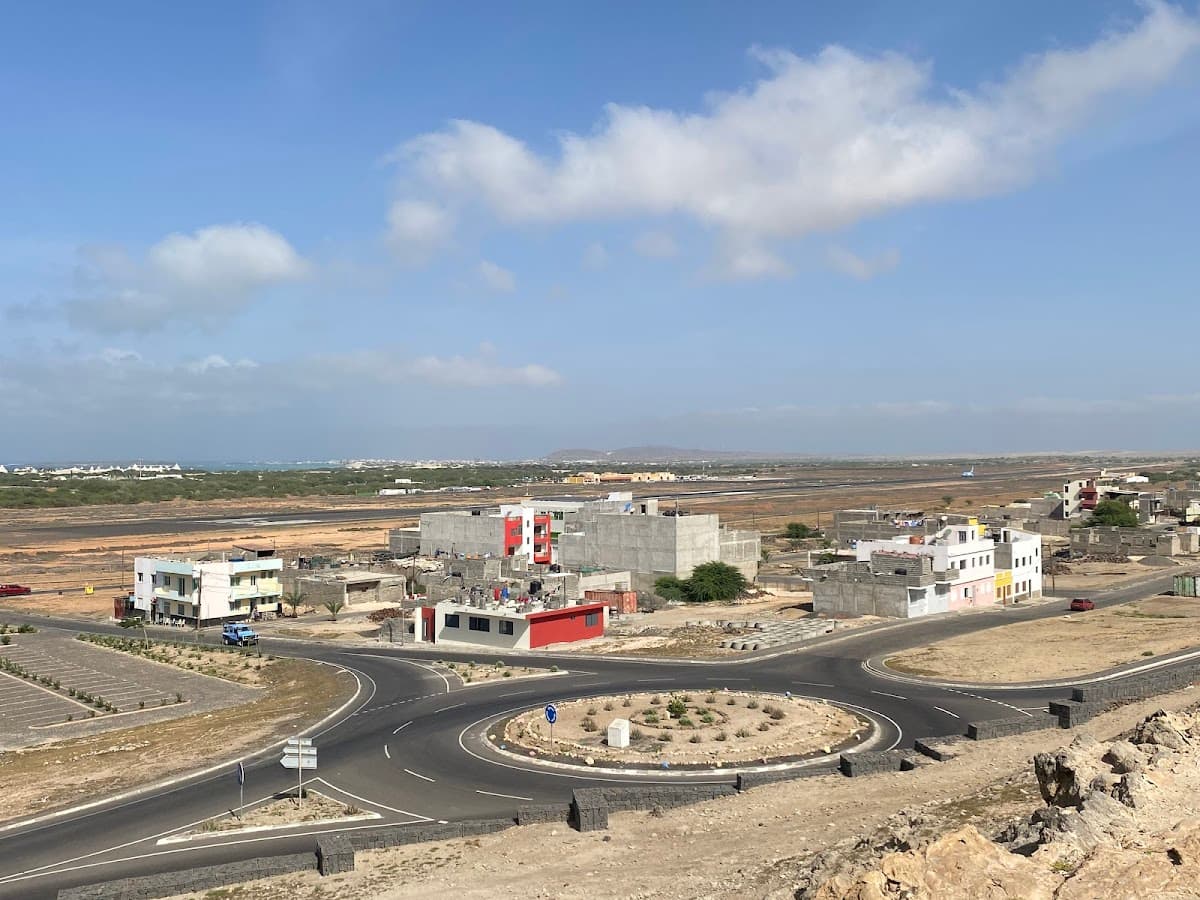
Boa Vista
Cape Verde's desert island paradise with endless dunes
Boa Vista feels like someone dropped a piece of the Sahara into the Atlantic Ocean. This is Cape Verde's third-largest island, where golden sand dunes roll right down to turquoise waters and the only traffic jams involve goats on the main road. The island stretches 31 kilometers at its widest point, but most of the action happens around Sal Rei, the sleepy capital where fishing boats bob in the harbor and locals play dominoes under acacia trees.
Here's what makes Boa Vista different from every other beach destination: the desert. The Viana Desert covers much of the interior, creating landscapes that look more like Morocco than the Caribbean. You'll find loggerhead turtles nesting on Praia de Chaves, kitesurfers carving up the waves at Praia de Cruz, and absolutely nothing but wind and sand at Praia de Santa Monica – a 22-kilometer stretch of beach that rivals anything in the Maldives.
The island runs on Cape Verdean time, which means everything happens eventually. But that's exactly the point. Come here to disconnect, to watch the sunset paint the dunes orange every evening, and to remember what silence actually sounds like.
Best Months
JAN · FEB · MAR · APR · MAY · NOV · DEC
~27°C · high crowds
Culture & Context
MORNA & MORABEZA
Boa Vista translates from Portuguese as "beautiful view," and the name does the heavy lifting the island itself refuses to do. This is Cape Verde's most stripped-back island. No mountains to speak of.
No lush forest canopy. What you get instead is 55 kilometers of mostly empty coastline, a desert interior that genuinely looks like the Sahara rolled into the Atlantic, and a population of around 13,000 people concentrated almost entirely in the northwest corner around Sal Rei. The island sits 450 km off the coast of Senegal, making it the easternmost outpost of the Cape Verde archipelago.
That proximity to West Africa matters. The culture here is a product of centuries of Portuguese colonialism, the transatlantic slave trade, and a fierce local identity that eventually led to independence in 1975. Cape Verde celebrated its 50th anniversary of independence in July 2025.
The island has a deep musical heritage. Morna, Cape Verde's most soulful musical genre, is believed to have originated right here on Boa Vista. Think of it as the islands' version of blues or fado: melancholic, string-heavy, and deeply tied to the concept of sodade, that untranslatable Cape Verdean longing for home and people left behind.
And then there's morabeza, the local word for the warmth and hospitality Cape Verdeans extend to strangers. It shows up constantly, in how someone at the market tosses in an extra mango, in how a fisherman explains his catch, in how completely unbothered everyone seems by your presence. The island's motto is essentially "no stress," and they mean it.
Local Customs
CASH ONLY ISLAND
Morabeza is not just a word, it's a way of operating. Locals extend genuine warmth to strangers. Lean into it.
Accept the offered grogue (sugarcane rum), accept the conversation, accept the slower pace.. Cash is king. There are only 3 ATMs on the entire island, all of them in Sal Rei.
Cards work at resort hotels and a handful of restaurants in town, but taxis, market vendors, and most local spots are cash-only. Bring euros — they're widely accepted at a rate of around 1 EUR = 100 CVE informally, though the official rate is 110.265 CVE..
The Sal Rei fish market is a morning ritual. Boats return early, fishermen unload yellowfin tuna and grouper, locals negotiate prices, and cats operate with what can only be called professional focus. Even if you're not buying, this is where the day starts..
Morna music is something you'll hear in restaurants and bars, not just at festivals. Don't just nod politely — it matters here the way blues matters in Mississippi. It came from this island..
Sunday is for doing nothing. Cafés fill up, the waterfront fills up, and everyone seems to have collectively agreed that nothing urgent is happening until Monday.. Modest dress matters when visiting inland villages or churches.
The coast is relaxed, bikinis at the beach bar are fine, but Rabil village and the Nossa Senhora de Fátima church call for covered shoulders at minimum.. Aluguer shared minivans are how locals move between towns. No fixed schedule — the driver leaves when the van is full.
Cheap, slow, and the most authentic way to travel if you're not renting a car.. The island's beaches regularly fly red flags due to powerful Atlantic currents. This is not theater.
Drownings have occurred on unguarded beaches. Estoril, east of Sal Rei, is the safest spot for swimming. Everywhere else, read the flags seriously.
Safety
WATCH THE OCEAN FLAGS
Boa Vista is generally safe, and petty theft is the main concern rather than anything more serious. Watch your valuables at crowded beaches and around ATMs in Sal Rei — there are only three ATMs on the whole island and they're a magnet for distraction theft. Don't leave bags unattended on the beach.
Isolated areas after dark are worth avoiding, solo female travelers especially should stick to populated areas at night. The ocean is the more serious risk. Atlantic currents around the island are powerful and beaches frequently fly red flags.
Several drownings have occurred on unguarded stretches. Estoril beach near Sal Rei has calmer water; Santa Mónica and Chaves can have brutal surf even when they look calm. Take the flags seriously.
Medical facilities are limited: there are two hospitals (one in Sal Rei, one private clinic in Rabil) that handle common needs, but serious emergencies require medical evacuation. There are no decompression facilities on the island, so scuba divers need to know that going in. LGBTQ+ travelers: homosexuality is not criminalized, but attitudes in smaller villages can be conservative.
Sal Rei, with its international visitor base, is notably more relaxed.
Getting Around
4WD OR SCOOTER
Boa Vista's airport (BVC, Aristides Pereira International) receives direct flights from Europe and connects domestically to Sal and Praia. The ferry from Sal takes about 3 hours and costs around $15 per person — a genuinely scenic crossing. Once on the island, a 4WD rental is the honest answer for anyone wanting to reach Santa Mónica beach, the desert interior, or the eastern coast.
The island is small enough (roughly 30km x 30km) that a full circuit on paved roads takes under two hours. The unpaved sandy tracks to the good beaches require 4WD and make a regular car a very bad idea. Car rentals run €50–70/day depending on vehicle type.
Scooters ($25/day) work fine for the Sal Rei–Chaves–Estoril corridor on flat paved road. Shared aluguer minivans connect the main settlements with no fixed schedule — they leave when full. Taxis from the resort strip to Sal Rei run $8–10 each way, which is worth doing at least twice during any resort-based stay.
Cash only for taxis and most local transport.
Useful Phrases
Money-Saving Tips
- 1.Rent a 4x4 and split costs with other travelers - many remote beaches are only accessible by car and group rentals cost €35/day divided among 4 people
- 2.Buy groceries at Sal Rei's main supermarket rather than hotel shops - prices drop by 30-50% for basics like water, snacks, and sunscreen
- 3.Book whale watching tours directly with local operators like Cabo Verde Natura (€45) instead of through hotels which add 20-30% markup
- 4.Stay in Sal Rei and take day trips to beaches rather than beachfront resorts - accommodation costs half as much and you'll experience local life
- 5.Eat at local restaurants away from the main tourist strip - meals cost €8-12 versus €18-25 at resort-style places
- 6.Travel during shoulder season (June-October) for 40% lower accommodation rates, though it's hotter and more humid
- 7.Use aluguers (shared vans) for €2-3 between villages instead of private taxis which charge €15-25 for the same routes
Travel Tips
- •Pack reef-safe sunscreen - the sun reflects intensely off both sand and water, and you'll burn faster than expected
- •Bring a good camera with extra batteries - the desert landscapes and sunsets are incredible, but charging opportunities can be limited outside Sal Rei
- •Learn basic Portuguese phrases - English isn't widely spoken outside tourist areas, and locals appreciate the effort
- •Pack layers for evening - temperatures can drop 10°C after sunset, especially during harmattan wind season (December-February)
- •Bring cash in euros - ATMs exist in Sal Rei but can run out of money, and most local businesses don't accept cards
- •Download offline maps before exploring - cell coverage gets spotty in remote areas and GPS can be unreliable
- •Respect turtle nesting sites - if you encounter nesting turtles, keep distance and avoid flash photography
- •Book accommodations in advance during whale season (February-May) - this is peak tourist season and good places fill up quickly