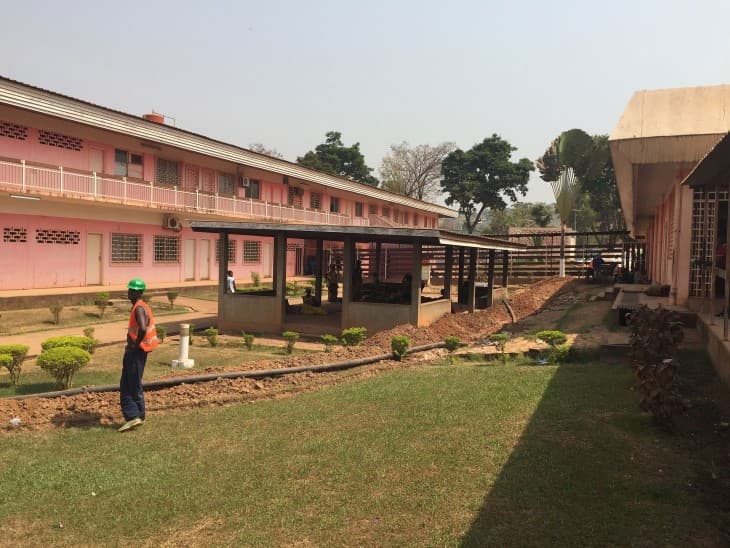
Bangui
Central African Republic's riverside capital awaits intrepid explorers
Bangui sits where the Ubangi River bends toward the Congo, a city that most travelers never consider but shouldn't ignore. This is Central African Republic's capital - raw, authentic, and completely off most tourist radars. You'll find French colonial architecture crumbling alongside vibrant markets, where vendors sell everything from dried fish to handwoven textiles. The city moves to its own rhythm, slower than most capitals but with an energy that's impossible to fake. Yes, it requires careful planning and realistic expectations. But for travelers seeking genuine cultural immersion away from selfie sticks and tour buses, Bangui offers something increasingly rare: an unfiltered African capital experience.
Best Months
JAN · FEB · MAR · NOV · DEC
~34°C · moderate crowds
Culture & Context
RESPECT YOUR ELDERS FIRST
Bangui sits on the northern bank of the Ubangi River, looking directly across the water at the Democratic Republic of Congo. The city was established as a French outpost in 1889, named for its location near the Ubangi rapids, and it became the capital when CAR gained independence from France in 1960. French and Sango are both official languages.
Sango is the one you actually hear everywhere, a Ngbandi-based creole that grew up along the river trade routes and is now the first language of most people born in the city. The population is around 900,000. The city is deeply religious, with Catholic, Protestant, and Muslim communities all present, and their calendars shape daily life throughout the year.
There's a respect-for-elders culture here that is serious, not ceremonial. The younger person defers. Greet older people first, always.
The "kodro" system organizes neighborhoods partly by ethnic lineage, where migrant families from the same region cluster together, making different parts of the city feel genuinely distinct from each other. Hospitality is real and generous, especially once you've met someone properly. The downside is that foreign visitors are rare enough to attract attention, and that attention is not always benign.
Local Customs
PASSPORT ALWAYS REQUIRED
Always carry your passport. Local law requires it. Failing to produce it at a checkpoint can mean detention or a fine.
Keep a photocopy somewhere separate.. Do not photograph police, military, airports, or government buildings. Even an accidental shot can result in equipment confiscation and detention..
Ask permission before photographing people, especially at markets. Many locals are genuinely comfortable with it once asked properly, but assuming is seen as rude.. Greet elders first in any social setting.
The young defer to seniors, not out of politeness but obligation. Skipping this marks you as ignorant of basic respect.. Negotiate prices in markets and with taxi drivers.
It is expected. Agreeing to the first price given is actually a bit odd and may confuse vendors.. Bring cash for everything.
Credit cards are accepted at the Ledger Plaza and a handful of expat restaurants, and nowhere else you will realistically visit.. Avoid moving around at night on foot. The risk is real.
After dark, a vehicle is non-negotiable.. When attending church services at Notre-Dame, the choir sings in both French and Sango. Sunday mornings are the most active and worth attending even if you are not religious.
Safety
EXTREME CAUTION REQUIRED
Here's the thing: Bangui carries a Level 4 "Do Not Travel" advisory from the US State Department, and Australia and Canada echo that position. This is not bureaucratic overcaution. Violent crime is genuinely common, including homicide, armed robbery, and kidnapping.
Armed groups and opposition forces control large areas of the country outside Bangui, and unrest can spill into the capital with very little warning. At night, unofficial checkpoints staffed by police or soldiers appear on roads, and they frequently demand money. Do not argue.
US government employees working in Bangui are required to travel in armored vehicles and are subject to a curfew. Their families are not allowed to join them. If something goes wrong, victims of crime in Bangui may have to pay to summon police, because there is a shortage of police vehicles and fuel.
Medical services are extremely limited throughout the country. There is no adequate treatment available for even routine emergencies. Budget for medical evacuation insurance before you go.
Do not photograph military personnel, checkpoints, the airport, or government buildings, even accidentally. Carry your passport at all times. Do not walk at night.
Hire a trusted driver for all movement after dark. The Alliance Française de Bangui is generally considered a safe and neutral space. The PK5 district is lively but requires heightened vigilance against pickpockets even during the day.
Getting Around
HIRE TRUSTED DRIVER
Bangui M'Poko International Airport (IATA: BGF) is 8.2 km from the city centre and takes about 35 minutes by taxi, depending on traffic and checkpoints. Get a taxi arranged by your hotel, not a random one from the arrivals area.
In the city, your main options are: motorcycle taxis (called bendros) which are fast, cheap, negotiable, and run from early morning to dusk. Good for short hops through traffic. Helmets are not always provided.
Shared minibuses and shared taxis cost roughly 300–600 CFA francs (about $0.50–1) per trip and are the cheapest way to cover ground, but they are crowded and unpredictable. The US State Department describes the official green buses and yellow taxis as often dangerously overcrowded and poorly maintained.
A private car with a reliable driver runs about $65/day and is the safest, most practical choice for anyone not already familiar with the city. Central African Republic Tours (on Avenue de la Ind., Centre-Ville) can arrange vehicles.
Taxi-brousse (shared minibuses) handle intercity routes, running roughly 6am–6pm. Boat taxis on the Ubangi River cross to the DRC side and serve riverbank communities, operating irregularly during daylight depending on demand. The only paved roads in the country run from Bangui to Bossembélé, Sibut, and Mbaïki.
Everything else deteriorates badly in the May–October rainy season.
Useful Phrases
Money-Saving Tips
- 1.Bring euros or US dollars to exchange - ATMs are unreliable and often empty
- 2.Negotiate prices at markets but don't haggle aggressively - margins are thin
- 3.Budget around $30-50 per day for basic accommodation and meals
- 4.Motorcycle taxis cost 500 CFA francs across town - agree on price first
- 5.Restaurant meals range from 2,000-8,000 CFA francs depending on location
- 6.Fuel costs about 700 CFA francs per liter - fill up before day trips
- 7.Bottled water costs 500 CFA francs - buy in bulk to save money
Travel Tips
- •Yellow fever vaccination is mandatory - carry your certificate
- •French phrases will get you much further than English outside hotels
- •Download offline maps - internet can be spotty outside the center
- •Pack a headlamp - power outages are common in the evenings
- •Dress conservatively, especially when visiting markets or rural areas
- •Keep copies of your passport and visa in separate bags
- •Malaria prophylaxis is essential - consult your doctor before traveling
- •Travel insurance with evacuation coverage is non-negotiable here
- •Register with your embassy upon arrival if staying more than a few days