Lamu
Kenya's timeless Swahili port where donkeys outnumber cars
Step off the plane in Lamu and you've time-traveled 600 years. No cars hum down these coral stone streets. Just the clip-clop of donkeys carrying everything from groceries to tourists. This UNESCO World Heritage site on Kenya's coast has kept its Swahili soul intact while the rest of East Africa modernized around it.
The old town feels like a living museum, but one where people actually live. Dhows still sail into the harbor loaded with mangoes from the mainland. Call to prayer echoes off ancient walls at sunset. And yes, you'll get lost in the maze of alleyways at least once – everyone does.
But here's what makes Lamu special: it's not trying to be anything other than itself. No resort chains, no cruise ship terminals. Just a place where Arabic, African, and Indian cultures blended centuries ago and never looked back.
Culture & Context
SEVEN CENTURIES INTACT
Lamu has been continuously inhabited for over 700 years. That's not a marketing line — the place genuinely feels like it. The architecture is built from coral stone and mangrove timber, with interior courtyards, carved wooden doors, and star-shaped vents in the walls that cool the air like a natural AC system. The doors, famously, were often constructed first. A wealthy family would erect the door as a public statement of status before the rest of the house went up around it.
The cultural DNA here is a dense mix of Swahili, Arab, Persian, Indian, and traces of Portuguese and even Chinese influence. Local legend (backed by some archaeological evidence) says sailors from Zheng He's fleet shipwrecked in the archipelago in the 15th century and married into the community. Some residents today have features that support that story.
Lamu is a majority Muslim community, and that shapes daily life in ways visitors should respect. The call to prayer echoes five times a day. Friday is the most significant day of the week. The Riyadha Mosque, built in 1890, remains a major center of Islamic scholarship. This isn't a backdrop to ignore. The town has retained its social and cultural integrity in ways that most ancient settlements on the Swahili coast simply haven't.
Local Customs
RESPECT & POLE POLE
Dress modestly in Lamu Old Town — no bikinis or shirtless walking through the alleys. This isn't a rule for tourists only; it applies generally as a sign of respect for a conservative Muslim community.. Don't drink alcohol in public spaces within Old Town.
Alcohol is served at hotels, private resorts, and the floating bar. Stick to those spots.. Always greet before doing anything.
Launching into a transaction or question without first saying 'Jambo' or 'Habari' is considered rude. Start with the greeting every time.. Embrace pole pole — 'slowly, slowly.
' Boat departures, restaurant service, and pretty much everything else operates on island time. Getting annoyed about it just makes you look like the problem.. Eat with your right hand when dining traditionally.
Most restaurants provide cutlery, but at local spots you may find yourself eating rice and stew the traditional way.. Ask permission before photographing people, especially women in buibui (the black robe commonly worn). Most people are friendly about it if you ask first..
Watch where you walk on the main streets. Donkeys are the primary form of heavy transport and relieve themselves freely throughout the alleys — it's a practical reality of a working island, not a tourist oversight.. Be firm but polite with boat touts at Mokowe jetty and along the Lamu waterfront.
They are persistent and will all claim to have the fastest boat. Check prices yourself and trust actual posted rates over what you're told on the spot.
Safety
CALM BUT STAY ALERT
Lamu Old Town and Shela Village are generally safe, with strong community policing. That said, honest caveats apply.
The US State Department gives Kenya an overall risk score of 3.1 out of 5 and Lamu County sits close to the Somali border — there have been security incidents in past years in the broader region, particularly on the mainland. The island itself has been calm for travelers, and many long-term visitors will tell you it's safer than people think. But stay informed before you go and check current travel advisories.
Practically speaking: avoid isolated beaches after dark, keep valuables out of sight, and don't resist if someone tries to rob you. Boat touts at Mokowe can be pushy — stay firm, stay polite. In Lamu Town (not Shela), be cautious of overly smooth-talking touts on the waterfront who may be angling for a scam or a kickback.
Lamu is in a malarial zone — bring repellent, sleep under a treated net, and consider prophylactics. Drink bottled or filtered water only. There is a district hospital on the island and several pharmacies, but serious medical emergencies mean evacuation to Mombasa or Nairobi. Carry travel insurance that covers medical evacuation.
Street lighting at night is minimal in the alleys. A small flashlight (or the LED lighter sold in the tiny shops) is a genuinely useful thing to have.
Getting Around
FERRIES & DONKEYS
Getting to Lamu takes some effort, which is part of why the island hasn't been overrun.
BY AIR: Fly into Manda Airport (LAU) on Manda Island. Daily flights from Nairobi Wilson Airport via Safarilink and Air Kenya (about 1.5 hours). Jambojet and Fly540 operate from JKIA. From Mombasa, it's around 45 minutes. Malindi to Lamu is 30 minutes. One important thing: airlines on this route enforce soft-sided luggage rules strictly on smaller aircraft. Pack a duffel, not a hard shell.
FROM THE AIRPORT: A short ferry crossing gets you from Manda Island to Lamu Town (about 10 minutes). Public ferry: around Ksh 200. Private boat to Shela: Ksh 1,200–1,500 (your hotel will often arrange a pickup).
VIA MOKOWE PORT (by road from Mombasa or Nairobi): Bus from Mombasa to Mokowe takes 4+ hours. Then take the ferry across: public slow boat Ksh 100–200 per person, shared speedboat Ksh 300 (faster, about 15 minutes when full), private speedboat Ksh 1,000. You will be approached by boat boys at Mokowe immediately. All claim to have the fastest boat. Check prices against the posted rates.
ON THE ISLAND: No cars to speak of (officially about 3 on the whole island). Getting around means walking, donkey, or boda-boda motorbike. Boda-boda between Shela and Old Town costs Ksh 100–150 at low tide, Ksh 250–300 at high tide. Dhow trips between islands run $5–10 per person for shared trips. The 45-minute walk between Old Town and Shela along the waterfront is pleasant in the morning — less so at midday heat.
Useful Phrases
Where to Stay in Lamu
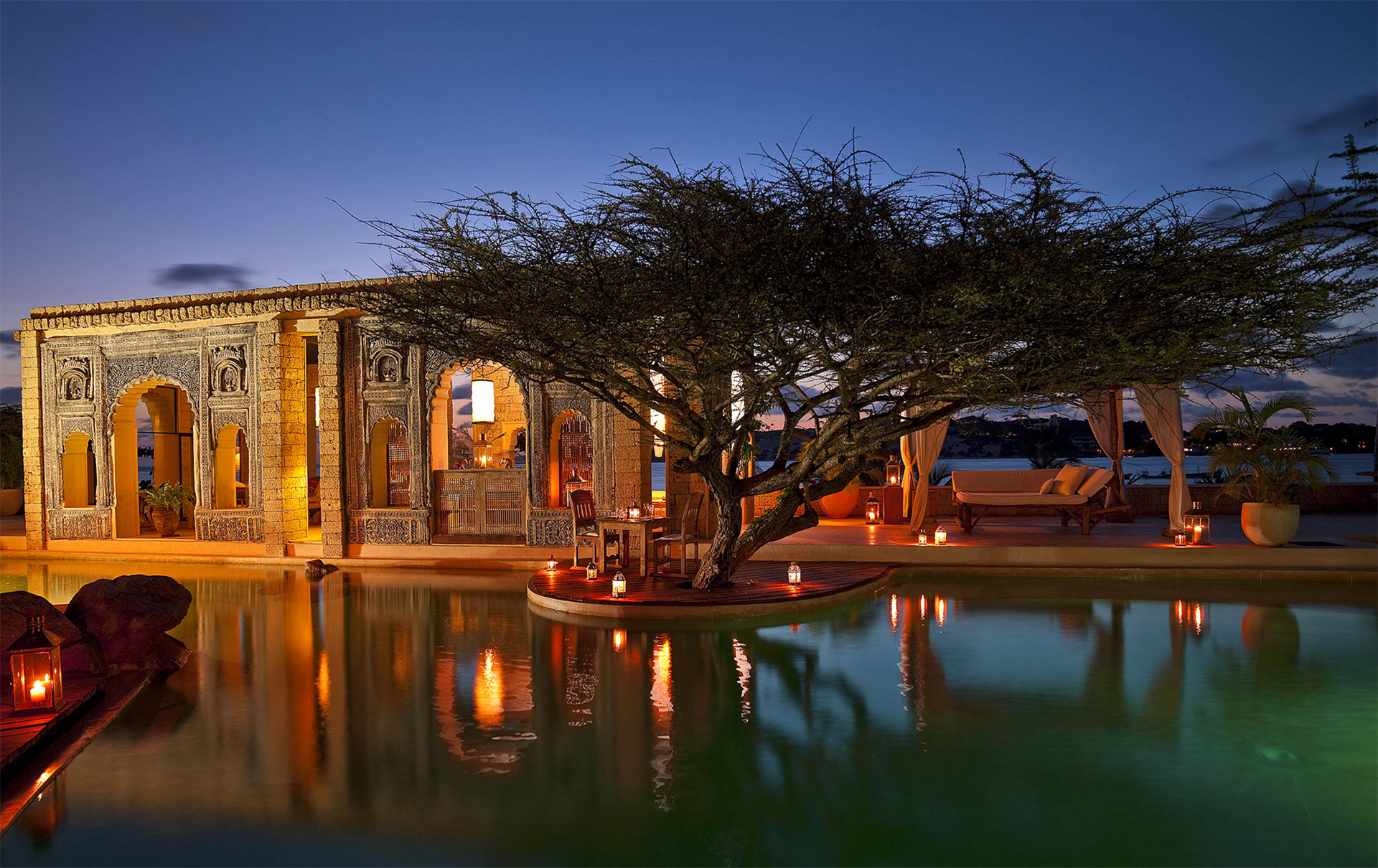
1 recommended properties
Money-Saving Tips
- 1.Bargain for everything except restaurant meals - dhow rides, donkey taxis, and souvenirs all have flexible pricing
- 2.Eat at local places rather than hotel restaurants - street food costs 100-200 KES vs 800+ KES for hotel meals
- 3.Share dhow costs by joining other travelers - solo trips to outer islands cost 5000+ KES, but split four ways it's manageable
- 4.Visit during shoulder season (October-November) for 30-40% lower accommodation rates
- 5.Buy bottled water in bulk from shops rather than hotels - 100 KES vs 300 KES per bottle
- 6.Skip expensive airport transfers - public dhows to Manda Island cost 100 KES vs 2000+ KES for private boats
Travel Tips
- •Bring cash - ATMs are unreliable and many places don't accept cards
- •Pack light cotton clothes and a sun hat - the sun reflects intensely off coral stone streets
- •Download offline maps before arriving - GPS doesn't work well in the narrow alleyways
- •Learn basic Swahili greetings - locals appreciate the effort and it helps with bargaining
- •Respect local customs - dress modestly, especially when visiting mosques
- •Book accommodation in advance during peak season (July-August) - options are limited
- •Bring reef-safe sunscreen - the coral reefs around outer islands are fragile
- •Pack a good book - Lamu's pace encourages serious relaxation time