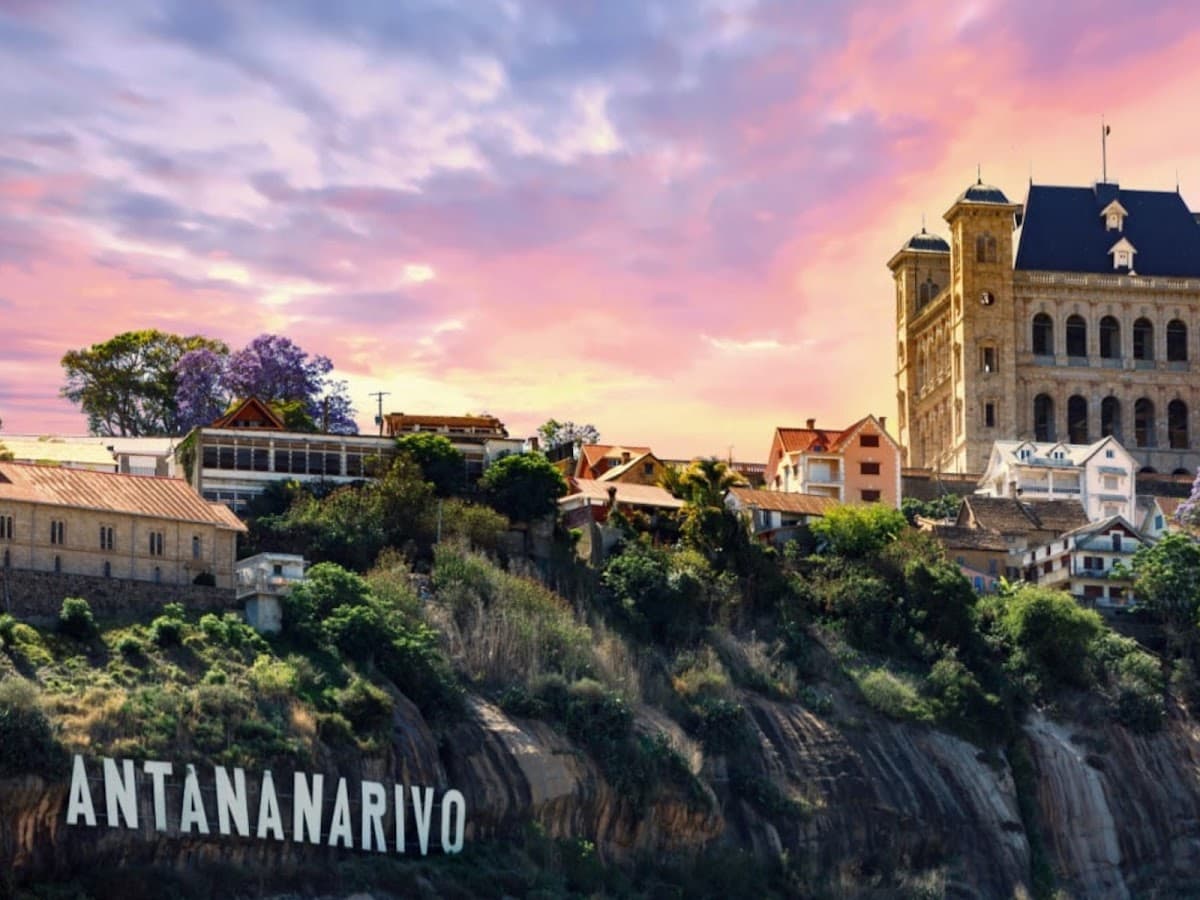
Antananarivo
Madagascar's chaotic capital where cultures collide beautifully
Welcome to Antananarivo — or Tana, as locals call it. Madagascar's capital sprawls across twelve hills like a living amphitheater, where French colonial mansions crumble gracefully next to traditional Malagasy houses. The streets pulse with taxi-brousse horns, zebu cart wheels, and the chatter of eighteen tribes speaking Malagasy.
Look, this isn't your typical African capital. Tana feels more like a highland town that accidentally became a city. Rice paddies still dot the valleys between neighborhoods. Women balance impossible loads on their heads while navigating pothole-riddled streets. And somehow, it all works in the most beautifully chaotic way possible.
The city sits at 1,280 meters above sea level, which means cool mornings and warm afternoons year-round. But here's the thing — Tana rewards the curious traveler. Dig past the initial chaos and you'll find incredible art galleries in Isoraka, family-run restaurants serving the best romazava you've ever tasted, and markets where vanilla beans cost less than your morning coffee back home.
Best Months
APR – OCT
~22°C · moderate crowds
Culture & Context
ANCESTORS & FIHAVANANA
Tana sits at 1,280 meters above sea level in the central highlands, which means genuinely cool evenings even in what passes for summer. The city is the cultural heart of the Merina kingdom — the dominant highland ethnic group — and you feel that history everywhere, from the royal hilltop palace to the red-brick church architecture. About 55% of Malagasy follow traditional ancestral beliefs, while around 40% practice Christianity.
Death is treated as a passage, not an ending, which explains why the Famadihana ceremony (rewrapping of ancestors' bones) is a joyful, communal affair rather than a mournful one. The concept of "fihavanana" — social solidarity and kinship — shapes daily interactions. Don't mistake a slow pace for indifference.
"Hora malagasy" (Malagasy time) is a real thing: social events start late, buses run behind schedule. For tours and flights, be punctual. For a dinner invitation, showing up exactly on time can feel strange to your hosts.
French is widely spoken alongside Malagasy, especially in business and government. English is growing in tourist areas but still limited. Pointing with your index finger is considered rude — use your whole hand or a nod instead.
Always greet elders with "manahoana" and take any blessing from an older person seriously; it genuinely matters here.
Local Customs
HORA MALAGASY RULES
Greet everyone with a handshake — it's expected, even in quick interactions with shopkeepers or taxi drivers.. Never point with your index finger. Use your whole hand, chin, or a nod to indicate direction..
Accept the 'hora malagasy' (Malagasy time) mindset for social situations — events and meals run late. Being visibly impatient reads as rude.. If invited into a home or to a ceremony, always accept a blessing from an elder.
Refusing is a genuine slight.. All Malagasy houses traditionally face west and bed heads face north — these are deeply held beliefs tied to ancestors and power. Don't rearrange furniture in guesthouses without asking..
Never leave home (or set off on a trip) without acknowledging elders and receiving their blessing, especially in rural areas or during ceremonies.. Famadihana is sacred and private. If you happen to be invited to a bone-turning ceremony, treat it as a profound privilege — not a photo opportunity..
Photography of military, police, or government buildings can get you arrested. Don't risk it.. Haggling is expected at Analakely market and most street stalls.
Start at roughly half the asking price and negotiate from there.. Madagascar is a cash economy. Always carry ariary in small denominations for markets, motos, and food stalls.
Safety
WATCH YOUR PHONE
Tana is manageable but requires honest attention. The main risks are petty theft — pickpocketing and bag snatching — concentrated around Analakely market and Avenue de l'Indépendance. Keep your phone in a front pocket, leave expensive jewelry at the hotel, and don't walk in the Basse Ville or market areas after dark.
Use taxis for any nighttime movement and always negotiate the fare before getting in. The Haute-Ville and Isoraka are noticeably safer at night than the commercial lower town. Ride-sharing apps Piqla and e-VTC operate in Tana and are generally more reliable than flagging random taxis.
Avoid taxi-brousses (shared minibuses) entirely — they're overcrowded, poorly maintained, and have a serious accident record. A political note: in October 2025, the military took over following large-scale demonstrations and announced a 2-year transition period. As of early 2026, the interim measures have been implemented without major unrest and conditions are calm — but monitor your government's travel advisories before and during your visit, as situations can shift.
Do not photograph the military, police, or government buildings under any circumstances. For emergencies, police are reached at 117, ambulance at 18. Medical facilities in Tana are limited by Western standards — bring any essential medications, and comprehensive travel insurance with medical evacuation coverage is non-negotiable here.
Getting Around
NEGOTIATE TAXI FARES
The airport (Ivato, TNR) is 17 km from the city center. Budget MGA 20,000–40,000 ($5–10 USD) for a negotiated taxi into town; the ride takes 30–60 minutes depending on traffic, and Tana traffic is genuinely notorious. First-timers should consider a hotel transfer — confirm at booking.
Within the city, metered white taxis are your friend. Short neighborhood hops run MGA 5,000–8,000 (about €1–€1.70).
Cross-city trips cost MGA 10,000–20,000 (€2–€4). Always negotiate or confirm the meter before getting in. Avoid taxis arranged by hotel concierges who take commission — flag your own from the street for better rates.
Tuk-tuks (cyclopousse) cover short distances more cheaply but are slower. Ride apps Piqla and e-VTC add a useful layer of transparency and safety. The taxi-be minibuses are used by locals but are overcrowded and disorienting for newcomers — not recommended unless you're with someone who knows the routes.
Within neighborhoods, Tana is very walkable. The lower city between Analakely and Tsaralalàna is flat. The Haute-Ville requires good shoes for the steep climbs — the 15-minute walk up from Analakely is fine in daylight.
A local SIM with data helps with navigation; Google Maps works reasonably well in the central city.
Useful Phrases
Money-Saving Tips
- 1.Bring US dollars or euros to exchange — ATMs often run empty and credit cards work nowhere outside upscale hotels
- 2.Negotiate taxi fares before getting in — tourists pay 3x local rates if you don't establish price first
- 3.Shop at Analakely market early morning for best prices — vendors mark up everything after 10 AM when tourists arrive
- 4.Eat where locals eat — street food costs 200-500 ariary while tourist restaurants charge 10,000+ for similar dishes
- 5.Book hotels directly rather than online — many offer 20-30% discounts for cash payments in local currency
Travel Tips
- •Pack layers — Tana's highland climate means 15°C mornings and 25°C afternoons year-round
- •Learn basic French phrases — English speakers are rare outside tourist hotels and restaurants
- •Carry toilet paper everywhere — public facilities rarely provide it, even in restaurants
- •Download offline maps — GPS works but data coverage gets spotty in hillside neighborhoods
- •Respect fady (taboos) — ask before photographing people or entering sacred sites like tombs
- •Bring hand sanitizer — running water isn't guaranteed even in mid-range accommodations
- •Pack comfortable walking shoes — Tana's cobblestone streets and steep hills destroy flimsy footwear
Frequently Asked Questions
Explore Antananarivo
BUILD YOUR
ANTANANARIVO PLAN
Insider picks, smart timing, and a plan ready when you are.
Start Planning