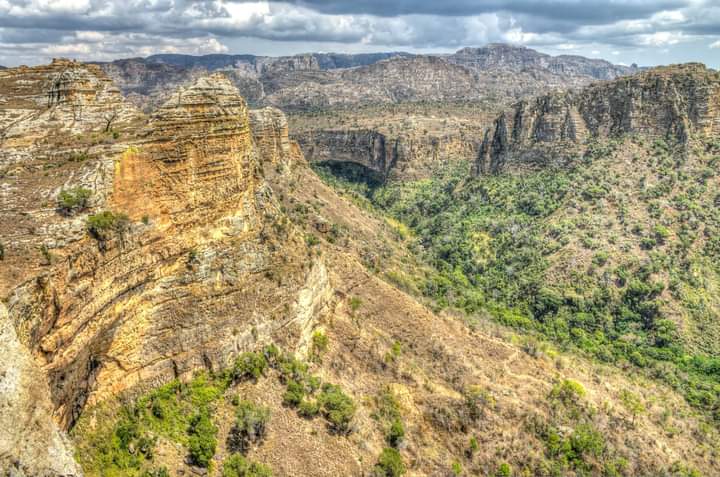
Isalo National Park
Madagascar's dramatic sandstone canyons and endemic wildlife
Madagascar's Isalo National Park feels like stepping onto another planet. These towering sandstone formations have been carved by wind and rain for millions of years, creating a landscape of deep canyons, natural pools, and rock formations that photographers dream about. But this isn't just about the scenery. The park shelters lemurs you won't find anywhere else on Earth, plus a surprising variety of plants that have adapted to this harsh, beautiful environment. Located in Madagascar's central highlands, about 280 kilometers south of Antananarivo, Isalo covers 815 square kilometers of some of the island's most dramatic terrain. The park opened in 1962, and while it's gained popularity with international visitors, it still feels refreshingly untouched compared to other safari destinations.
Culture & Context
Isalo sits squarely on Bara tribal land.
For centuries, the Bara people have used natural caves carved into the canyon walls as sacred burial sites — you'll see these on hikes, and they are not props for photos without asking. The park was founded in 1962 and covers 81,540 hectares of Jurassic-era sandstone massif that geologists treat as a living textbook of crustal movement.
It's Madagascar's most visited national park precisely because it sits along the well-maintained RN7, the main artery connecting Antananarivo to Toliara. The Malagasy cultural worldview is shaped by ancestor worship — the dead are not gone, they are participants in family life. This belief drives everything from daily habits (houses face west, bed heads face north) to the elaborate Famadihana ceremonies held in the highlands each dry season.
The local philosophy of "mora mora" (take it slowly, easy does it) is not laziness — it is a genuine cultural value. Embrace it, especially on park trails in the midday heat. Road travel, park logistics, and meals all move on Malagasy time.
The park's biodiversity is staggering: 77 bird species, 14 lemur species, 39 reptile species, and endemic plants like Pachypodium and the Malagasy rainbow frog found only in Isalo's canyons.
Local Customs
Fady (taboos) are sacred and hyper-local.
Never point at a tomb or burial site — even accidentally. Ask your guide 'Misy fady ve eto?
' (Are there taboos here?) before entering any village or canyon with visible burial caves.. The Bara people's cave tombs visible in Isalo's canyon walls are active sacred sites, not ruins.
Do not approach, photograph, or touch them without explicit permission.. Always ask before taking photos of people. The phrase is 'Azo atao sary ve?
' — locals appreciate the effort enormously.. Mora mora is the Malagasy life philosophy. Things move slowly.
Your guide will not rush. Your taxi-brousse will leave when it's full, not on schedule. Lean into it rather than fighting it..
Cash is king everywhere in Ranohira and the park. Bring far more ariary than you think you'll need — the nearest reliable ATM is back in Ihosy or Fianarantsoa.. Do not wear red clothing near ancestral sites or during ceremonies.
Avoid sitting on pillows, which is considered disrespectful in some households.. Tipping your guide is important and expected — it forms a major part of their income. 10-20% of the guide fee is a solid baseline for a good day hike..
Malaria is a risk in Madagascar, including around Isalo. Take prophylaxis, use DEET repellent, and cover arms and legs at dusk. Scorpions live in Isalo's rocky terrain — shake out boots every morning..
Do not drive after dark. This is a hard rule. The road toward Ilakaka (south of Ranohira) is particularly dangerous at night due to Dahalo activity (cattle-thieving gangs).
Your driver will know this instinctively — trust them.
Safety
Isalo is one of Madagascar's safer destinations for tourists, especially when traveling with a guide and a dedicated driver.
The park itself has no dangerous mammals, and while Madagascar has many snake species, none are venomous. The bigger real risks: scorpions live in the rocky terrain — shake out hiking boots every morning before putting them on.
Flash floods in the canyons are a genuine hazard during the rainy season (November–March); don't hike in canyon areas if rain is threatening. Avoid all road travel after dark — this is critical on the stretch south toward Ilakaka, where Dahalo (cattle-thieving gangs) have historically targeted vehicles at night. Your driver will already know this.
Petty theft is low in Ranohira compared to Antananarivo, but keep valuables locked in accommodation. The nearest hospital with meaningful facilities is in Ihosy (~80km north) or Fianarantsoa; travel insurance with emergency evacuation coverage is strongly recommended for any canyon trekking. Malaria risk exists in this region — take prophylaxis and use DEET repellent, especially at dusk.
Don't drink tap water. The park is open daily 6:30am–4:30pm; do not attempt to hike without registering at the Ranohira office first.
Getting Around
Isalo sits on the RN7 — Madagascar's main paved artery running from Antananarivo south to Toliara.
The road itself is in good condition, which makes it one of the most reliable long drives in the country. From Antananarivo (Tana), the drive to Ranohira is roughly 700km and takes about 15 hours — realistically a two-day drive via Fianarantsoa and Ranomafana, which makes for a better itinerary anyway.
From Toliara, it's about 250km and 4 hours. A 4WD is recommended for accessing park trails off the main road. The most comfortable option is a private vehicle with a local driver who knows the road and can negotiate checkpoints.
Shared taxi-brousse (bush taxis/minibuses) depart from Fasan'ny Karana station in Antananarivo and Sanfily station in Tuléar — cost is around €10-15 but expect a grueling, overcrowded, long-day journey. Book guide services at the national park office in Ranohira (arrive early; guides in peak season July-September fill up fast). All park entry fees are cash-only, paid at the Ranohira office.
The park is open 6:30am to 4:30pm daily. A 4WD is recommended for the track to the Piscine Naturelle car park, a few kilometers south of Ranohira. Domestic flights connect Antananarivo to Toliara (Tuléar, TLE), from which a 4-hour taxi ride reaches Ranohira — this dramatically cuts the overland slog.
Useful Phrases
Money-Saving Tips
- 1.Bring cash in Ariary – no ATMs in Ranohira and most places don't accept cards
- 2.Negotiate guide fees upfront and confirm what's included in the price
- 3.Pack your own lunch and snacks to avoid overpriced park concessions
- 4.Stay in Ranohira town rather than the expensive lodge at park entrance
- 5.Group tours cost less per person than private guides if you're traveling solo
- 6.Buy water and supplies in larger towns before reaching Ranohira
Travel Tips
- •Hire guides through the official park office, not random people in town
- •Start hikes early morning to avoid the brutal afternoon heat
- •Wear closed-toe shoes – sandstone can be sharp and there are thorny plants
- •Download offline maps as cell service is spotty throughout the park
- •Pack more water than you think you need – dehydration hits fast here
- •Respect lemur viewing distances – they're wild animals, not photo props
- •Learn a few Malagasy phrases – locals appreciate the effort
- •Check weather conditions before longer circuits during wet season
Frequently Asked Questions
BUILD YOUR
ISALO NATIONAL PARK PLAN
Insider picks, smart timing, and a plan ready when you are.
Start Planning