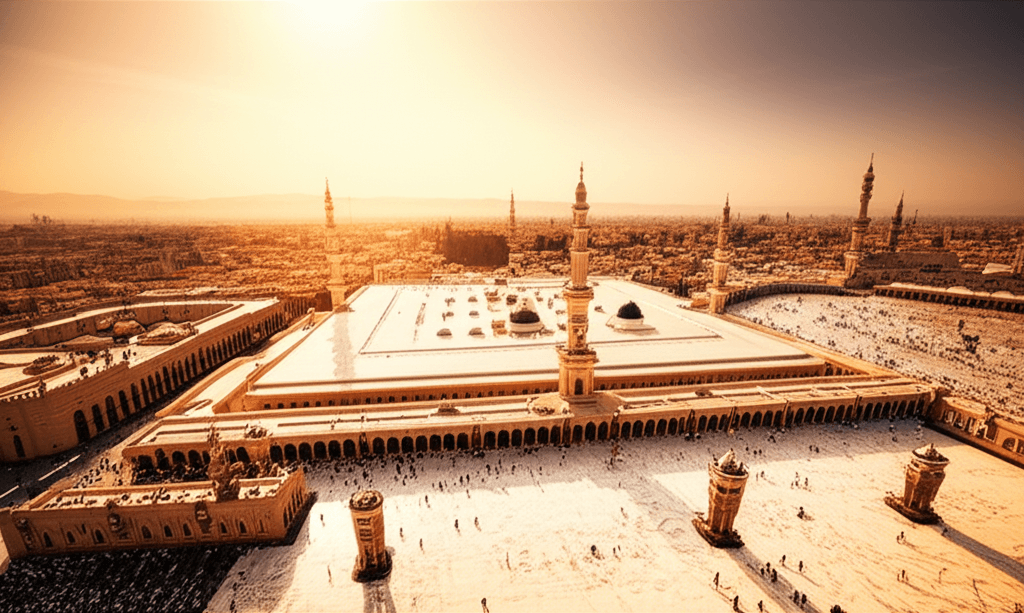
Medina
Ancient walled city where history comes alive
Step through the gates of Medina and you're walking into a living museum. These ancient walled quarters — found in cities across Morocco and the Middle East — pulse with the same energy they've had for centuries. Donkeys still carry goods down narrow alleys. Craftsmen hammer copper in workshops their grandfathers built. The call to prayer echoes off stone walls worn smooth by a thousand years of footsteps.
But this isn't some sanitized historical theme park. Real people live here, work here, argue over the price of mint tea here. You'll get lost in the maze of streets — everyone does. That's half the fun. The other half is stumbling onto a rooftop restaurant with killer tagines, or finding that perfect handwoven rug after three hours of "friendly" negotiation.
Culture & Context
ISLAM'S SECOND HOLIEST
Medina — formally Al-Madinah Al-Munawwarah, "The Radiant City" — is Islam's second holiest city. This is where the Prophet Muhammad migrated from Mecca in 622 CE, established the first Islamic state, built the first mosque, and is buried. For the estimated 1.8 billion Muslims worldwide, it carries the kind of weight that words struggle to convey.
The local dialect is Hejazi Arabic, a western Saudi variety shaped over fourteen centuries by pilgrims arriving from every corner of the Islamic world — Egypt, Turkey, Indonesia, South Asia, West Africa. You hear it in the food stalls and hotel lobbies alike: a more fluid, trade-influenced Arabic than the Najdi dialect spoken in Riyadh.
The city is in active transformation under Saudi Vision 2030. New museums have opened, the Hejaz Railway District has been revitalized as a cultural venue, and the Saudi Seasons program has brought festivals to what was once a city purely focused on pilgrimage. Non-Muslims can now access more of Medina than before — the Haram restriction remains firm, but the surrounding city is opening up.
The Ajwa date is the city's signature product — dark, soft, grown only in Medina's orchards, and sold in the Souq al-Tamr at SAR 100–300/kg depending on grade. It functions almost like a local currency of hospitality. Vendors offer tastings before purchase. Mandi (slow-cooked lamb and rice) and Kabsa (spiced rice with meat) are the food anchors of any proper meal here. Al-Baik's broasted chicken is the democratic pilgrim meal — SAR 16 and available at multiple Medina locations.
Local Customs
STRICTLY OBSERVANT CITY
Dress modestly at all times. Foreign women are no longer legally required to wear an abaya (since 2019), but shoulders and knees should be covered in public. Cover hair when entering any mosque.
Men should wear long trousers and sleeved shirts.. Respect prayer times. Five times daily, shops and restaurants may close for 10–20 minutes.
Don't try to rush or complain — just wait. Pharmacies and some larger venues stay open.. Alcohol is completely illegal — not just restricted, illegal.
No workarounds exist. Plan for a dry trip.. Avoid public displays of affection.
Holding hands between a married couple is generally fine, but anything beyond that draws attention you don't want.. Non-Muslims must not enter the Haram zone surrounding the Prophet's Mosque. Checkpoints are staffed.
This is a hard legal line, not a soft cultural suggestion.. Confirm prices before handing over cash at markets and small shops. Count your change immediately.
Vendors accept being corrected without drama if you're firm but polite.. Do not photograph people — especially women — without clear permission. Inside or near mosques, ask first even for architecture shots..
Social media is not a free zone. Anything posted critical of the Saudi government, its leadership, Islam, or public officials — even from home before your trip — can be used as grounds for detention.. During Ramadan, eating, drinking, or smoking in public during daylight hours is illegal for everyone, Muslim or not.
Restaurants operate after Maghrib. Plan accordingly.. The pace of life slows around prayer.
The best evening stroll is after Isha prayer, when the city loosens up and street food stalls do their best business.
Safety
REGIONAL CONFLICT ZONE
CRITICAL — 2026 SECURITY SITUATION: As of March 13, 2026, the U.S. State Department issued a Level 3 "Reconsider Travel" advisory for Saudi Arabia. Following the onset of U.S.-Iran hostilities on February 28, 2026, there is an ongoing threat of Iranian drone and missile attacks targeting cities, airports, military bases, and energy infrastructure. The U.S. Embassy ordered non-emergency government employees to leave the country on March 8, 2026. All travelers should check their government's current advisory before booking.
Beyond the regional conflict situation: Medina city itself has a strong security presence, particularly around the Prophet's Mosque and major landmarks, and the base crime rate is low. That said, watch for price manipulation at souvenir shops near the mosque — confirm prices before handing over cash and double-check your change. Vendors rarely persist if you push back firmly.
Social media is a serious risk: Saudi authorities have arrested people for posts critical of the government, religion, or public figures — including posts made before arriving in Saudi Arabia. Prison sentences up to 45 years have been issued for social media activity. Do not post anything that could be construed as critical of the Saudi government, Islam, or its leaders.
Exit bans are real: disputes over unpaid bills, business disagreements, and family matters can result in being barred from leaving the country, sometimes for years.
Alcohol is completely illegal throughout Saudi Arabia, including for tourists. No grace period, no exceptions. Penalties include fines, imprisonment, and deportation.
Non-Muslims must respect the Haram boundary — checkpoints are staffed and the restriction is enforced. Do not attempt to enter.
Getting Around
HARAMAIN RAILWAY REIGNS
Getting around Medina is straightforward, though options vary in reliability.
HARAMAIN HIGH-SPEED RAILWAY: The best way to get between Medina and Mecca (2.5 hrs) or Jeddah (under 2 hrs). Up to 15 departures per day in each direction. Clean, fast, and affordable. Book ahead during peak pilgrimage periods.
TAXIS: Available 24/7 outside the gates of the Prophet's Mosque. Most reliable option for short hops around the city. Agree on a fare before you get in — meters aren't always used. Ride-hailing apps (Uber and Careem operate here) are more transparent on pricing.
CITY BUSES: A new bus network debuted in mid-2025. Routes are on the official app and Google Maps. Tap-to-pay is theoretically possible but was reportedly unreliable at launch — drivers were often letting passengers on without payment. Cheap but slower.
INTERCITY BUSES: SAPTCO runs buses to most Saudi cities at low rates. Note: the SAPTCO terminal is restricted to Muslims only.
AIRPORT TRANSFERS: Shuttle buses run to/from the airport but aren't free. SAPTCO bus is the budget option (cash or card accepted). Taxis and private transfers also available.
WALKING: The area immediately around the Prophet's Mosque is very walkable. Beyond that, the city spreads out and the heat (up to 45°C in summer) makes walking inadvisable. Plan outings for early morning or after sunset.
Useful Phrases
Medina Itineraries
View all
Seven Serene Days Exploring Sacred Medina
Week · $$$
Green Oasis Weekender: 3 Days in Medina
Weekend · $$$

Rocky Ridges & Palm Groves: A Medina Weekend Escape
Day Trip · $$$

7 Days in Medina: Family Ziyara & Desert Oasis Vibes
Week · $$$
Three-Day Family Escape to Medina’s Woods and Water
Weekend · $$$

Green Serenity: A Family Weekend in Medina
Day Trip · $$$
Money-Saving Tips
- 1.Negotiate everything except food prices — start at 30% of the asking price and work up
- 2.Carry small bills (20, 50, 100 dirham notes) as vendors rarely have change for large denominations
- 3.Withdraw cash from ATMs in the new city before entering the medina — better exchange rates
- 4.Buy spices in bulk from wholesale areas near the main mosque, not tourist souk stalls
- 5.Shared taxis cost 10-15 dirhams per person vs 100+ dirhams for private rides
- 6.Eat lunch at local workers' spots — same food, quarter of the price of tourist restaurants
- 7.Shop for carpets and leather goods on weekday mornings when vendors are less aggressive
- 8.Bring a reusable water bottle — refill at your riad instead of buying 15 dirham bottles
Travel Tips
- •Download offline maps before entering — GPS gets confused by medieval street layouts
- •Learn basic Arabic numbers 1-10 for price negotiations and directions
- •Dress modestly — cover shoulders and knees to avoid unwanted attention and show respect
- •Carry toilet paper and hand sanitizer — public facilities vary wildly in quality
- •Take photos of your riad entrance and nearby landmarks — all doorways look similar
- •Hire a local guide for your first day to learn the layout and cultural customs
- •Keep copies of your passport separate from the original when exploring
- •Respect prayer times — avoid loud conversations near mosques during calls to prayer
- •Bargain with humor, not aggression — vendors appreciate good-natured negotiation
- •Try the local hammam (public bath) experience at least once — it's cultural immersion