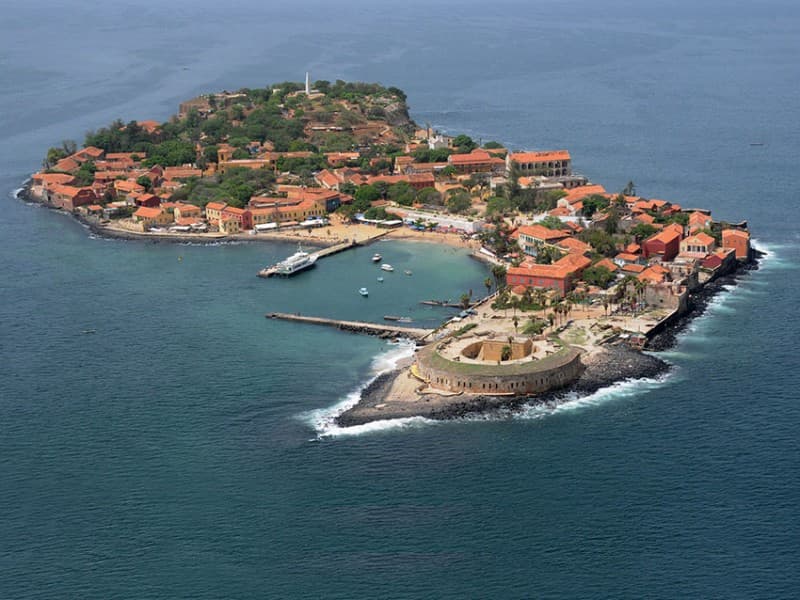
Goree Island
Senegal's haunting memorial to the Atlantic slave trade
Three kilometers off Dakar's coast sits an island that changed the world. Goree Island carries the weight of history in its coral stone buildings and narrow streets. This UNESCO World Heritage site served as one of West Africa's largest slave trading centers for over 300 years. Today, it stands as a memorial and museum, drawing visitors who come to understand a painful chapter of human history.
The island spans just 28 hectares, but every corner tells a story. Colonial mansions with their distinctive red-tiled roofs house museums and art galleries. Baobab trees shade sandy paths where vendors sell colorful textiles. And at the island's heart sits the House of Slaves, its Door of No Return facing the Atlantic where millions began forced journeys to the Americas.
But Goree isn't frozen in the past. Local artists paint in courtyards where slave merchants once lived. Children play soccer on beaches that witnessed unspeakable tragedy. The island pulses with life while honoring memory.
Best Months
JAN · FEB · MAR · APR · MAY · NOV · DEC
~29°C · high crowds
Culture & Context
MEMORY CARVED IN STONE
Gorée Island is one of those places that lands differently on everyone who visits. It sits 3.5 km off the coast of Dakar, small enough to walk end-to-end in 20 minutes, but it carries centuries of weight.
From the 15th to 19th century, it was the largest slave-trading center on the African coast, passing through Portuguese, Dutch, English, and French control before Senegalese independence. The architecture still tells that story: grim slave quarters right next to the elegant houses of the traders who profited from them. UNESCO recognized the whole island in 1978.
Today it functions as a living memorial and a genuine community. Around 1,000 people actually live here, kids play football in the square, artists work in backyard studios, fishermen mend nets. The weight of the past doesn't disappear, but life keeps going around it, which is part of what makes the place so striking.
Local Customs
GREETINGS DEMAND RESPECT
Greetings are serious business here. Don't rush them. Wolof culture treats the greeting ritual as a genuine acknowledgment of another person's presence — ask about their family, their work, their peace.
A quick nod and moving on reads as rude.. Eat with your right hand. It's a sign of respect.
Sharing food from a communal bowl is completely normal and an invitation worth accepting.. Say 'Asalaam aleekum' when entering a room, a shop, or joining a group — even on the ferry. It's expected and widely appreciated, not just performative..
Ask before photographing locals. Some residents near the slave house are tired of being treated as part of the exhibit. A genuine ask usually gets a genuine yes..
Dress modestly, especially around the mosque (said to be the first mosque built in solid construction in West Africa). Shoulders and knees covered is the safe bet.. Bargaining is expected at the market stalls and with unlicensed guides, but licensed guides (they wear official vests) have set price ranges.
Expect an opening ask of 20,000 CFA and negotiate down.. The Slave House is closed on Mondays. Don't show up on a Monday expecting to get in — you won't, unless you've arranged a private visit in advance.
Safety
VERY SAFE, USE SENSE
Gorée scores around 92 out of 100 on safety perception indexes and is generally considered very safe, including at night. But a few things are worth knowing. The main scam to watch for happens before you even get on the boat: unlicensed "guides" hang around Gare Maritime and offer to get you through without a passport for a fee (around 5,000 CFA has been reported).
Just bring your passport and you won't need them. Petty theft and pickpocketing are more of a concern around the busy port area in Dakar than on the island itself. Once you're on Gorée, the risk drops considerably.
Vendors and souvenir sellers can be persistent but not aggressive — a firm, polite decline and walking away is enough. The island is conservative, and LGBTQ+ visitors should be aware that Senegal has strict laws regarding homosexuality. Public discretion is strongly advised.
Solo female travelers should note that persistent attention from men is common in the broader Dakar area; Gorée itself is relatively calm. Avoid the late-evening quiet beaches at the end of the day if you're alone.
Getting Around
FERRY & FOOT ONLY
Ferry is the only way in. Boats depart from Dakar's port (Gare Maritime / Embarcadère) in the Plateau district, right across from the train station — an easy taxi ride from anywhere in central Dakar. Ferries run hourly from 7AM to 6PM.
Round-trip ticket costs around 1,000 CFA (roughly $1.50 USD). The crossing takes 20-30 minutes.
Sit on the right side of the boat if you want photos of Gorée as you approach. As of April 2026, only one ferry (the Coumba Castel) is often running, so expect it to fill up fast on weekends and holidays. Bring your passport — the gendarmes at the port entrance are strict and will turn you away without ID.
There are no cars on the island at all. Once you're there, everything is on foot. The entire island can be walked in under 20 minutes end-to-end.
Bikes exist but are unnecessary given the size. For guides, officially licensed ones wear vests and are generally multilingual. Negotiate the price before starting — a group of four should expect to pay around 15,000 CFA after negotiation (sellers often open at 20,000 CFA).
Useful Phrases
Money-Saving Tips
- 1.Ferry tickets cost 5,200 CFA francs round trip - bring exact change as credit cards aren't accepted
- 2.Most museums charge 1,000-2,000 CFA francs entry, but the House of Slaves is free
- 3.Meals on the island cost 2,500-4,000 CFA francs - bring snacks from Dakar to save money
- 4.Accommodation books up fast and costs more than mainland options - consider day trips from Dakar
- 5.Vendors accept CFA francs only - ATMs aren't available on the island
Travel Tips
- •Visit the House of Slaves early morning or late afternoon to avoid crowds and heat
- •Wear comfortable walking shoes - coral stone streets can be uneven and dusty
- •Bring sunscreen and water - shade is limited and the sun reflects off light-colored buildings
- •Check ferry schedules before planning your day - service can be disrupted by weather
- •Respect the solemn nature of historical sites - this isn't just a tourist attraction
- •Learn basic French phrases - English isn't widely spoken outside of major museums
- •Pack light for day trips - you'll be walking on uneven surfaces carrying everything
Frequently Asked Questions
Explore Goree Island
BUILD YOUR
GOREE ISLAND PLAN
Insider picks, smart timing, and a plan ready when you are.
Start Planning