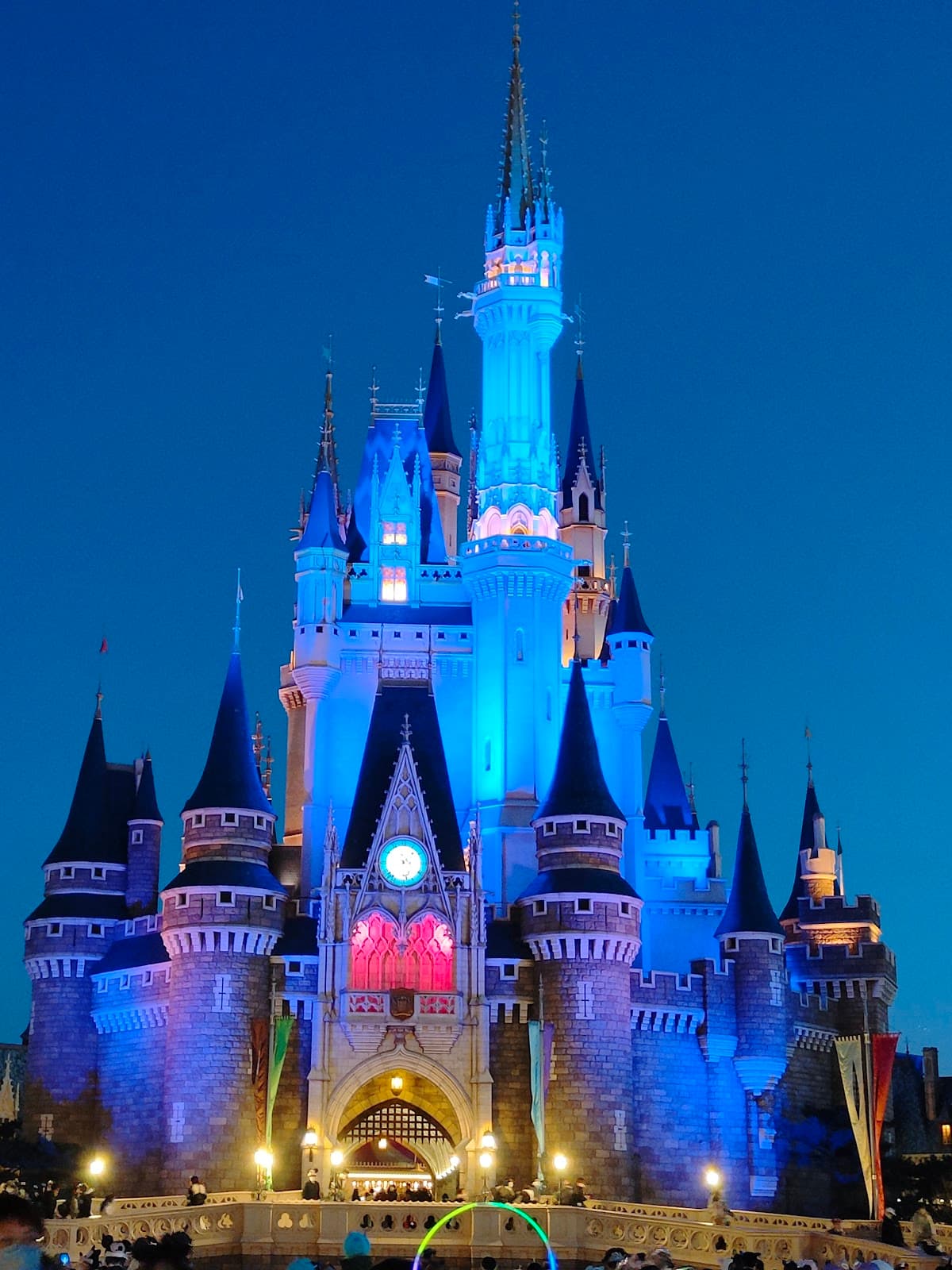
Tokyo Disneyland
Japan's magical kingdom where Disney dreams meet Japanese perfection
Tokyo Disneyland isn't just another Disney park. It's Disney filtered through Japanese perfectionism, and the result is something special. The staff bow when they greet you. The popcorn comes in flavors like curry and soy sauce butter. And good luck finding a single piece of trash on the ground.
This isn't the biggest Disney park, but it might be the most polished. Every detail feels considered, from the way cast members coordinate their movements to the seasonal decorations that change with surgical precision. The crowds can be intense, especially on weekends, but the efficiency of operations keeps things moving.
Here's what you need to know to make the most of your visit to Japan's most famous theme park.
Culture & Context
Tokyo Disneyland holds the distinction of being the first Disney theme park to open outside the United States, debuting in 1983.
Despite the name, the resort is actually located in Urayasu, Chiba Prefecture — not Tokyo proper. It is operated by Oriental Land Company under a licensing agreement with Disney, which gives it considerably more operational flexibility than US parks and is partly why ticket prices remain lower.
The park is widely regarded by Disney enthusiasts as the most meticulously run Disney park in the world — cast members here are legendary for their service standards and attention to detail. DisneySea, which opened in 2001, is the only Disney park of its kind anywhere on earth, themed entirely around exploration and the sea with eight distinct ports. The 2024 opening of Fantasy Springs (a ¥300 billion expansion featuring Frozen, Tangled, and Peter Pan) made the resort an even more significant pilgrimage for Disney fans globally.
In 2026, DisneySea's 25th anniversary is driving the biggest surge in international visitor interest in the resort's recent history. Japanese Disney culture is intensely passionate — adult fans dress up (especially during Halloween), collect limited-edition merchandise obsessively, and plan visits months in advance. The snack and food culture at TDR is also a serious draw in its own right, with seasonal and limited-edition themed foods generating as much excitement as new rides.
Local Customs
Queue culture is serious.
Japanese guests line up with extraordinary discipline — no cutting, no saving spots for friends who are not there yet. The parks operate on this unspoken contract and visitors are expected to respect it..
No tipping, anywhere. Attempting to tip staff at Tokyo Disney Resort or anywhere in Japan can cause genuine awkwardness. The service is exceptional and completely tip-free — that is simply the standard..
Costume rules during Halloween: Adult guests (18+) are only allowed to wear full costumes during the Disney Halloween event period (September–October). Outside of this window, character-accurate outfits are not permitted for adults.. You can bring your own food into the parks with a few restrictions.
No alcohol, no drinks in cans or glass bottles. The parks have designated picnic areas. This is a real money-saver — grab an onigiri from a 7-Eleven at Maihama Station before entering..
The Tokyo Disney Resort app is not optional. You need it to book Disney Premier Access (paid line-skipping), mobile order food at select restaurants, and enter restaurant reservation lotteries. Download it and add your ticket to the app before you arrive at the gates..
Arrive at least 60 minutes before opening. The first hour has dramatically shorter queues. For DisneySea specifically, Fantasy Springs lines can hit 90 minutes by 10 AM — being in the park at rope drop is the single biggest strategic advantage you have..
Eat lunch at 11 AM or after 2 PM to avoid the midday rush at restaurants. Same logic applies to dinner — going slightly early or late cuts wait times significantly.. Monday–Thursday are considerably less crowded than weekends and Japanese public holidays.
Golden Week (late April–early May) and Obon (mid-August) are the two peak windows to avoid if crowds bother you.
Safety
Tokyo Disneyland and the surrounding Maihama/Urayasu area are extremely safe.
Japan has one of the lowest crime rates in the world and the resort itself is meticulously managed. Pickpocketing is rare but not impossible in crowded areas — keep your bag zipped during parade viewing.
The parks handle large crowds with impressive efficiency, but summer (July–August) days can be brutally hot and humid, with heat indices well above 35°C. Bring a folding fan, a small towel, and stay hydrated — vending machines outside the gates are considerably cheaper than inside. The Summer Cool-Off event means you will get wet, so bring dry clothes or a change of shoes if that matters to you.
In the event of an earthquake (Japan is seismically active), Disney staff are trained in emergency procedures and the park has clearly marked assembly points. Emergency exits and shelters are well signposted throughout. Medical facilities are available inside both parks.
The parks may close or reduce hours due to typhoons, especially July through September — check the official app the morning of your visit during typhoon season.
Getting Around
The main gateway is JR Maihama Station, served by the JR Keiyo Line and JR Musashino Line.
From Tokyo Station it is a direct, no-transfer ride of about 15 minutes and costs just ¥220 each way. Tokyo Disneyland is then a 5-minute flat walk from the station.
DisneySea is a bit further — hop the Disney Resort Line monorail (runs every 6 minutes, 6 AM–midnight, cash only at ticket machines) and get off at Tokyo DisneySea Station. The monorail fare is ¥260 for adults, ¥130 for children. Experienced visitors often just walk between the two parks in about 10 minutes instead of taking the monorail, which saves a bit of cash.
From Narita Airport, the Airport Limousine Bus is the easiest option: roughly $20 USD, 60–90 minutes, and it drops you directly at the resort hotels. From Haneda Airport, the bus takes 30–60 minutes. Note that outbound buses from the resort hotels stop running around 5 PM, so plan your departure accordingly.
Taxis from Narita are possible but run around $150 one way — not recommended unless you are in a group and splitting costs. If you are staying at an official resort hotel, a free shuttle connects to JR Maihama Station and Bayside Station. Hotel guests also benefit from Happy Entry, which allows park entry 15 minutes before the general public — a genuinely valuable advantage for DisneySea given how fast Fantasy Springs queues build.
Long-distance overnight buses from cities like Osaka, Kyoto, and Nagoya also stop at Tokyo Disney Resort, making it accessible without flying into Tokyo.
Useful Phrases
Money-Saving Tips
- 1.Buy park tickets online in advance - they're the same price but guarantee entry during busy periods
- 2.Bring your own snacks and drinks - Tokyo Disneyland allows outside food, unlike most Disney parks
- 3.Skip the Disney hotels and stay in Shimbashi for 200-300 dollars less per night with quick train access
- 4.Download the Disney app for mobile food ordering to skip restaurant lines
- 5.Buy souvenirs at Ikspiari after the park closes - same merchandise, smaller crowds
- 6.Use the JR Pass if you have one - it covers the train to Maihama Station
- 7.Pack portable phone chargers - the Disney app drains batteries fast and replacement chargers cost 2000 yen in the park
Travel Tips
- •Download the Tokyo Disney Resort app before you arrive - it shows real-time wait times and lets you mobile order food
- •Arrive 30 minutes before opening for rope drop - the first hour has the shortest lines all day
- •Bring hand warmers in winter - you'll be standing outside for hours and Tokyo gets surprisingly cold
- •Learn basic Disney phrases in Japanese - cast members appreciate the effort and it enhances the cultural experience
- •Pack comfortable walking shoes - you'll cover 8-10 miles during a full park day
- •Bring a portable phone charger - the app is essential but drains batteries quickly
- •Use single rider lines when available - they can cut wait times in half for popular attractions
Frequently Asked Questions
BUILD YOUR
TOKYO DISNEYLAND PLAN
Insider picks, smart timing, and a plan ready when you are.
Start Planning