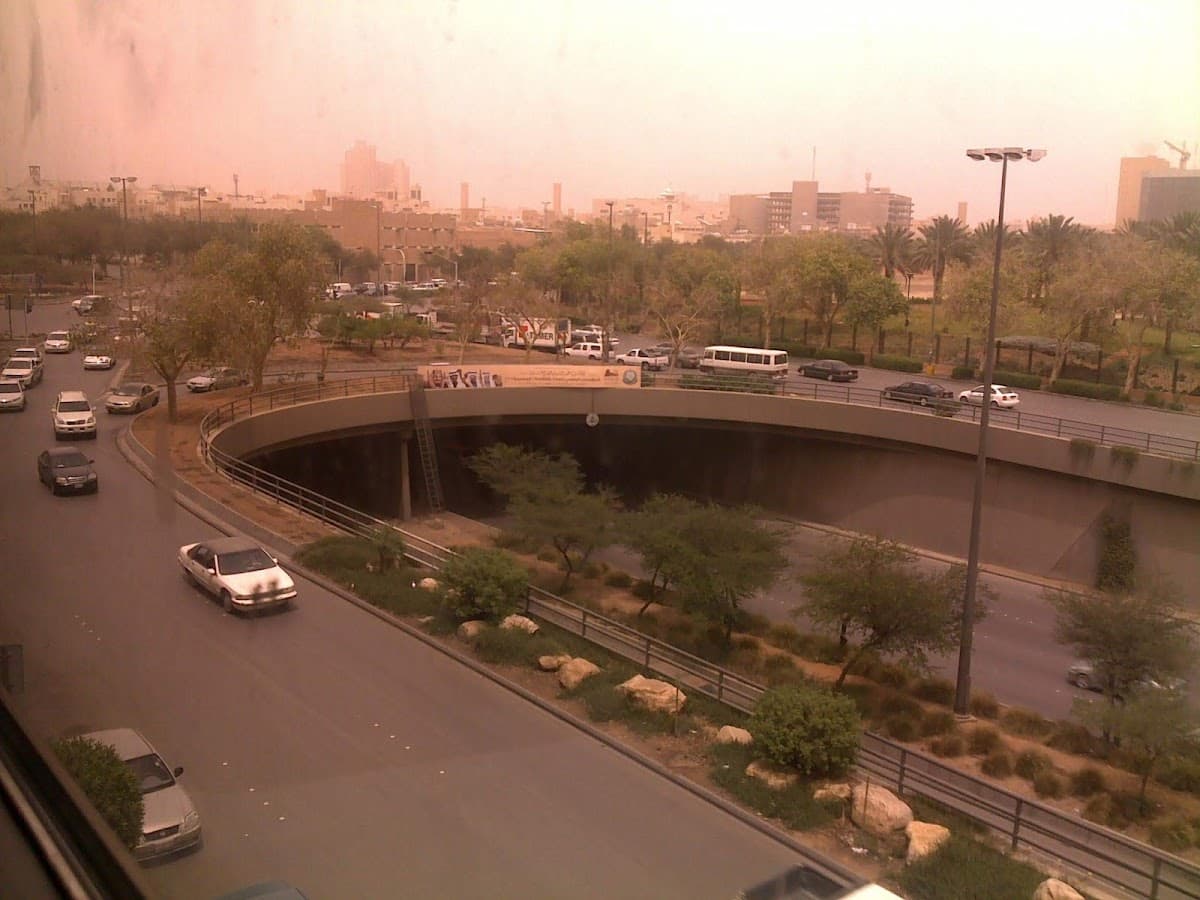
Al-Bathaa
Riyadh's traditional commercial heart with authentic Saudi culture
Al-Bathaa feels like stepping into old Riyadh before the glass towers took over. This sprawling commercial district buzzes with traditional souks, spice vendors calling out prices in Arabic, and the kind of authentic Saudi life that's harder to find in Riyadh's newer neighborhoods. Sure, it's not Instagram-pretty like King Abdullah Financial District. But if you want to see how locals actually shop, eat, and do business, Al-Bathaa delivers that experience in spades.
Culture & Context
Al-Bathaa (البطحاء, literally "the wide valley") is one of Riyadh's oldest and most character-filled commercial districts.
It started life in the 1940s as "Hillat al-Kuwaitiyyah" — a quarter set up by Kuwaiti merchants just outside the old walled city — and grew into the financial nerve center of downtown Riyadh. It sits along al-Bat'ha Street on the dried-up banks of Wadi al-Bathaa, wedged between al-Murabba and the historic Qasr al-Hukm District.
Today it's an umbrella term covering six sub-neighborhoods and is essentially where old Riyadh still breathes. Think narrow alleys jammed with fabrics, auto parts, South Asian spice vendors, and Pakistani restaurants — a sharp contrast to the gleaming towers of Olaya a few kilometers north. The area has a heavy expat population from the Indian subcontinent, Southeast Asia, and East Africa, which gives it a multicultural texture you won't find anywhere else in the city.
Local lore calls it "the Filipino Souq" by some, which tells you something about how diverse and lived-in this place actually is.
Local Customs
Haggling is expected and part of the culture in Al-Bathaa's souks.
Don't accept the first price — a confident counter-offer is welcomed, not offensive.. Alcohol is completely banned in Saudi Arabia.
There are no bars or off-licenses. This is not negotiable.. Shops close briefly during the five daily prayer times (roughly 5 times a day, 10–20 minutes each).
Plan around this — it's not a big deal once you're used to the rhythm.. Dress modestly in public. Cover shoulders and knees.
Tight or revealing clothing draws unwanted attention, especially in traditional areas like Al-Bathaa. Women don't need to wear an abaya anymore as a legal requirement, but modest, loose-fitting clothing is strongly advised.. Use your right hand for greetings, eating, and passing items.
The left hand is considered unclean in Islamic culture.. Ask permission before photographing people, particularly women. Do not photograph government buildings, security checkpoints, or military facilities..
Public displays of affection between unmarried couples are not culturally acceptable and can attract police attention.. During Ramadan, eating, drinking, or smoking in public during daylight hours is illegal and disrespectful — even for non-Muslims.. Many smaller vendors in Al-Bathaa prefer cash.
Carry enough Saudi Riyals, especially for the souks.. The area gets genuinely overwhelming for newcomers. The scale and crowds can disorient.
Navigate with Google Maps or ask locals — they're generally happy to help.
Safety
Riyadh scores around 83/100 on safety perception indices in 2026, making it one of the safer major cities in the Middle East.
Al-Bathaa specifically is low on violent crime but the commercial district's dense crowds make it one of the areas in Riyadh where pickpocketing and tourist-targeted scams are most likely to occur — rare by global standards, but worth noting. Watch your wallet in packed souk lanes and be skeptical of anyone offering unofficial tour guides or suspiciously cheap currency exchange.
Traffic is genuinely the biggest physical danger in Riyadh — driving habits are aggressive, pedestrian infrastructure is thin in many areas, and crossing roads requires real caution. The good news: Al-Bathaa's narrow market alleys are largely car-free, making the area itself quite walkable. Some older, outer-fringe streets in the district can feel chaotic and difficult to navigate at night — stick to the well-lit commercial core after dark.
For women travelers: solo female travel in Riyadh is considerably safer and easier than it was before 2019. Women can travel independently, rent cars, and walk freely. Dress modestly (cover shoulders and knees, loose clothing).
Carry a headscarf for mosque visits. Use Uber or Careem rather than street taxis for solo travel. Download the Tawakkalna app (health and location access) and Absher (visa and ID management) before arriving — both are useful day-to-day tools.
Getting Around
Al-Bathaa is one of the most walkable areas in all of Riyadh — the alleys are too narrow for cars in many parts, so you'll be on foot once you're in.
Getting there is straightforward. The National Museum Metro Station (Lines 1 and 5) sits right in the Al-Batha area and is architecturally striking — its double-skin facade is inspired by Saudi Arabia's mountain landscapes.
A single metro ticket costs SAR 4 (~$1.10 USD) for a 2-hour window. Download the Darb app to manage tickets digitally.
The metro opened in full phases between December 2024 and January 2025, with 85 stations across 176 km — it's the world's longest driverless metro system and a genuinely easy way to get around. Uber and Careem are both widely used and recommended over street taxis, which can overcharge tourists unfamiliar with routes. If you do take a street taxi, confirm the fare before getting in.
From King Khalid International Airport, the Yellow Line metro runs to KAFD where you can transfer, or a taxi runs about 40 minutes. Once in the area, most of the interesting market streets are pedestrian by necessity — wear comfortable shoes because you will walk a lot.
Useful Phrases
Money-Saving Tips
- 1.Bargaining is expected in Al-Bathaa's traditional souks — start at 60% of the asking price
- 2.Bring cash (Saudi Riyals) as many small vendors don't accept cards
- 3.Shop during weekday mornings for better prices when vendors are eager to make their first sales
- 4.Compare prices between shops on the same street — they often vary significantly for identical items
- 5.Traditional spices and dates cost 30-50% less here than in modern Riyadh malls
Travel Tips
- •Learn basic Arabic greetings — vendors appreciate the effort and often offer better service
- •Dress conservatively (long sleeves, long pants) to show respect and blend in with locals
- •Visit during cooler morning hours (8-11 AM) to avoid crowds and heat
- •Bring a reusable shopping bag as plastic bags aren't always available
- •Download Google Translate with Arabic to help communicate with vendors who don't speak English
- •Respect prayer times — most shops close for 15-20 minutes during each of the five daily prayers