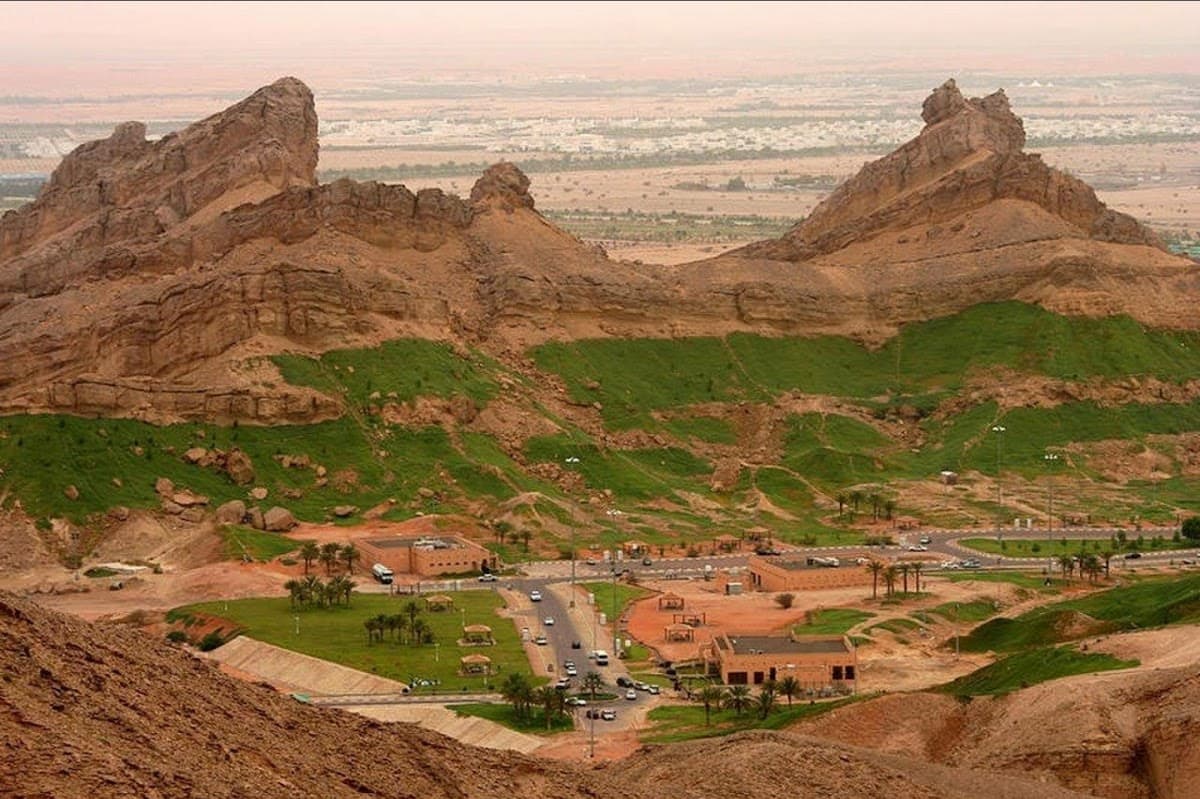
Al Ain
UAE's garden city of ancient oases and culture
Al Ain sits two hours inland from Dubai, where date palms have grown for 7,000 years and falaj irrigation channels still flow through ancient neighborhoods. The UAE's fourth-largest city feels worlds apart from the glittering coast — here, you'll find UNESCO World Heritage sites, traditional souks, and the country's only natural hot springs. Locals call it the Garden City, and after walking through the shaded pathways of Al Ain Oasis or climbing Jebel Hafeet at sunset, you'll understand why. This is where Emirati culture runs deepest, where families picnic under palm trees on Friday afternoons, and where you can actually hear the call to prayer echo across quiet streets.
Best Months
JAN · FEB · MAR · NOV · DEC
~28°C · high crowds
Culture & Context
TRADITION OVER TOURISM
Al Ain holds a genuinely different energy from Dubai or Abu Dhabi. It's the UAE's fourth-largest city, the largest inland city in the country, and it sits right on the Omani border. The city was the birthplace of the UAE's founding father, Sheikh Zayed bin Sultan Al Nahyan, and that legacy runs deep here.
People are prouder and more traditional than in the coastal cities. In 2026, Al Ain was named Capital of Arab Tourism, building on its 2025 title as Capital of Gulf Tourism. Visitor numbers to cultural sites rose 40% in the first half of 2025 alone.
It's not a party city. Alcohol exists but isn't the centerpiece of social life. The population is overwhelmingly expatriate (over 50% South Asian), with Emiratis making up a small but culturally dominant percentage.
Islam shapes the daily rhythm: prayer calls five times a day, Friday being the holy day, and Ramadan changing everything from restaurant hours to noise levels. Dress conservatively, especially near mosques and traditional markets. Covering shoulders and knees isn't legally required for tourists in most spaces, but it's genuinely appreciated and makes interactions warmer.
Local Customs
STRICT ISLAMIC LAW APPLIES
Greet with your right hand only — left-hand handshakes are considered rude.. Accept offers of Arabic coffee (qahwa) or dates when visiting a home or traditional business. Refusing repeatedly is impolite..
During Ramadan, eating, drinking, or smoking in public during daylight hours is illegal, not just frowned upon. This applies to non-Muslims too.. Public displays of affection are illegal, even between married couples.
This is enforced.. Friday is the primary holy day. Many businesses, especially local shops and government offices, open later or close entirely on Friday mornings..
Photography of people — especially local women — without explicit permission is a serious social violation and can lead to legal trouble.. Bargaining is normal at traditional souks but not in malls or fixed-price shops. Read the room..
Dress modestly near mosques and heritage sites. Shorts and sleeveless tops work in malls and tourist areas, but attract negative attention in traditional neighborhoods.. The city observes five daily prayer calls.
Some shops briefly close. Factor this into timing for errands.. Pointing the sole of your foot toward someone is considered rude — sit accordingly in social settings.
Safety
NEARLY PERFECT SAFETY
Al Ain scores around 97 out of 100 for perceived safety in 2026, ranking among the safest cities in the world. Theft is negligible. Scams are rare.
Night-time feels completely safe. That said, a few things to know: UAE law is strict and applies fully to tourists — public intoxication, drugs, and any public indecency (including photos of strangers without consent) carry serious legal consequences. Overstaying your visa costs AED 50 per day with no grace period.
The summer heat (May–September) is genuinely dangerous — temperatures exceed 45°C and outdoor activity becomes physically risky. Carry water obsessively if you're outside during summer. The Al Ain border with Oman (Al Buraimi) is open but requires your passport; don't wander across without it.
Getting Around
BUSES & TAXIS ONLY
Al Ain doesn't have a metro. Your main options are buses, taxis, and rental cars. For getting around the city, the public bus network is air-conditioned and uses Hafilat cards (available at all Lulu Hypermarket branches).
A weekly pass costs AED 30, monthly AED 80. Route 900 connects the bus station to Al Ain Mall, Al Jimi Mall, and Al Ain Zoo. Route 960 links Al Mutarad to Al Towayya and passes Al Ain Oasis.
Buses can get crowded during peak hours (6am–9am and 4pm–8pm). For intercity travel, the main bus station is on Zayed Bin Sultan Street, open roughly 5am–11pm. Route E201 to Dubai runs from 6am (weekdays) until 12:50am.
Route X90 to Abu Dhabi starts at 5:30am and runs until 11pm. Fares range AED 25–40 for intercity routes. Taxis are plentiful, notably cheaper than in Dubai, and available curbside or through Careem.
Jebel Hafeet has no direct public bus — take a taxi from the city (around AED 30-50 one way). Al Ain International Airport is about 20km from the city center, roughly a AED 35-50 taxi ride.
Useful Phrases
Money-Saving Tips
- 1.Entry to Al Ain Oasis and most heritage sites costs just 3 AED - cheaper than a coffee
- 2.Fill up your car in Al Ain before crossing to Oman - fuel is significantly cheaper on the UAE side
- 3.Buy dates and honey directly from farms around the oases rather than tourist shops - better quality, lower prices
- 4.Many hotels offer free shuttle service to major attractions - ask when booking
- 5.Green Mubazzarah hot springs charges 5 AED entry but you can spend the whole day there with picnic facilities
- 6.Al Ain Zoo offers annual passes for 200 AED if you're staying more than a few days
- 7.Local buses cost 2 AED per journey but rental cars often work out cheaper for families visiting multiple sites
Travel Tips
- •Download offline maps before exploring the oases - cell service can be spotty in some areas
- •Bring a flashlight for exploring the underground falaj irrigation channels
- •Visit Al Ain Oasis early morning or late afternoon to avoid crowds and harsh sunlight
- •Dress modestly when visiting heritage sites and museums - shoulders and knees covered
- •The drive up Jebel Hafeet can make some people carsick - take breaks at the scenic viewpoints
- •Friday afternoons see heavy local family crowds at popular spots like Green Mubazzarah
- •Keep your passport handy if you plan to cross into Al Buraimi, Oman
- •Most attractions close during midday prayer times - plan your schedule accordingly
- •Bring cash for small vendors and parking meters - not all accept cards
- •Learn a few Arabic greetings - locals appreciate the effort and are more helpful