DISTRICT GUIDE
Angkor Wat
Cambodia's crown jewel of ancient Khmer civilization
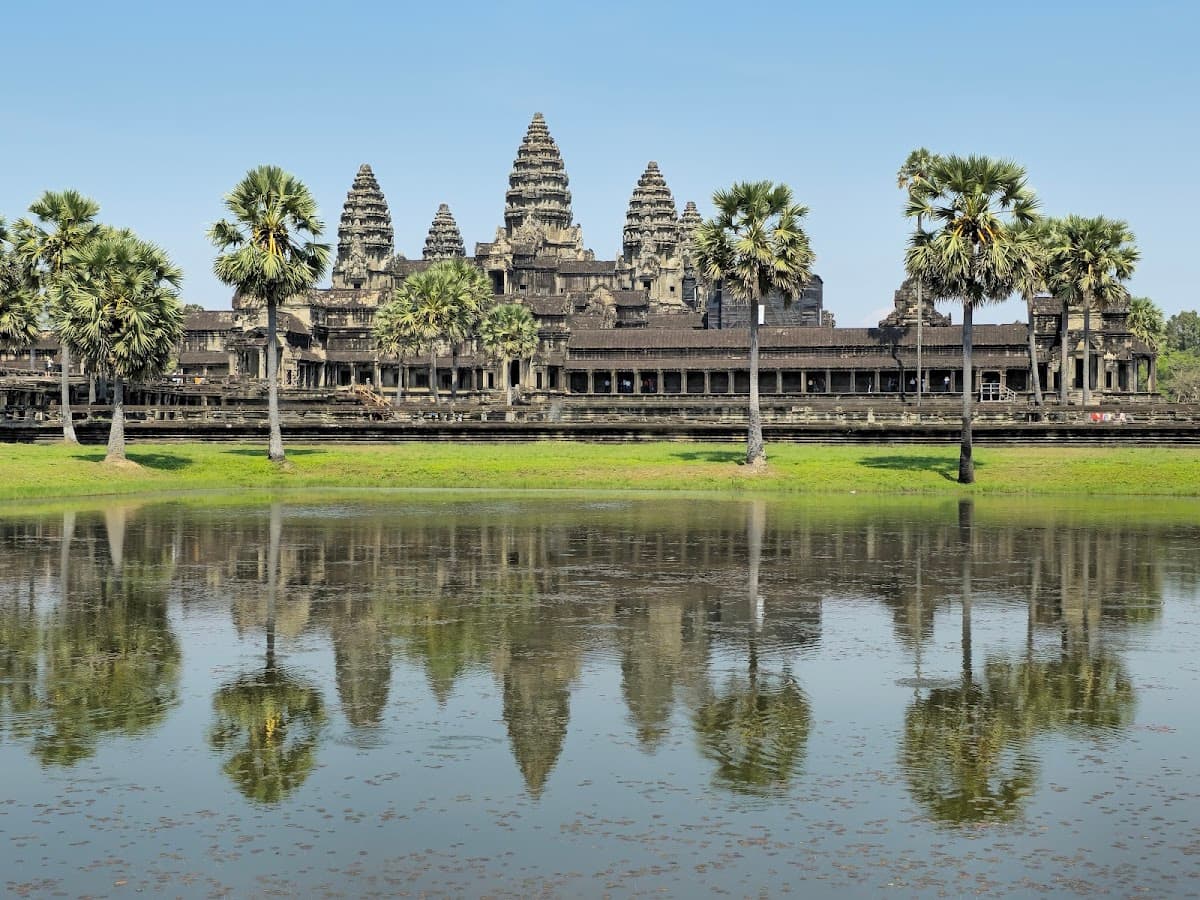
You've seen it on postcards, but nothing prepares you for the real thing. Angkor Wat rises from the Cambodian jungle like a stone prayer frozen in time. Built in the early 12th century, this temple complex spans over 400 acres and represents the peak of Khmer architecture. But here's what the photos don't tell you: the crowds arrive at sunrise, the heat hits hard by 10am, and the best views often come from the lesser-known temples nearby. Look, this isn't just another temple visit. You're walking through the world's largest religious monument, where every carved stone tells a story of gods, kings, and an empire that once ruled Southeast Asia.
King Suryavarman VII built Angkor Wat between 1113 and 1150 CE as a Hindu temple dedicated to Vishnu. The name means 'Temple City' in Khmer. Here's the scale: the outer wall stretches 3.6 kilometers, the central tower reaches 65 meters high, and over 3,000 apsaras (celestial dancers) are carved into the walls. The temple originally faced west toward Vishnu, unusual for Khmer temples. By the late 13th century, it transformed into a Buddhist site. French explorer Henri Mouhot didn't 'discover' Angkor Wat in 1860 - local Khmer people never lost it. But his writings brought international attention to the complex. The Khmer Empire controlled much of Southeast Asia from this region for over 600 years. Angkor Wat represents the pinnacle of their architectural achievement, combining symbolic cosmology with engineering mastery.
Money-Saving Tips
- 1.Buy the 3-day Angkor Pass for $62 instead of three single-day passes at $37 each - you save $49
- 2.Negotiate tuk-tuk rates in advance - $15-20 per day is fair for temple tours
- 3.Eat at local restaurants in Siem Reap town rather than temple food stalls to save 50-70%
- 4.Book flights to Siem Reap 2-3 months ahead for better prices, especially during dry season
- 5.Stay in Siem Reap's Old Market area to walk to restaurants and avoid transport costs
- 6.Bring your own water and snacks - temple vendors charge tourist prices
- 7.Download offline maps to avoid buying expensive SIM cards for navigation
Travel Tips
- •Start your temple visits at 5am to beat crowds and heat - bring a flashlight for dark areas
- •Wear long pants and covered shoulders or you'll be denied entry to upper temple levels
- •Bring comfortable walking shoes with good grip - temple stairs are steep and worn smooth
- •Download the Angkor Wat audio guide app before arriving - WiFi at temples is unreliable
- •Plan rest breaks in shaded areas - temple courtyards offer little shade during midday
- •Respect local customs and don't climb on fragile ruins for photos
- •Book accommodations near Old Market area for easy access to restaurants and services
- •Learn basic Khmer greetings - locals appreciate the effort and it enhances interactions
Frequently Asked Questions
Three days gives you enough time to see the main temples without rushing. Day one covers Angkor Wat and Angkor Thom, day two hits Ta Prohm and the small circuit temples, and day three explores Banteay Srei and other outer temples. You can see the highlights in one day, but you'll be exhausted.