
Bordeaux Region
World-class wines amid elegant French countryside
The Bordeaux region doesn't just make wine — it perfects it. Here in southwestern France, rolling vineyards stretch between limestone villages and Renaissance châteaux, creating a landscape that's equal parts agricultural powerhouse and aristocratic playground. You'll find some of the world's most expensive bottles aging in cellars that have been family-owned for centuries.
But this isn't just about the wine. The Dordogne River curves through medieval towns where Saturday markets overflow with foie gras and fresh oysters from nearby Arcachon Bay. Michelin-starred restaurants share cobblestone streets with century-old wine bars where locals still argue about the 1982 vintage.
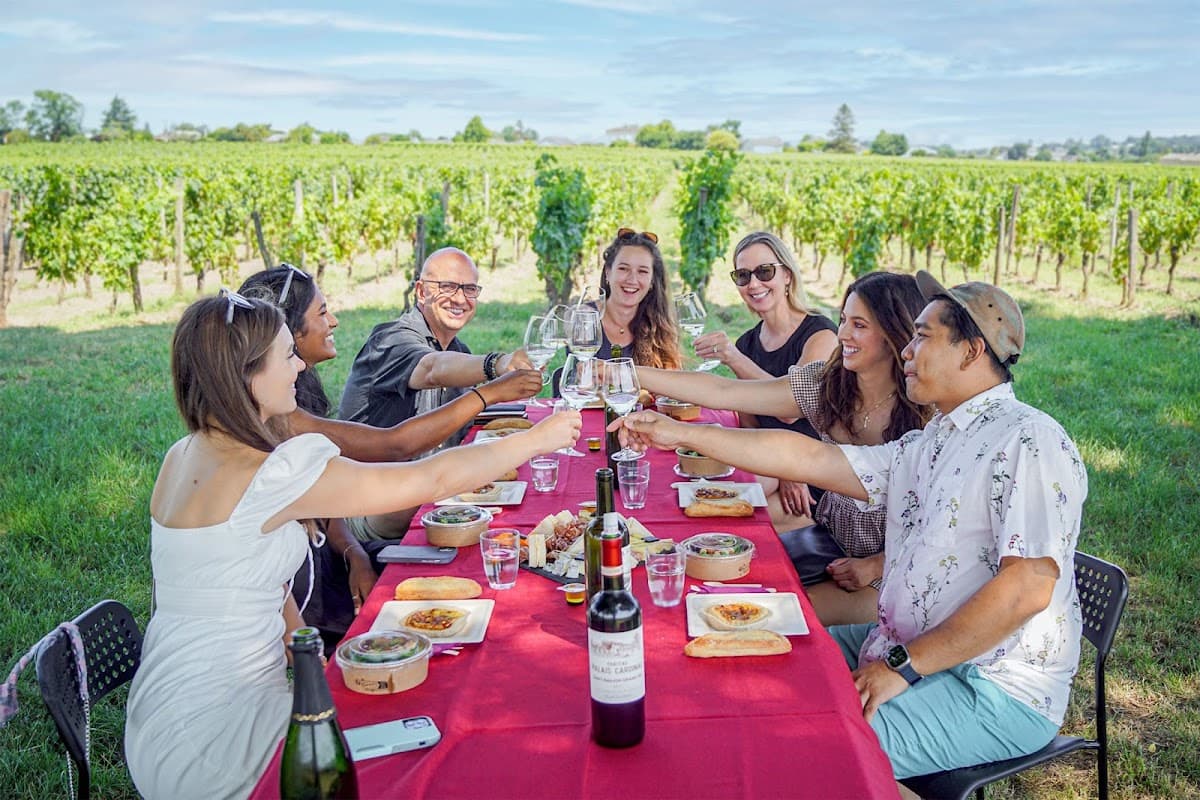
Look, Bordeaux region moves at its own pace. Lunch stretches into afternoon tastings. Châteaux tours end with impromptu picnics in manicured gardens. And somehow, even the most tourist-heavy wine routes feel authentically French — probably because they've been doing this exact thing for 800 years.
Culture & Context
WINE & NEOCLASSICAL GRANDEUR
Bordeaux sits at the intersection of two things France does better than almost anywhere on earth: architecture and wine. The entire city center is a UNESCO World Heritage Site — 18th-century neoclassical limestone facades line the Garonne's crescent curve, earning it the nickname "Port de la Lune" (Port of the Moon). The Romans planted vines here in the 1st century AD. Eleanor of Aquitaine was married in Bordeaux Cathedral in 1137. The 1855 Classification of Bordeaux wines, commissioned by Napoleon III, still shapes the global wine market 170 years later.
But the Bordeaux of 2026 is not a museum piece. The TGV connection to Paris (2 hours) has injected serious energy and population growth into what was once nicknamed "La Belle Endormie" — the Sleeping Beauty. Young professionals, creatives, and international residents have moved in, and neighborhoods like Chartrons, Bacalan, and La Bastide have been completely transformed over the past 15 years.
The culture here is southwestern French — warmer and more relaxed than Paris, with a rugby-playing, wine-drinking, market-going sensibility. The UBB rugby club draws serious local loyalty. The canelé (small rum-soaked cake with caramelised shell) is almost a civic identity — you'll see bakeries and specialist shops throughout the city. The Marché des Capucins, known as the city's belly, is where locals actually shop for food.
Wine is not just an industry here — it's the lens through which the city understands itself. The 2026 Fête le Vin marks an even-numbered year (held biennially), and with the Tour de France rolling in on July 10 and La Cité du Vin celebrating its 10th anniversary, 2026 is an especially strong year to visit. Over 7,000 wine-producing estates surround the city, and many are accessible by public transport.
Local Customs
WINE TALK REQUIRED HERE
Always say 'Bonjour' when entering any shop, café, or restaurant — and 'Au revoir' when leaving. This is non-optional social etiquette and skipping it will get you off on the wrong foot immediately.. La bise (cheek kisses — usually two, starting on the left) is standard greeting between friends and acquaintances.
A handshake is appropriate for strangers in formal contexts. Don't initiate la bise with someone you've just met in a business setting.. Meals are slow and social affairs.
A French server will not rush you or drop the bill uninvited. This is a feature, not a bug. Ask for 'l'addition' when you're ready.
Servers are professionals, not performing for tips.. Service is included in the bill (service compris). Tipping is not expected but a small gesture — rounding up or leaving a couple of euros — is appreciated for genuinely good service..
Thursday nights are when locals go out in Bordeaux. Wine bars fill up with after-work crowds on Rue du Loup, Rue Saint-Rémi, and Chartrons. If you want to drink where Bordelais drink, Thursday is your night..
At most wine bars in Bordeaux, you must order a food item (typically a charcuterie or cheese board) to also order a drink. This is a licensing rule, not a money grab — and the boards are usually generous enough for two people.. Wine is central to social life here in a way that goes beyond tourism.
Locals talk about wine like other people talk about sport. Showing genuine curiosity about what's in your glass goes a long way in conversation.. The canelé is Bordeaux's signature pastry — small rum-soaked cakes with a crispy caramelised shell and soft custard centre.
Eating one fresh from a local bakery is basically required. Pair with coffee, not wine (despite temptation).. Call it a 'chocolatine'.
Asking for a pain au chocolat in a Bordeaux boulangerie is a social experiment. You'll get what you ordered, but you'll also get The Look.. Rugby matters here.
The UBB (Union Bordeaux Bègles) is the local team and matches are a social occasion. If there's a game on, expect packed bars and more noise than usual — especially if they're winning.. Bordeaux has the largest pedestrian zone in France.
The city is built for walking, and locals take their time doing it. Rushing through crowds or cutting across café terraces is the fastest way to mark yourself as an outsider.. When entering a winery or wine tasting, wait for the sommelier or host to pour before you drink.
Eye contact during a toast ('santé!') is important — avoiding it is considered bad luck and mildly rude.
Safety
WATCH YOUR POCKETS
Bordeaux is generally a safe city and a comfortable destination for all types of travelers, including solo women. Violent crime is rare, and the inner city areas within the UNESCO perimeter are safe at most hours.
BIGGEST REAL RISK: Pickpockets. The main hotspots are Rue Sainte-Catherine (Europe's longest pedestrian shopping street and very crowded), the tram network, Marché des Capucins, and Place de la Victoire. Keep valuables in a front pocket or inner bag and stay aware of your surroundings on public transport.
AREAS TO BE CAREFUL AT NIGHT: The Gare Saint-Jean (main train station) area gets sketchy after dark — drug dealing and associated activity is concentrated there. Don't linger if you arrive by train in the evening. The Quartier des Aubiers has a reputation for higher crime and has no reason to draw tourists. After midnight, locals also recommend being alert around Les Quinconces, Quartier Saint-Michel, and Capucins if you're on your own.
SCAMS TO KNOW: Fake petition approach — someone with a clipboard asks you to sign, often as a distraction for pickpocketing. Just walk away. Unlicensed unofficial guides or taxis without meters — use the TBM network or recognized taxi apps.
For solo female travelers: The consensus from recent 2026 reports is that Bordeaux is fine, and the city center (especially within the UNESCO perimeter) is comfortable. Stay in central accommodation if you're going out at night so you're not traveling far alone after midnight.
EMERGENCY: Dial 112 for all emergencies (police, fire, ambulance). Non-emergency police: +33 5 57 85 73 00. Tourist Information: 12 Cours du 30 Juillet.
Getting Around
TRAM & BIKE FRIENDLY
Bordeaux runs on TBM (Transports Bordeaux Métropole), one of the best urban transit systems in France. The tram network has 4-6 lines with 134+ stations across 77+ km — the most extensive network outside the Paris region. Lines A, B, C, and D cover virtually every neighborhood you'll want. Line B gets you to the Cité du Vin; Line A covers Mériadeck and the airport tram connection.
A single ticket costs around €1.80–1.90 and is valid for 1 hour of travel with unlimited transfers across tram, bus, and the river shuttle (BATO/Bat³). Always validate your ticket every time you board — inspectors do check.
The Bordeaux City Pass (24h, 48h, or 72h versions — starting at €37 for 24 hours) is your best move as a tourist: unlimited TBM transport plus free entry to most major attractions including Cité du Vin (before noon). Do the math before you buy — if you're hitting multiple museums, it saves money quickly.
Le Vélo is the city's bike share system: €30/year or €1 per ride for non-subscribers, with the first 30 minutes of every ride free. There are 170 stations and 2,000 bikes including 1,000 e-bikes. The city center is almost completely flat, so cycling is genuinely pleasant.
Paris is 2 hours away by TGV from Gare Saint-Jean — this has transformed Bordeaux's population and energy over the last decade. The airport (Bordeaux-Mérignac, BOD) is 12km west of the city; tram Line A connects to a bus shuttle for the airport run.
The BATO river shuttle crosses the Garonne between Bordeaux, Bègles, and Lormont — accessible on any standard TBM ticket. It's scenic and practical, especially if you're crossing to La Bastide. One downside: the tram network does not run 24/7. After midnight, services thin out significantly — plan accordingly or budget for a taxi home after late nights.
Useful Phrases
Explore Cities
Explore the Region
Bordeaux Region Itineraries

Money-Saving Tips
- 1.Visit châteaux during harvest season (September-October) for free demonstrations and samples included with regular tour prices
- 2.Buy wine directly from producers to avoid retail markups — most châteaux offer 10-15% discounts on case purchases
- 3.Book château tours in groups of 6+ for reduced per-person rates, often 20-30% cheaper than individual visits
- 4.Stay in Bourg or Blaye instead of Saint-Émilion for similar wine experiences at half the accommodation cost
- 5.Pack picnic lunches for vineyard visits — most châteaux allow outdoor eating and charge €25+ for basic café meals
- 6.Visit during shoulder seasons (April-May, October) for lower hotel rates and the same wine experiences
- 7.Use regional TER trains (€8.50 to Saint-Émilion) instead of taxis (€80+) when possible
- 8.Shop at Bordeaux city wine bars for by-the-glass tastings (€6-12) before committing to expensive château bottles
Travel Tips
- •Book château visits 2-3 weeks ahead, especially for prestigious names like Cheval Blanc and Pétrus
- •Bring a designated driver or book organized tours — French police strictly enforce drunk driving laws
- •Learn basic wine vocabulary in French — 'dégustation' (tasting), 'millésime' (vintage), 'terroir' (soil characteristics)
- •Pack layers for château cellars, which stay 12-14°C year-round even in summer
- •Download offline maps — GPS signals get spotty in vineyard areas between villages
- •Respect château dress codes — avoid shorts and flip-flops for premium winery visits
- •Bring cash for small producers and village markets — many don't accept cards
- •Schedule château visits for mornings when your palate is freshest for tastings
- •Ask about library wines and older vintages — many châteaux keep special bottles not listed on standard tours
Frequently Asked Questions
Explore Bordeaux Region
BUILD YOUR
BORDEAUX REGION PLAN
Insider picks, smart timing, and a plan ready when you are.
Start Planning