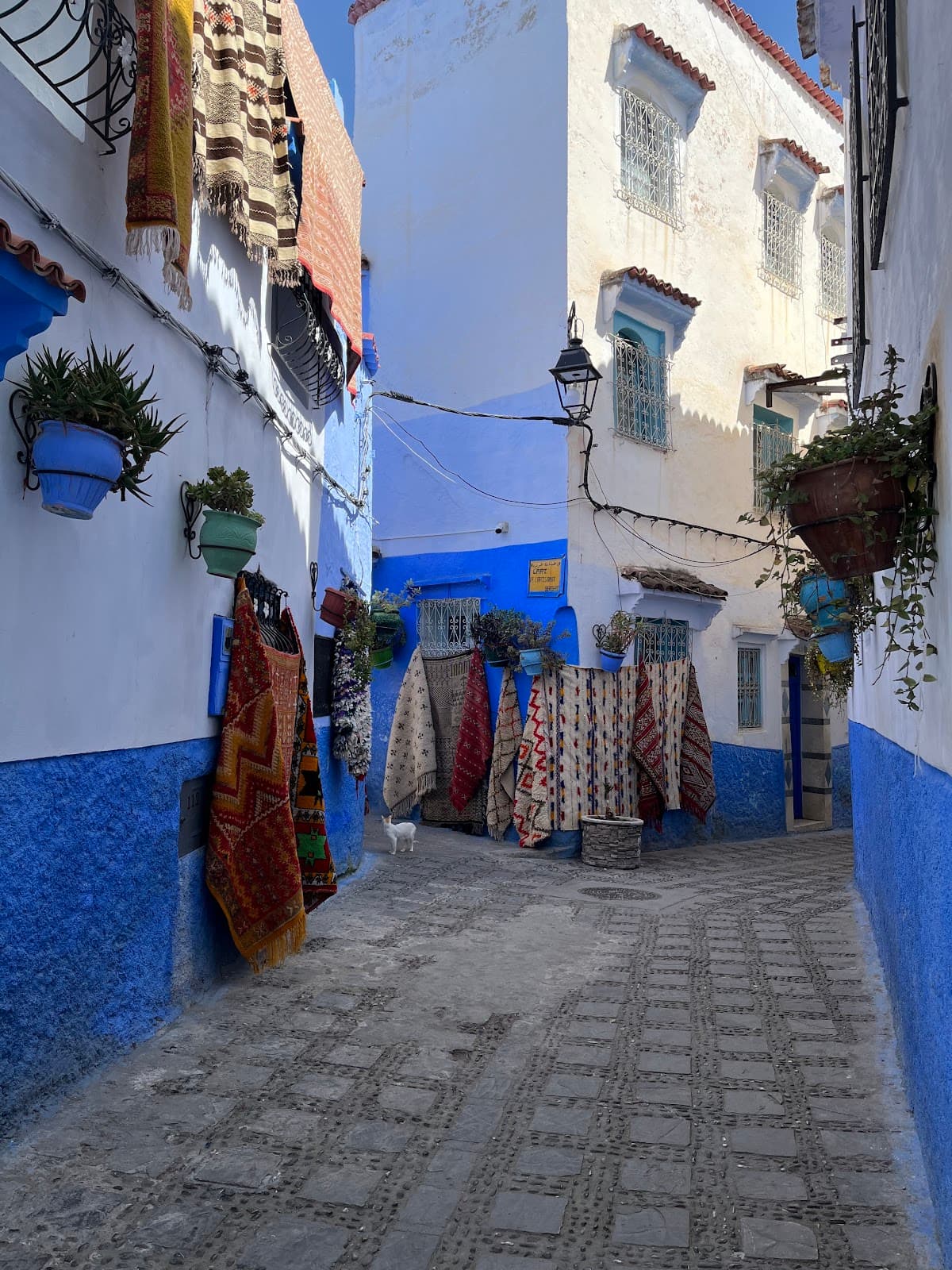
Chefchaouen
Morocco's blue pearl nestled in mountain serenity
Chefchaouen climbs up the Rif Mountains like blue paint spilled down a hillside. Every doorway, every alley, every staircase glows in shades of cobalt and cerulean that photographers dream about. But here's what the Instagram posts don't tell you: this isn't just a pretty face. The medina hums with Berber culture, artisan workshops, and mountain air so clean it makes your lungs happy. Sure, the blue walls are stunning. And yes, you'll take a thousand photos. But you'll stay for the mint tea conversations with locals, the handwoven blankets in tiny shops, and the way time seems to slow down in these ancient streets.
Best Months
MAR · APR · MAY · SEP · OCT · NOV
~24°C · moderate crowds
Culture & Context
BLUE-PAINTED CROSS-CULTURAL FORTRESS
Chefchaouen sits at about 600 meters in the Rif Mountains, founded in 1471 by Moulay Ali Ben Rachid as a fortress against Portuguese invasions. The blue walls have a layered origin: Sephardic Jewish refugees who arrived in the 1930s fleeing persecution painted buildings blue as a spiritual symbol. The tradition stuck.
Today the city reflects a genuine mix of Riffian Berber culture, Islamic practice, and Andalusian influence — you can see it in the arched doorways, the courtyard layout of the riads, and the way the medina's streets feel more like a Spanish pueblo than a North African souk. The city was even twinned with Vejer de la Frontera in Spain because of a love story between a Moroccan emir and a Spanish noblewoman. That cross-cultural DNA is real, not manufactured for tourists.
The local population descends from mountain tribes who place serious value on hospitality — "tamazight" (nobility of character) governs how people treat guests. This is also the Rif, Morocco's main cannabis-producing region. You will be offered kif (hashish) constantly.
A polite but firm "la shukran" handles it.
Local Customs
GREET FIRST, HAGGLE FRIENDLY
Always greet before you ask for anything. Walk into a shop, a cafe, any interaction — lead with 'Salam' first. Launching straight into a question is considered rude..
Bargaining is expected in the souks. It's a conversation, not a confrontation. Start around 40–50% of the asking price, be friendly about it, and walk away if the price doesn't suit.
Vendors often call you back.. Fixed prices exist in food markets and produce stalls — don't haggle for vegetables, bread, or spices. That's considered disrespectful..
Mint tea is a hospitality ritual. If someone offers you tea, accepting it is the gracious move even if you don't want caffeine. Refusing can feel like a snub..
Dress modestly. Chefchaouen is more relaxed than many Moroccan cities, but covering shoulders and knees in the medina shows respect and reduces unwanted attention.. Ask permission before photographing locals, especially older women.
Some residents are genuinely tired of being treated as props for social media.. During Ramadan, avoid eating, drinking, or smoking on the street during daylight hours. It's basic respect and easy to follow..
LGBTQ+ travelers: Morocco is generally welcoming but same-sex relationships are not legally recognized. Keep public displays of affection low-key regardless of relationship type.. When invited into a home, follow the host's lead on shoes.
Typically you remove them at the door, but hosts often insist you keep them on as courtesy.. The Rif is kif country. Cannabis is offered openly and frequently.
A simple 'la shukran' (no thank you) is all you need.
Safety
REMARKABLY SAFE MOUNTAIN TOWN
Chefchaouen is widely considered one of Morocco's safest cities for tourists — more relaxed than Marrakech or Fes, smaller scale, less aggressive tout culture. The main risk is opportunistic petty theft (pickpocketing in crowded medina areas), not violent crime. Use a money belt for your passport and main cash.
Keep your phone in a front pocket in tight alleyways. Solo female travelers consistently report positive experiences here, though dressing modestly reduces unwanted attention significantly. Night wandering in the medina is generally fine but stick to lit, trafficked streets and avoid dark dead-ends.
When using petit taxis (the small blue cars), agree on the fare before you get in — 15–20 MAD gets you from the bus station to Bab El Ain. For hiking around the Rif Mountains or the Akchour waterfall trail (a 45-minute grand taxi ride away), consider going with at least one other person. The trails are safe but remote.
Cannabis is everywhere in this region — it's grown openly in the Rif — and you will be approached. Politely declining is always sufficient. Buying and carrying kif as a tourist carries genuine legal risk regardless of how normalized it seems locally.
Getting Around
WALKABLE MEDINA, BUS ARRIVAL
No train reaches Chefchaouen. The CTM bus is the standard arrival method. From Fes: approximately 4 hours 15 minutes, 110–140 MAD ($11–14).
From Tangier: about 2.5 hours, with 5 CTM departures daily. Grand taxis (shared) from Tangier cost around 120 MAD per seat.
Once you arrive, the bus drops you in Ville Nouvelle. Grab a petit taxi (small blue car, 15–20 MAD) to Bab El Ain, the main medina gate. If you have heavy luggage, hire a porter at the gate with a blue cart — they'll haul everything to your riad for 20–30 MAD.
The medina itself is entirely walkable and car-free. You can cross it end to end in under 20 minutes. For day trips: grand taxis to Akchour waterfalls run 60 MAD for two people.
Cash is king throughout — ATMs exist in the city center but carry dirhams for anything inside the medina. Credit cards accepted at larger hotels but not at most restaurants or shops.
Useful Phrases
Money-Saving Tips
- 1.Haggle for everything except food and tea – starting prices are usually double what locals pay
- 2.Bring cash in dirhams – most places don't take cards and ATMs charge hefty fees
- 3.Share grand taxis to nearby towns instead of hiring private drivers to save 60% on transport
- 4.Buy handicrafts directly from workshops in the medina rather than tourist shops near the main square
- 5.Eat where you see locals eating – street food costs 10-15 dirhams vs 50+ at tourist restaurants
Travel Tips
- •Download offline maps before arriving – GPS signals get spotty in the narrow medina alleys
- •Pack layers even in summer – mountain temperatures drop 15°C between day and night
- •Learn basic Arabic or French phrases – English isn't widely spoken outside tourist areas
- •Respect photography rules – always ask before taking photos of people or inside shops
- •Bring a good camera or phone – the blue walls look different in various lighting throughout the day
- •Book accommodations in advance during peak season – the medina only has about 30 hotels total