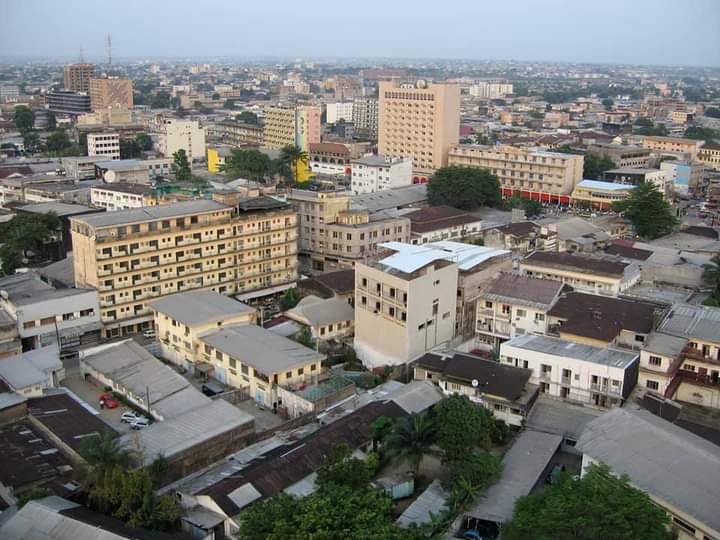
Douala
Cameroon's Economic Heart and Cultural Melting Pot
Most travelers skip Douala for Yaoundé or head straight to the beaches. Big mistake. This port city of 3 million people serves up West Africa's most surprising urban experience — part Lagos energy, part French colonial charm, with a food scene that'll ruin you for anywhere else. Sure, the traffic makes Bangkok look organized and the rainy season hits like a monsoon. But stick around past the first impression. You'll find live makossa music spilling from Akwa bars, ndolé that costs 2,000 CFA and tastes like your grandmother's secret recipe, and art galleries in converted colonial mansions. This isn't tourist Cameroon. This is real Cameroon.
Best Months
JAN · FEB · NOV · DEC
~30°C · moderate crowds
Culture & Context
COMMERCE OVER POSTCARD
Douala is Cameroon's economic engine, not its postcard city. This is where the money moves, the port hums 24 hours a day, and the streets are packed with people who have actual business to do. It sits on the Wouri River estuary, Atlantic-adjacent and permanently humid.
The city handles the bulk of Cameroon's exports: oil, cocoa, coffee, timber. That commercial DNA shapes everything. Locals are hustlers in the best sense.
Time is money here. Don't expect the slow, tourist-friendly pace you might find in smaller towns. French is the dominant language, though the Duala people have their own Bantu language with deep roots in the area.
English is spoken in some expat circles but rarely on the street. Cameroonian Pidgin English (called Kamtok) is actually a better bridge language if you have it. The city has been shaped by German and then French colonial rule, and that layered history shows up in the architecture.
Bonanjo's colonial-era buildings and the infamous La Pagode palace (built in 1905 for King Manga Ndumbe Bell by the German colonial administration) give you real texture if you look for it. Cameroon is often called "Africa in miniature" for good reason: over 250 ethnic groups, tropical coast, active volcanoes inland, rainforest, savanna. Douala is the gateway to all of it.
Local Customs
GREET FIRST, ALWAYS
Greet before asking for anything. Walking up to a market vendor or shopkeeper and launching straight into your request without a greeting first is considered rude. A quick 'Bonjour' or 'Mbote' goes a long way..
Bargaining is expected at markets like the Marché Central and Marché des Fleurs. The first price quoted is almost never the real price. Stay calm, be friendly about it, and don't take it personally when vendors push back hard..
French is the working language. Outside the expat bubble and a handful of businesses, English gets you nowhere. Download a French phrase app or brush up before you go.
Locals genuinely appreciate any attempt at French, however broken.. Dress modestly when visiting religious sites. The Cathedral of Saints Peter and Paul and local mosques are active places of worship.
Cover shoulders and knees.. The concept of time is flexible. Meetings, events, and transport often run late by Western standards.
Build buffer time into every plan. Getting frustrated about it publicly will not help.. Cash is king.
Credit cards are not widely accepted. ATMs are available in major areas of Douala and Yaoundé but can be unreliable. Carry XAF (Central African CFA franc) for most daily transactions..
Yellow fever vaccination is not optional. You'll need proof of vaccination to enter the country. Malaria prophylaxis is strongly recommended year-round..
Tap water is not safe to drink. Buy sealed bottled water. Budget about 500 XAF (under $1) per 500ml bottle.
Safety
STREET SMARTS ESSENTIAL
Douala requires genuine street smarts, not paranoia. The US, Canada, and Australia all issue Level 2 advisories for Cameroon overall: exercise increased caution. That's the honest baseline for the city.
Petty crime including pickpocketing and bag snatching is common in crowded areas like the Marché Central and busy transport hubs. Armed robbery exists, particularly at night in less-populated areas. Two neighborhoods to actively avoid are New Bell and Bepanda, which have significantly higher crime rates than the rest of the city.
After dark, taxis over walking. Always. Regarding transport: motorcycle taxis, locally called "okada" or "bend-skin," cover about 90% of the city and are how many locals get around daily.
But 88% of surveyed passengers in a 2025 study acknowledged they are the riskiest form of transport available. The Australian and Canadian governments both explicitly advise against using them. Over 56% of injured motorbike users admitted to hospitals in Douala were not wearing helmets.
If you do take one, the risk is yours to own. For regular taxis, negotiate the fare before getting in. A ride from Douala International Airport (DLA) to the city center should cost 5,000 to 10,000 XAF (roughly $8 to $16 USD).
Fake police stops demanding bribes do happen. Stay calm, present ID, and don't hand over money. Emergency numbers: police at 17, ambulance at 18.
Response times in Douala are better than rural areas but still inconsistent. Have your hotel's contact number saved as backup. The LGBTQ+ situation is serious: homosexuality is criminalized in Cameroon with penalties including fines and up to five years in prison.
Public displays of affection of any kind attract unwanted attention.
Getting Around
TAXIS & TRAINS
Douala International Airport (DLA) is the main gateway into Cameroon and one of the busiest in Central Africa. From the airport, negotiate a taxi fare before leaving the terminal. The ride to Akwa or Bonanjo should take 20 to 40 minutes depending on traffic, but Douala's traffic is genuinely bad.
Budget extra time at peak hours. Within the city, shared taxis (called "taxi commun" or "drop") are the workhorse of urban mobility. Agree on the price before you get in.
Hotel-arranged taxis are safer and worth the slight premium, especially at night. The train is actually a solid option for intercity travel: the Cameroon Railway Corporation (Camrail) runs services from Douala to Yaoundé and on to Ngaoundéré. Tracks and carriages are in varying condition, and the Australian government notes that safety standards don't match Western norms, but the train is generally considered safer than long-distance road travel at night.
For day trips to Limbe (about 40 miles west, with black-sand beaches and a wildlife sanctuary), minibuses run from the Bonaberi bus station area. Budget for the Wouri Bridge crossing if heading toward the anglophone west. Crossing that bridge during rush hour can add a full hour to any journey.
Useful Phrases
Money-Saving Tips
- 1.ATMs are scarce outside city center — withdraw cash in Akwa or Bonapriso districts
- 2.Negotiate taxi fares before getting in, especially from the airport where drivers quote tourist prices
- 3.Street food vendors don't have change for large bills — break 10,000 CFA notes at shops first
- 4.Hotel WiFi is often unreliable — buy local SIM card with data for 5,000-8,000 CFA
- 5.Restaurant prices jump 50% in expat areas like Bonapriso — eat local for authentic prices
- 6.Shared taxis cost 200-500 CFA vs 2,000+ CFA for private rides across the same distance
Travel Tips
- •Download offline maps before arriving — GPS signal gets spotty in dense neighborhoods
- •Pack waterproof bag for electronics during rainy season (June-October)
- •Learn basic French phrases — English works in hotels but not on the street
- •Carry toilet paper and hand sanitizer — public restrooms rarely have either
- •Keep copies of passport and visa separate from originals — police checks happen randomly
- •Malaria prophylaxis recommended year-round — bring insect repellent with DEET
- •Airport departure tax of 10,000 CFA must be paid in cash at check-in