Mostar
Where Ottoman heritage meets Balkan soul and resilience
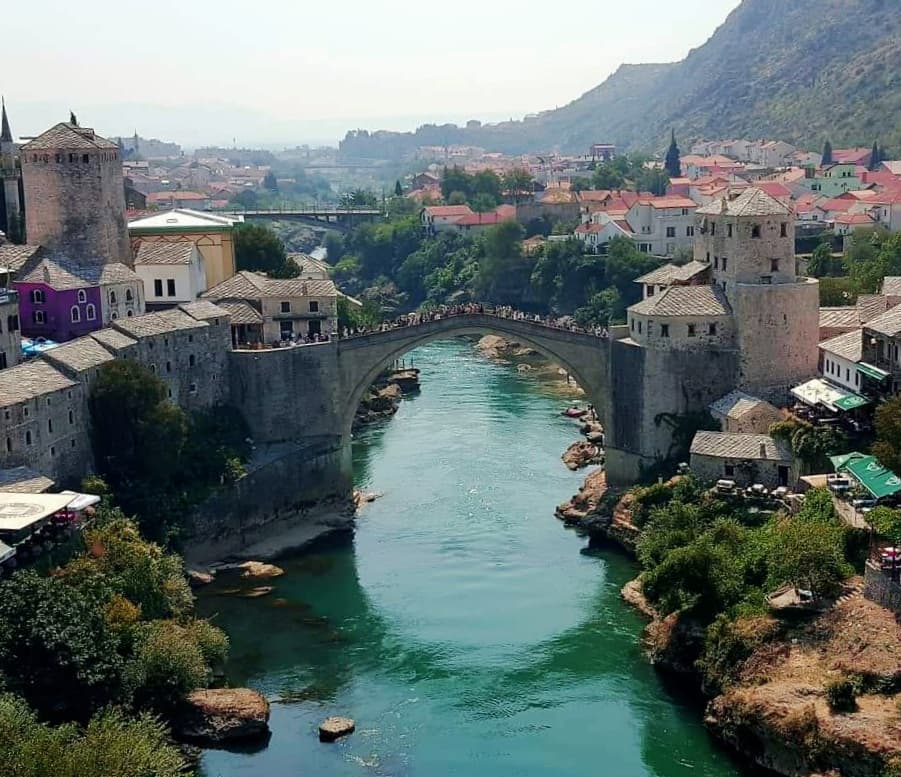
Mostar hits different. This isn't your typical European city break – it's where 500 years of Ottoman architecture collides with Balkan grit and a story of rebuilding that'll stick with you long after you leave. The famous Stari Most bridge draws the crowds, sure, but stick around and you'll find copper workshops echoing with hammers, riverside cafes serving the best ćevapi outside Sarajevo, and locals who've turned survival into an art form. The Neretva River cuts through limestone cliffs and centuries of history, while minarets and church bells create a soundtrack that's purely Mostar. Budget travelers love the cheap eats and affordable guesthouses. History buffs get lost in the Ottoman old town. And everyone leaves understanding why this city represents something bigger than just another pretty bridge.
Best Months
APR – OCT
~28°C · moderate crowds
Culture & Context
DIVIDED BY RIVERS, UNITED BY BRIDGES
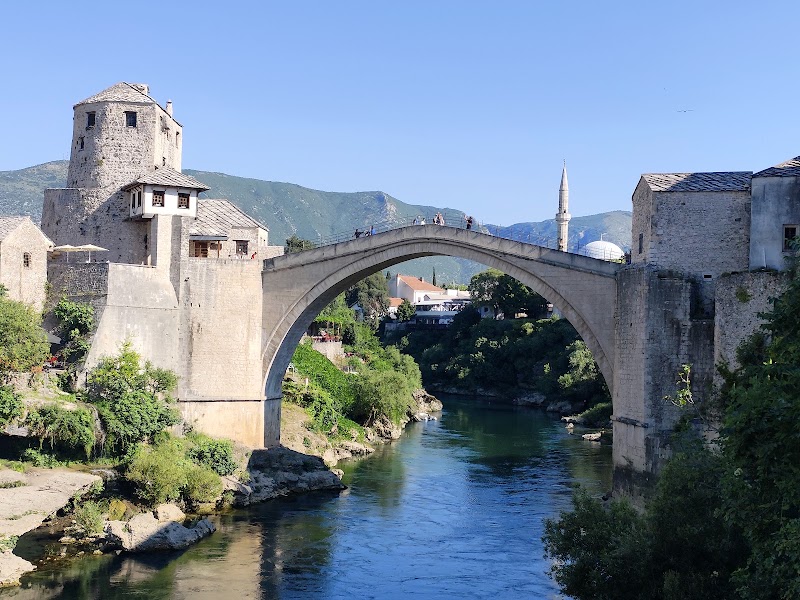
Mostar is Bosnia's most visually recognizable city, but the postcard shots don't show the full story. The Neretva River splits it along ethnic lines: the east bank is predominantly Bosniak and Muslim, the west predominantly Croat and Catholic. The Stari Most bridge — destroyed by Croat forces in November 1993 and rebuilt in 2004 — has become the country's most loaded symbol of post-war reconciliation.
It works as a symbol. But if you pay attention, you'll notice the city is still deeply divided in practice: separate schools, separate cafes, separate political loyalties. The name "Mostar" literally comes from "mostari," meaning bridge keepers.
Founded in 1452, it was organized under Ottoman rule into the čaršija (commercial quarter, today's bazaar) and the mahala (residential neighborhoods). That structure still shapes how the place feels. Mosques and Catholic bell towers compete on the skyline.
Street food is cheap, locals are genuinely warm, and the history is heavy in a way that rewards slowing down.
Local Customs
COFFEE RITUAL OVER SPEED
Greet strangers with Dobar dan and close friends with Zdravo. When meeting a group, start with the eldest person — that order actually matters here.. When entering a mosque, cover your shoulders and knees.
Women are offered headscarves at the entrance to Koski Mehmed Pasha Mosque. Photography inside is usually fine, but don't use flash and read the room.. Bosnian coffee is not Turkish coffee, and locals will correct you on this.
It's served with sugar on the side and a glass of water. Don't rush it — the ritual is part of the point.. Cash is still the dominant payment method.
Bring BAM for taxis, food stalls, markets, and smaller guesthouses. ATMs are easy to find in the Old Town but have local currency ready.. Bosnia is not in the EU, meaning EU roaming plans don't apply.
Get a local SIM from HT Eronet (the dominant carrier in Herzegovina) or sort an eSIM before you arrive. A week of data costs 15-30 BAM.. Tap water in Mostar is safe to drink and locals drink it daily.
You don't need to buy bottled water.. Avoid discussing ethnic politics unless you know someone well and the conversation goes there naturally. The city's divisions are real and the war is within living memory for many people..
Taxis from the bus station sometimes refuse to use meters and quote flat tourist rates. Agree on a price before you get in, or use a licensed ride app. The bus station taxis are the most complained-about scam in town..
The bridge-diving betting setup is a tourist trap. Handlers circulate collecting donations with the promise that once they have 25 EUR, the diver jumps. Real dives happen regularly in summer afternoons anyway — just watch from the riverbank for free.
Safety
LANDMINES: STAY ON PATH
Mostar is safe for tourists by any reasonable measure. The US State Department rates Bosnia at Level 2 (exercise increased caution), and the main specific concern is leftover landmines from the 1990s war — not urban violence. The landmine risk is real but geographically clear: it applies to rural hillsides, forests, and areas near old frontlines.
Tourist areas, the Old Town, and marked hiking paths are cleared and well-trafficked. Don't go scrambling through unmarked countryside or exploring abandoned structures outside town. In the city, petty theft and pickpocketing do happen, especially in the crowded Old Bridge area and during summer festivals.
Keep your phone in a front pocket, don't leave bags unattended on cafe chairs, and be aware in markets. The dive-betting scam on the bridge is a nuisance, not a danger. Taxis from the bus station can overcharge significantly — agree on a price before you get in.
Late nights in some cafes and nightclubs carry a low but non-zero risk of being nearby when local organized crime disputes spill over, but this rarely involves tourists. Emergency numbers: 122 (police), 124 (ambulance), 123 (fire). LGBTQ+ travelers should be aware that public expressions of same-sex affection may draw unwanted attention in a conservative city.
Getting Around
WALKABLE OLD TOWN
The Old Town is entirely walkable — leave the car outside and go on foot. The historic quarter is compact enough that you can cover most of it in a few hours on foot. For getting to Mostar: the train from Sarajevo costs around 11.
90 BAM (about €6) for a second-class ticket, takes roughly 2 hours, and runs twice daily. Sit on the left side heading toward Mostar for the best scenery as the route hugs mountainsides and the turquoise Neretva River through gorges. Flixbus also runs Sarajevo to Mostar from €7.
Within the city, local bus fare is 2 BAM (about $1.20). Taxis start at 3 BAM with a per-km rate of 1 BAM, but don't get in without agreeing on a price first, especially near the bus station where overcharging tourists is common.
For day trips to Blagaj (14km), Počitelj, or Kravice Waterfalls, most hostels and guesthouses can arrange transport, or you can rent a car. Driving in Bosnia requires patience: roads can be poorly maintained outside main routes, signage isn't always in Latin script everywhere, and local driving habits can be aggressive.
Useful Phrases
Mostar Itineraries
Things to Do in Mostar
Stari Most & Old Bridge Area
Old Town East · 90 min
Kujundžiluk Old Bazaar & Street Market
Old Town East · 60 min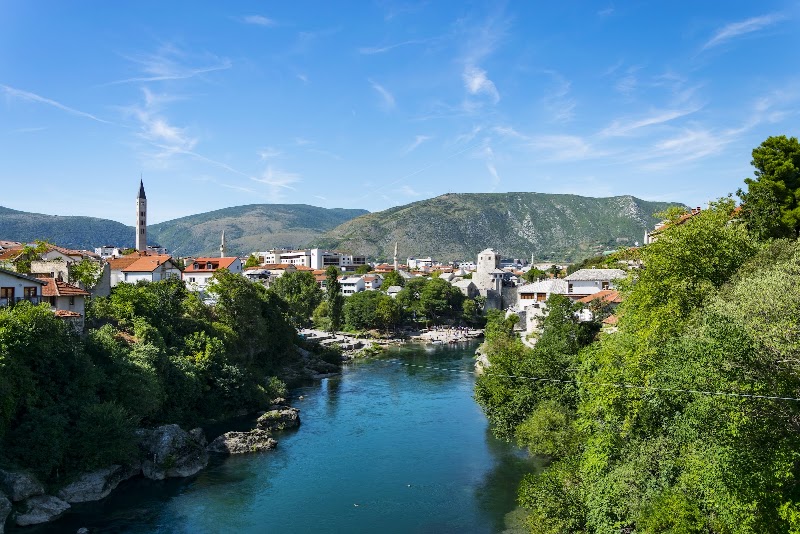
Zip Line Stari Most
Neretva Riverside (Lucki Bridge Park) · 60 minMoney-Saving Tips
- 1.Eat away from Stari Most bridge - prices drop 50% just two streets back from the main tourist area
- 2.Buy groceries at Konzum or Bingo supermarkets rather than corner shops near attractions
- 3.Many guesthouses offer free breakfast - take advantage and skip expensive hotel morning meals
- 4.Local buses cost 1.50 BAM vs 8-10 BAM taxi rides for short distances within the city
- 5.Bring cash - many smaller restaurants and shops don't accept cards, and ATM fees add up
- 6.Book accommodations directly with guesthouses to avoid booking platform commissions
- 7.Free walking tours run daily from the old bridge - tip what you can afford rather than paying for expensive private guides
Travel Tips
- •Learn basic Bosnian greetings - 'Zdravo' (hello) and 'Hvala' (thank you) open doors and hearts
- •Respect the mosque dress code - cover shoulders and legs, remove shoes, women should bring a headscarf
- •Don't photograph people without asking, especially older locals who lived through the war
- •The bridge stones get slippery when wet - wear shoes with good grip, not flip-flops
- •Exchange money at banks or official exchange offices - avoid street money changers
- •Tap water is safe to drink and tastes good - bring a refillable bottle to save money and plastic
- •Visit the War Photo Exhibition for context about the 1990s conflict - it helps understand the city's resilience
- •Tipping 10% is standard at restaurants, round up for coffee and small services