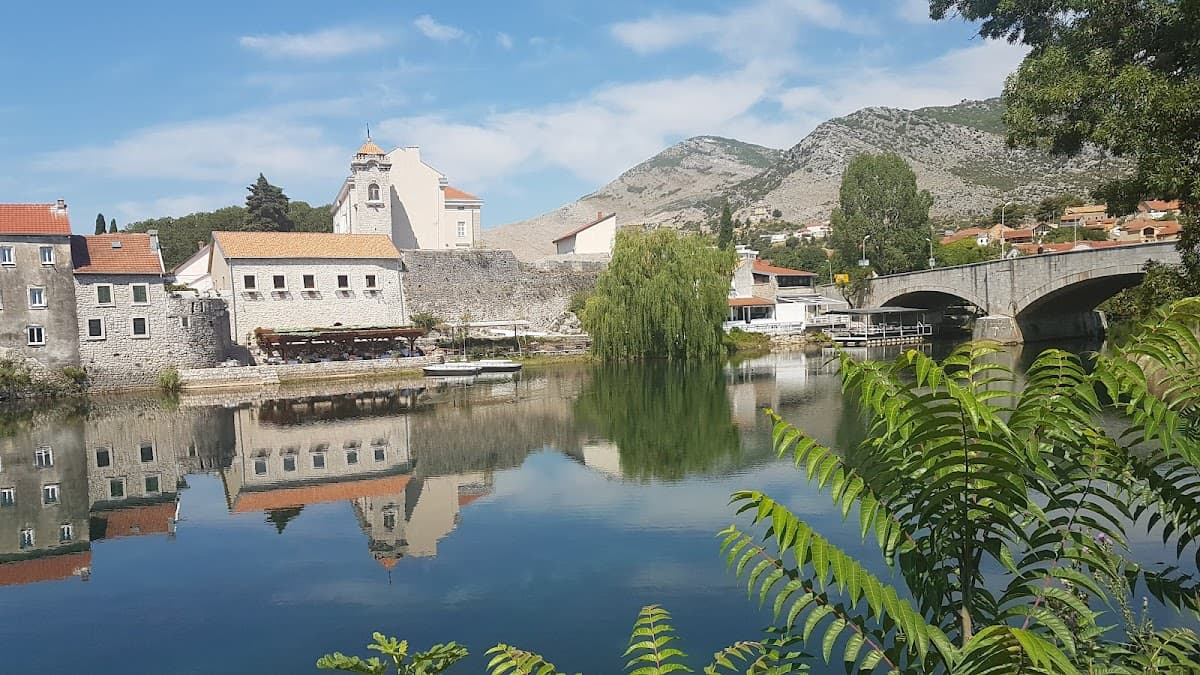
Trebinje
Hidden Balkan jewel with Ottoman heritage charm
Look, I'll be honest — most people can't even pronounce Trebinje correctly. And that's exactly why you need to go. This southern Bosnian city sits quietly along the Trebišnjica River, with Ottoman-era stone bridges and plane tree-lined streets that feel like they've been waiting centuries for you to discover them.
While Dubrovnik gets crushed by cruise ship crowds just 30 kilometers away, Trebinje serves up the same Mediterranean charm with actual locals still living their daily lives. The old town centers around Arslanagić Bridge, a 16th-century Ottoman masterpiece that reflects perfectly in the green river below. But here's the thing — you can actually enjoy it without fighting for a photo.
The city's compact size means everything is walkable, from the hilltop Hercegovačka Gračanica monastery with views over red-tiled roofs to the riverside cafes where coffee costs less than a euro. And yes, the wine here is surprisingly good — Herzegovina's been making wine since Roman times, they just forgot to tell the rest of the world.
Best Months
APR · MAY · JUN · SEP · OCT
~25°C · moderate crowds
Culture & Context
SERBIAN WINE MONASTERY
Trebinje is the southernmost city in Bosnia and Herzegovina, sitting in Republika Srpska — the Serbian-majority political entity within BiH's complex federal structure. That distinction isn't just administrative. The city's identity is strongly Serbian Orthodox, with Cyrillic signs sharing walls with Latin-alphabet ones, and a cultural pull toward Belgrade and Serbia rather than Sarajevo. The 1990s war left marks: ten mosques were destroyed, much of the Bosniak population left, and visible reconstruction has been ongoing for decades. It's not something locals bring up immediately with visitors, but it's the undercurrent beneath the surface warmth.
And the warmth is real. Trebinje only has around 30,000 people. Strangers talk to you. When a traveler's car broke down at closing time near one of the monasteries, three workers stayed an hour past closing, called their father for jump cables, and made sure the visitors got safely on their way. That story repeats in different forms constantly. The city is genuinely unhurried.
Wine is woven into identity here. The native Žilavka grape makes a smooth, full-bodied white. Vranac produces an intense ruby red. Monks at Tvrdoš have been doing this since at least the 15th century. Slow Food movement has been working with local producers for years to protect these varieties. The region now counts 22 wineries, most family-owned, most welcoming walk-ins. Wine isn't a luxury activity here. It's how people mark time together.
Local Customs
EVENING KORZO RITUAL
The evening korzo is real and important. Locals do a slow promenade loop around Trg Slobode and along the river after sundown. Join it.
Walk slow.. Coffee is not fast. Ordering a kafa means sitting down for at least 30–45 minutes.
It's a social activity, not a caffeine transaction. Don't rush it.. Dress modestly at monasteries and Orthodox churches.
Head coverings for women are expected at Tvrdoš and Gračanica. There's usually a basket of scarves near the entrance.. Greet with a handshake.
Close friends exchange cheek kisses. Younger people greeting elders sometimes kiss the hand — don't be alarmed.. Trebinje is in Republika Srpska, the Serbian-majority entity of BiH.
You'll see Cyrillic script alongside Latin, Serbian Orthodox churches everywhere, and strong cultural ties to Serbia. Be aware of this political context — it matters to locals.. Wine is a point of pride.
If someone offers you a glass of their homemade wine or rakija, accept it. Refusing without good reason reads as rude.. Public fountains around town have clean drinking water — locals use them constantly.
Bring a refillable bottle.. When entering the Herzegovina Museum, ring the bell or knock. It genuinely feels like visiting someone's home, because essentially you are..
Tipping is appreciated but not mandatory. Rounding up or leaving small change (5–10%) is standard in restaurants. At cafes, leaving a coin or two is enough.
Safety
SAFE, WATCH BORDERS
Trebinje is genuinely safe for travelers. Petty theft and pickpocketing exist but at low levels compared to most European cities. Violent crime is rare. That said, a few specific things are worth knowing.
Traffic police at the border entry from Montenegro have a documented reputation for stopping cars and requesting informal cash payments. Reports from travelers describe being told they were speeding with no camera or device in sight, then having the 'fine' negotiated down from €200 to €50 in seconds. If this happens, stay calm, ask for an official receipt, and be prepared to call the bluff — or pay the smaller amount and move on. It happens most at the Montenegro-Trebinje entry point.
Landmines are a real and ongoing concern in rural Bosnia generally. In Trebinje itself and on main paved routes, the risk is negligible. But if you're hiking into unmarked mountain terrain or going off-road, take the Bosnia and Herzegovina Mine Action Center maps seriously and stay on marked trails.
Bosnia is not in the EU, so EU health insurance cards (EHIC) do not apply here. Travel insurance with medical coverage is strongly recommended. Pharmacies in town are well-stocked for minor issues. The local emergency number is 122 (police) and 112 (general emergency).
Public water from fountains is clean and locals drink it daily. Bottled water is cheap if you prefer it.
Getting Around
WALKABLE, RENT CAR
Trebinje is small enough to walk almost everywhere in the center. Stari Grad, Trg Slobode, the river walk, and the main restaurants are all within 15 minutes on foot of each other. Free parking lines the Trebišnjica riverbank if you're driving in.
The city has no train service. Buses connect Trebinje to Sarajevo, Mostar, Dubrovnik, and the coast — but schedules are limited and the routes through the mountains involve known dead zones for mobile signal, so download offline maps before you go.
Taxis start at 2 KM (~€1) with per-kilometer rates around 1.60 KM. A ride across town runs 5–8 KM total. For the vineyards and monasteries outside the city center — Tvrdoš is 5 km out, Duži Monastery further — a rental car or taxi makes much more sense than waiting for infrequent local buses.
Dubrovnik is only 35 km away, about 40 minutes by car. Many travelers use Trebinje as a base to avoid Dubrovnik's prices and tourist density. The road between them crosses a Bosnia-Croatia border so bring your passport. Kotor in Montenegro is about 75 minutes away. Mostar is roughly 90 minutes north.
For mobile data: Trebinje is in Republika Srpska, where m:tel has the strongest 4G signal. In-city speeds run 30–80 Mbps on a good connection. Bosnia is outside the EU, so EU roaming bundles don't apply — buy a local m:tel SIM or an eSIM before you arrive. Expect data blackouts on the mountain roads to Sarajevo.
Useful Phrases
Money-Saving Tips
- 1.Skip the tourist restaurants near the bridge — locals eat at places like Studenac where mains cost €8-12 instead of €15-20
- 2.Buy wine directly from Vukoje or Tvrdoš wineries for €8 per bottle versus €15+ in restaurants
- 3.Stay in family guesthouses (€15-25) rather than hotels (€40+) — you'll get better local tips anyway
- 4.Free parking is available near the Cultural Center, saving €5-10 per day compared to hotel parking
- 5.Take the bus to Dubrovnik (€8) instead of organized tours (€35+) — it's the same 45-minute journey
- 6.Coffee and pastries at local cafes cost €3-4 total versus €8-10 at tourist spots
- 7.Many hiking trails and viewpoints around the city are completely free with better views than paid attractions
Travel Tips
- •Learn to pronounce it correctly: TREH-bee-nyeh — locals appreciate the effort
- •Download offline maps before arriving — cell coverage can be spotty in surrounding hills
- •Pack layers for shoulder seasons — mornings can be cool while afternoons get warm
- •Bring cash — many small restaurants and guesthouses don't accept cards
- •The evening stroll (šetnja) along the river is a local tradition — join in around 7 PM
- •Street signs use Cyrillic script — familiarize yourself with key words before arriving
- •Restaurants often close for afternoon breaks (2-5 PM) — plan lunch accordingly
- •Ask locals about swimming spots upstream from the city — they know the best hidden pools
- •Wine tastings at monasteries require modest dress — cover shoulders and knees
- •The hilltop monastery offers the best sunset views but closes at dusk — time your visit accordingly