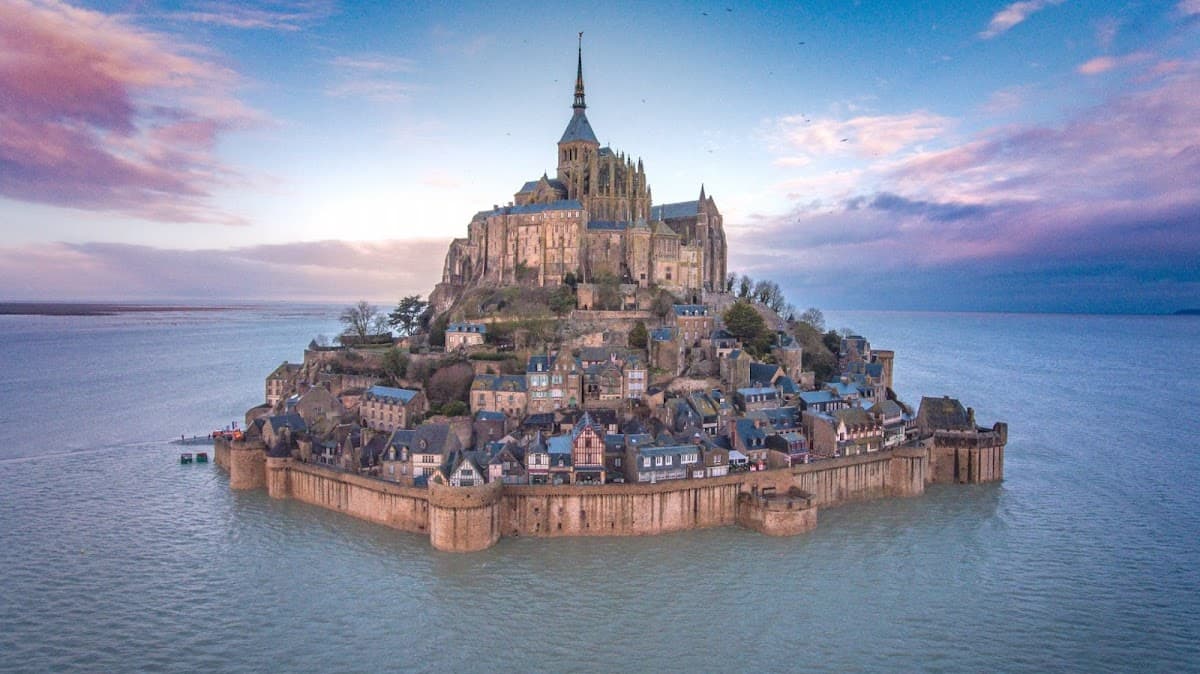
Mont Saint-Michel
Medieval abbey rising majestically from Norman tides
Mont Saint-Michel rises from the Norman coast like something from a fairy tale. But this isn't fantasy — it's a thousand-year-old abbey that's survived Viking raids, English sieges, and centuries of Atlantic storms. The medieval spire pierces the sky at 170 meters above sea level, visible for miles across the mudflats of Normandy. When the tides rush in twice daily, the rocky outcrop becomes a true island. When they recede, you can walk the ancient pilgrim paths across the sand. The abbey's Gothic architecture defies gravity, built stone by stone over eight centuries by Benedictine monks who somehow hauled granite blocks up this impossible rock. Today, about 30 residents still call Mont Saint-Michel home, living in medieval houses that cling to the granite slopes below the abbey walls.
Best Months
APR · MAY · JUN · SEP · OCT
~18°C · moderate crowds
Culture & Context
SACRED MEETS SPECTACLE
The island has 23 permanent residents and a working religious community of 12 monks and nuns who actually live and pray in the abbey. This isn't a museum recreation. Mass still happens.
Pilgrims still come. And yet, 3 million tourists a year also pour through, making it the most visited site in France outside Paris. That tension between sacred and spectacle is kind of the whole story of the place.
The abbey has been a prison, a fortress, a pilgrimage destination, and a UNESCO World Heritage Site since 1979. A €50+ million restoration project is currently underway, so some sections may have work zones. The pré-salé lamb (agneau de pré-salé) grazed on the salt meadows around the bay carries an AOP label, the European protected-origin designation.
It's the local ingredient worth ordering if you eat here, not the omelettes. The administrative border between Normandy and Brittany runs right through the bay just west of the rock. Brittany claims cultural kinship.
Normandy keeps the postcode. Locals mostly shrug about it.
Local Customs
BONJOUR FIRST, ALWAYS
Always say 'Bonjour' when entering any shop, café, or hotel. Not doing so reads as rude, full stop. This matters more here than almost anywhere else in France because staff deal with millions of visitors who skip it..
Use 'vous' with everyone you don't know. Switching to 'tu' only happens when the other person invites it. Don't jump the gun..
Attempt French first before defaulting to English. A simple 'Parlez-vous anglais?' before switching languages earns you noticeably better service..
Don't rush your meals. French dining runs slow by design. Waving at your server is considered abrupt — make brief eye contact instead..
Keep your voice down, especially in the abbey and on the ramparts. Loud groups stand out immediately.. Service charge is included in restaurant bills.
Small coins left on the table are a fine tip. American-style 20% gratuity is not expected.. Follow dress codes at the abbey: no shorts or sleeveless tops inside the religious sections.
Light layers solve this easily.. At high tide events and grande marée viewings, staking out your spot on the footbridge or dam at least 90 minutes early is standard practice among locals. Showing up at the official high tide time means you've already missed the water arriving.
Safety
TIDES MOVE LIKE HORSES
The tides are the main safety issue and they're genuinely serious. The incoming water moves at up to 6 km/h across the bay — the old local phrase compares it to a galloping horse. This is not a metaphor for drama; it's accurate physics.
People get cut off every year. The bay also has quicksand (tangue): a wet-sand mixture that won't swallow you like a movie prop, but will grip your legs firmly enough that you cannot outrun an incoming tide if you're stuck. Never walk out onto the bay floor alone.
If you want to cross the bay on foot, hire a licensed guide — services like Chemins de la Baie or Les Traversées de Ludo run certified crossings with guides who know current quicksand locations (which shift with every tide) and safe timing windows. The 2026 grande marée calendar marks the biggest tidal events: April 18-19 (coefficient 105), March 20-21 (103-104), August 14 around 9:28pm (102), and September 12 around 9:02pm (102). On these dates, the esplanade can flood and bridge access cuts off for a few hours.
That's thrilling to watch from the island or mainland — just know you may be stranded for that window if you're caught in between. Check the official tide schedule from SHOM (Service Hydrographique et Océanographique de la Marine) before your visit. Parking saturates early on grande marée days and the shuttle queue can stretch to 45 minutes by mid-afternoon.
Arrive at least 2 hours before the predicted high tide peak. Inside the village: the streets are extremely narrow, cobblestoned, and full of stairs. Not suitable for strollers.
Difficult for anyone with significant mobility issues. Wear proper walking shoes.
Useful Phrases
Money-Saving Tips
- 1.Buy abbey tickets online for €11 instead of paying €13 at the gate
- 2.Pack lunch to avoid €25+ restaurant meals inside the village
- 3.Park at the official lot for €15.70/day rather than risk private lots that tow
- 4.Take the free shuttle instead of paying €20+ for a horse-drawn carriage
- 5.Visit after 4 PM when some hotels offer discounted rates for walk-ins
- 6.Buy postcards at the visitor center gift shop rather than inside the village
- 7.Bring a water bottle — drinks inside cost €4-5 for basic sodas
Travel Tips
- •Check tide schedules before visiting — high tide creates the most dramatic photos
- •Wear layers — it's always windy on the abbey ramparts
- •Download the abbey's free audio guide app before arriving
- •Book guided bay walks in advance through official providers only
- •Stay overnight to see the abbey illuminated after tour groups leave
- •Bring a zoom lens — photography inside the abbey is limited
- •Visit the Maritime Museum first to understand the bay's tidal phenomena
Frequently Asked Questions
Explore Mont Saint-Michel
BUILD YOUR
MONT SAINT-MICHEL PLAN
Insider picks, smart timing, and a plan ready when you are.
Start Planning