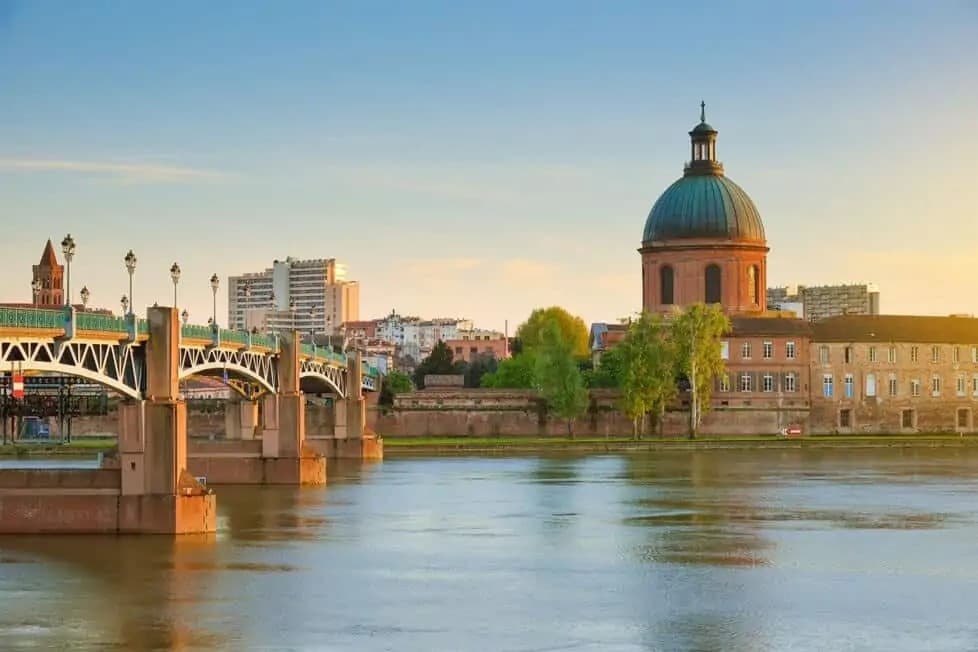
Toulouse
Pink City of aerospace innovation and French charm
Toulouse earned its nickname "La Ville Rose" honestly — the entire city glows pink at sunset thanks to terracotta brick buildings that date back centuries. But don't let the romantic facade fool you. This is France's aerospace capital, home to Airbus and the European space program. You'll find rocket ships and Renaissance palaces on the same street corner. The Garonne River cuts through the heart of town, connecting medieval squares to cutting-edge museums. Students from the massive university system keep the energy young and the restaurant prices reasonable. And yes, this is where cassoulet was invented — you'll eat the best version of your life here.
Best Months
APR · MAY · JUN · SEP · OCT
~23°C · moderate crowds
Culture & Context
TERRACOTTA & AEROSPACE
Toulouse wears its nickname, la Ville Rose, honestly. The city is built almost entirely from terracotta bricks, which turn different shades of orange, pink, and deep red depending on the hour and the light. It's not a cosmetic branding exercise. The bricks were simply cheap and local, and that pragmatism defines the place. Look for stone accents on fancier buildings — that was someone showing off.
Here's the thing about Toulouse: it's simultaneously ancient and completely modern. The Académie des Jeux Floraux, founded in 1323, is the oldest literary society in the Western world. Airbus builds planes here. Both facts feel equally at home. The city is the European capital of aerospace, which means a significant chunk of the population are engineers who eat cassoulet and watch rugby on weekends.
And rugby is not a casual interest. The Stade Toulousain's red and black colors appear on café walls, apartment balconies, and clothing brands. Match days transform the city. If you're here when they play, join the crowd watching on the big screen at Place du Capitole. Toulouse FC (football) is also surging back into the national conversation, but rugby came first and rugby runs deepest.
The Occitan language adds another layer you won't find anywhere else in France. Street signs are bilingual in French and Occitan. Metro station announcements play in both languages. It's not folk revival nostalgia — locals use Occitan-derived words daily without thinking about it. The city has around 120,000 students, which keeps the energy young and the bar tabs long. Toulouse is the third-largest university city in France after Paris and Lyon, and that shapes everything from the price of a beer to the hours everything stays open.
Local Customs
SAY BONJOUR FIRST
Always say Bonjour when entering a shop, café, or restaurant — before you do anything else, before you ask a question, before you look at the menu. Skipping it is considered genuinely rude, not just mildly impolite. The French aren't unfriendly; they just have etiquette, and this is step one..
L'apéro is a serious institution. Before dinner, locals gather for aperitifs — Pastis (anise, drink with cold water), or Floc de Gascogne if you want to try something regional (it's an Armagnac and grape juice blend from nearby Gascony). Showing up at a dinner party without time for apéro is a social misdemeanor..
Do not call the rugby team 'le foot' — the Stade Toulousain plays rugby union, not football. They're one of the most decorated clubs in European rugby history. Knowing even one player's name will make you friends at a bar..
Tipping is not obligatory in France. Round up, or leave a couple of euros on the table at restaurants if the service was good. Don't feel obligated to calculate 15-20% — servers are paid proper wages here..
Lunch is the main meal of the day and restaurants take it seriously. Many places offer a 'menu du jour' — a fixed-price lunch with two or three courses — that gives you the best value by far. Dinner menus often cost more for equivalent food.
The Victor Hugo covered market has restaurants upstairs that are outstanding for market-driven lunches.. Metro and tram station announcements play in both French and Occitan. The bilingual street signs are real Occitan, not decorative — the language is genuinely part of local identity.
Don't assume they're misprints.
Safety
PETTY THEFT WATCH
Toulouse is genuinely safe for tourists — safer by most measures than Paris, Marseille, or Bordeaux, and the crime figures improved enough that the city dropped off France's top-20 most dangerous cities list by 2026. But it's still a real city, not a theme park, and a few things are worth knowing.
The main threat is petty theft. Pickpockets work crowded spots: the Saturday market on Place du Capitole, metro line A between Jean-Jaurès and Capitole, and the Gare Matabiau area. Carry a cross-body bag zipped toward your front. Don't put your phone on café tables, especially along the river quays — cyclists have been known to grab them from outdoor diners. This is not hypothetical.
The Gare Matabiau (main train station) area deserves extra attention at night. Fine during the day, practical and busy. After dark, treat it as a transit point and move on. The Rue Bayard nearby is specifically flagged by locals for late-night issues.
The neighborhoods of Le Mirail, Reynerie, Bellefontaine, Bagatelle, and Arnaud Bernard have higher crime statistics. There's no sightseeing reason to visit them, so most travelers won't end up there. Arnaud Bernard is central and has good food, but leave before things thin out at night.
The tourist core — Capitole, Carmes, Saint-Étienne — is well-lit, populated late, and comfortable. Female travelers report being able to walk the Capitole area until late without issues, though standard city vigilance applies, especially on quieter side streets after midnight.
Emergency numbers: Police 17, SAMU (medical emergency) 15, Fire 18, European emergency line 112. The CHU Rangueil hospital (Metro Line B, Rangueil station) has a 24-hour emergency department. Pharmacies show a flashing green cross and can handle minor medical questions — useful for avoiding hospital waits.
Getting Around
METRO EVERYWHERE
The Tisséo network covers everything you need. Two fully automated metro lines, two tram lines, buses, and a cable car (Téléo) form a comprehensive system that makes owning a car genuinely pointless in the city center.
Metro Line A (red): Runs east-west across the city. The stations you care about as a visitor are Basso-Cambo, Arènes (tram connection), Esquirol, Jean-Jaurès (interchange), and Balma-Gramont. This line covers the main sightseeing zones. Travel time end-to-end: 22 minutes.
Metro Line B (yellow): Runs north-south along the Garonne. Jean-Jaurès is the interchange with Line A. Useful for getting to the universities and the south of the city. Travel time end-to-end: 28 minutes.
Metro hours: Weekdays 5:15am to midnight. Weekend hours are slightly extended. The system is driverless and runs on rubber-wheeled trains, which makes it noticeably quieter than most European metros.
Tram Line T1 (blue): Connects Arènes (Metro A) westward through Blagnac. Useful if you're visiting the Aeroscopia museum. Tram Line T2 is being replaced in 2026 by the new Toulouse Aéroport Express tramway, which will link the future Line C Blagnac station directly to Toulouse-Blagnac airport.
Airport: The Tisséo airport shuttle runs every 20 minutes from Jean-Jaurès, Jeanne d'Arc, and Matabiau metro stations. Cost: €9 one way (this ticket is separate from the regular €1.80 network ticket). Journey time is roughly 20-25 minutes.
Bikes: Vélôtoulouse is the city bike-share system. First 30 minutes free. Good for riding the Canal du Midi towpath or crossing to Saint-Cyprien. The system has around 250 stations.
Driving: Don't. Parking is expensive, traffic is real, and the metro goes everywhere you need.
Useful Phrases
Toulouse Itineraries

Things to Do in Toulouse
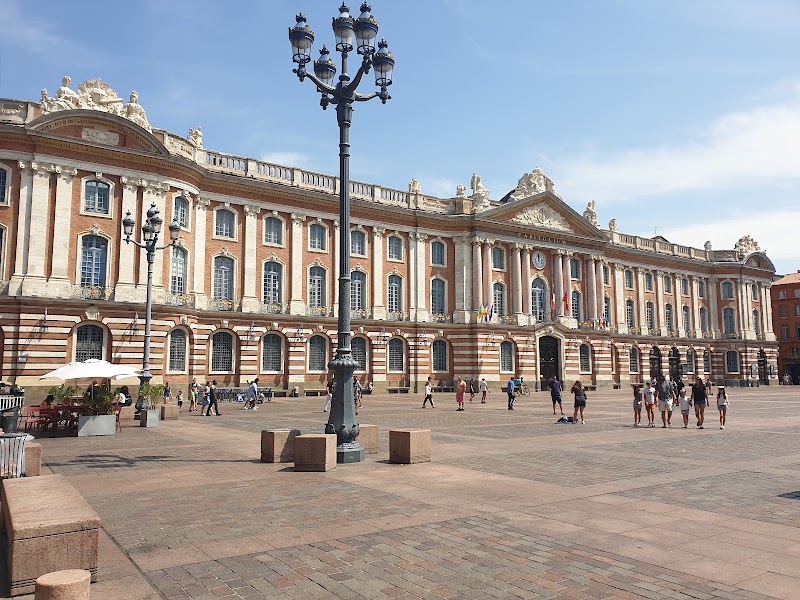
Place du Capitole & Old Town Stroll
Capitole / Old Town · 90 min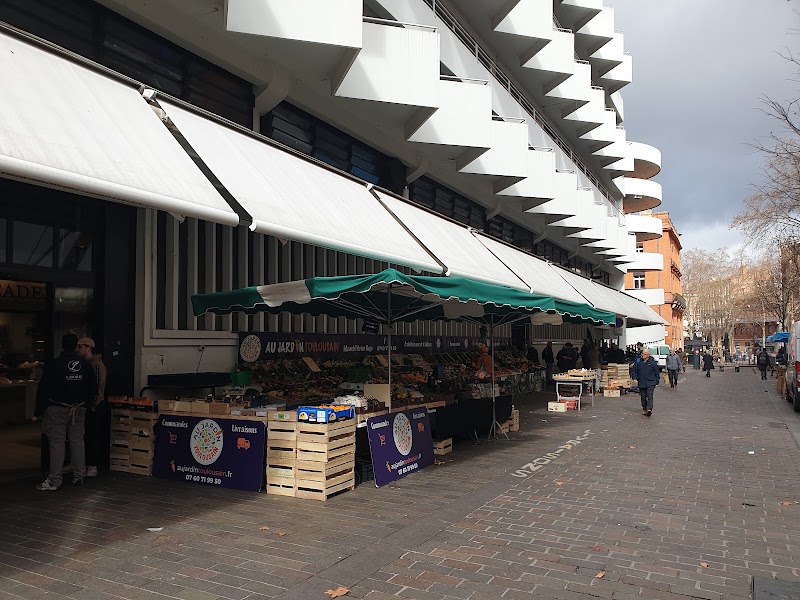
Marché Victor Hugo
Capitole / Victor Hugo · 60 min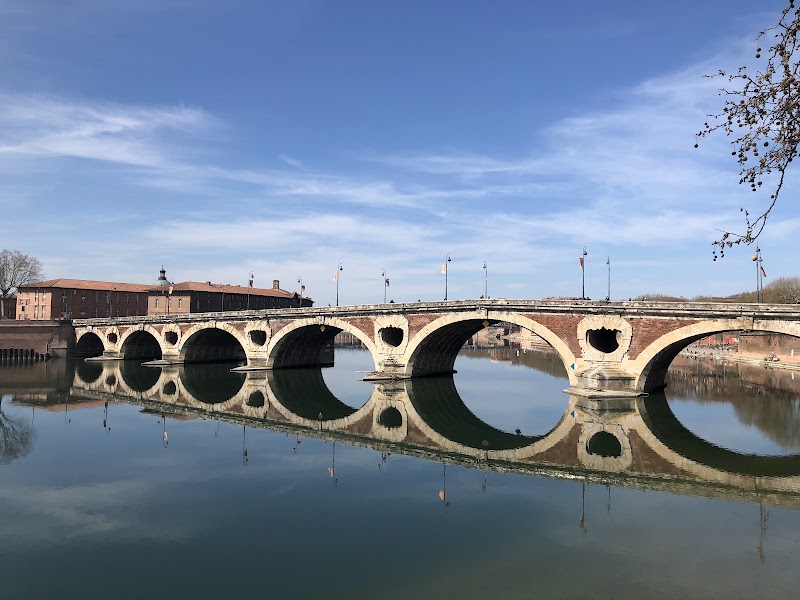
Garonne Riverfront Walk & Pont Neuf Viewpoints
Place Saint-Pierre / Garonne Quays · 90 minMoney-Saving Tips
- 1.Museum pass covers 15+ attractions for €35 (vs €8-12 per museum individually)
- 2.Lunch menus at bistros cost €15-18 vs €25-30 for dinner
- 3.Free walking tours run daily from Place du Capitole (tip-based)
- 4.Municipal pools charge €4.50 vs hotel pools at €15+ day passes
- 5.Marché des Carmes Saturday mornings has cheapest fresh produce
- 6.Happy hour at wine bars runs 5-7pm with €4-5 glasses
- 7.Vélib bike rental costs €1.70/30min vs €25+ for full-day rentals
Travel Tips
- •Download the Tisséo app for real-time metro and bus schedules
- •Many museums close Mondays — plan accordingly
- •Restaurants stop serving lunch at 2pm sharp, dinner starts at 7:30pm
- •Carry cash for small vendors at markets and some wine bars
- •Book cassoulet restaurants ahead — popular spots fill up quickly
- •The Capitole's free WiFi works throughout the main square
- •Pharmacy signs with green crosses indicate 24-hour locations