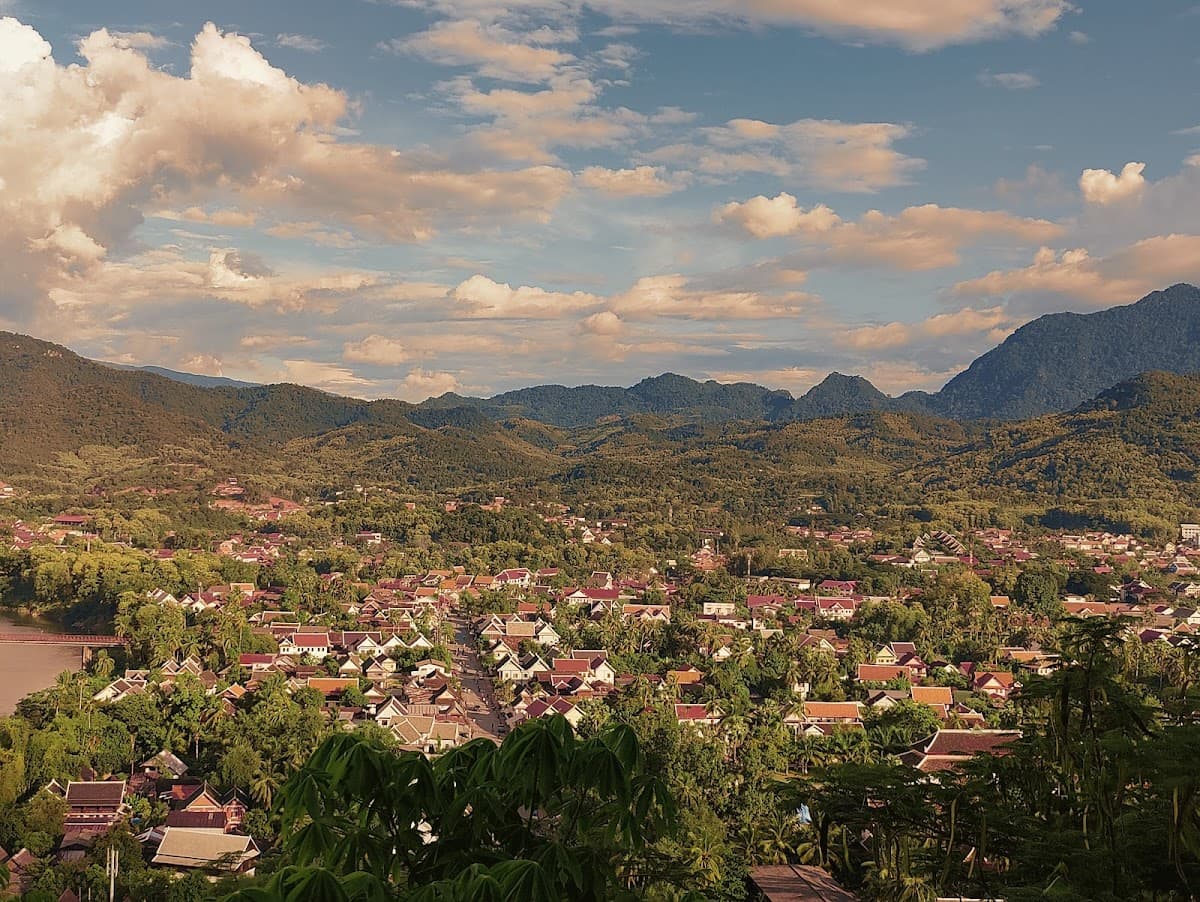
Luang Prabang Province
Laos' Mystical Buddhist Kingdom by the Mekong
Look, Luang Prabang Province isn't just another Southeast Asian destination. This is where time moves differently. Where monks in saffron robes collect alms at dawn while mist rises from the Mekong. Where French colonial buildings lean into Buddhist temples like old friends sharing secrets.
The province wraps around northern Laos like a golden silk scarf. At its heart sits Luang Prabang city, the former royal capital that UNESCO couldn't help but protect. But venture beyond the city limits and you'll find waterfalls that locals still consider sacred, hill tribes who've never heard of Instagram, and river towns where the biggest decision of the day is which noodle soup to order.
Here's the thing about Luang Prabang Province: it rewards the curious. The travelers who wake up early for alms giving. Who take the slow boat instead of flying. Who understand that the best temples aren't always the most famous ones. This isn't a place you conquer with a checklist. It's a place that seeps into your bones, one sunset over the Mekong at a time.
Culture & Context
Luang Prabang sits where the Mekong and Nam Khan rivers meet, and that geography shapes everything — the pace, the ceremonies, even the festivals.
It was the royal and religious capital of Laos for centuries, home to the powerful Lan Xang kingdom from the 14th century. The city's name comes from a sacred golden Buddha statue, the Prabang, gifted by the Khmer King of Angkor.
French colonial rule from 1893 layered European architecture over ancient temple streets, and that dual identity is everywhere: saffron-robed monks pad past shuttered French colonial villas every morning. UNESCO inscribed the entire Old Town in 1995. The Khmu are the largest ethnic group in Luang Prabang Province at 45%, followed by the Hmong (16%), and lowland Lao (39%).
Buddhism is the pulse of daily life. The Tak Bat alms-giving at dawn, where hundreds of monks walk in silence collecting sticky rice, is the most visible expression of that — and it's a living religious tradition, not a performance. The town has about 56,000 people and roughly 30+ temples within its compact grid.
"Boh pen nyang" (never mind / no problem) is the local philosophy in action: slow down, things will sort themselves out.
Local Customs
Tak Bat (Alms Giving): The morning alms ceremony is not a tourist attraction — it's a living religious tradition.
If you observe, stand well back, keep absolute silence, and never use flash photography. Do not buy sticky rice from vendors set up along the monks' route (buy from the proper market).
Don't force eye contact or try to get a close-up shot.. The Nop Greeting: Press both palms together in a prayer-like gesture at chest or chin level and bow slightly. The higher your hands, the more respect you're showing — reserve the highest position for monks and elders.
A cheerful 'Sabaidee!' always accompanies it.. Temple Dress Code: Cover shoulders and knees for both men and women at all 30+ temples.
Always remove shoes before entering. Never point feet toward Buddha images or altars — feet are considered the lowest, least clean part of the body.. Monk Etiquette: Women must never touch a monk or hand anything directly to them.
Everyone should avoid touching a monk's robe. If you want to offer something to a monk, place it in front of him or on a receiving cloth.. No Public Displays of Affection: Laotians are modest and reserved.
Loud behavior, public kissing, and excessive skin exposure (outside riverside/pool areas) are considered disrespectful. This is a country where 'boh pen nyang' (no worries) governs daily life — match the pace.. Shoes Off Policy: Remove shoes before entering homes, guesthouses, and many shops.
You'll usually see a pile of sandals at the door. Follow suit without being asked.. Bargaining: Acceptable at night markets and with tuk-tuk drivers.
Keep it friendly — a 10–15% discount is the typical range. Walking away politely is your most effective tool. Never be aggressive about it..
The 11 PM Curfew: UNESCO rules enforce an 11 PM closing time for most businesses in the Old Town. Luang Prabang goes to bed early. Plan dinner, drinks, and check-in before things shut down..
Eating Etiquette: Use your fingers for sticky rice — that's the correct method. Use utensils for other dishes. Leaving food on your plate is considered disrespectful.
Safety
Luang Prabang is one of Southeast Asia's safest destinations.
Violent crime against tourists is extremely rare. The US State Department rates Laos at Level 2 (Exercise Increased Caution), primarily due to unexploded ordnance (UXO) in rural areas of Luang Prabang Province — stick to marked trails outside town and don't go bushwhacking in the countryside.
The UNESCO-enforced 11 PM curfew in the Old Town means the city has minimal nightlife and naturally safer evening streets. Main risks: petty theft (pickpocketing at the Night Market and bus stations; bag-snatching by motorbike is uncommon but happens), scams at the Tak Bat ceremony (vendors pressure tourists to buy rice then demand inflated follow-up payments — buy from proper markets or observe from a distance), and overcharging tuk-tuk drivers (negotiate fares before you get in, every time). Use LOCA, Kokkok, or InDrive ride apps for transparent fares.
At Kuang Si Falls, the wooden railing is algae-slick by noon — wear grip soles. Tap water is untreated — drink bottled or use the 'Refill Not Landfill' filter stations at participating cafes. Medical care for basic issues is available locally, but any serious injury or illness requires evacuation to Bangkok — get comprehensive travel insurance that covers medical evacuation before you arrive.
The rainy season (June–October) brings monsoon flooding and can make rural roads and trekking paths hazardous. Avoid river travel on the Mekong after dark. Emergency numbers: Police 191, Fire/Ambulance 195.
Tourist Police: +856 71 260 249.
Getting Around
Getting to Luang Prabang: Luang Prabang International Airport (LPQ) is 4 km from the Old Town center; a taxi costs about $5 USD.
Direct international flights connect to Bangkok, Hanoi, Siem Reap, and Vientiane. The Laos-China high-speed railway runs Luang Prabang to Vientiane in about 2 hours for $20–35 USD — a genuinely good option.
The classic two-day slow boat down the Mekong from the Thai border (Huay Xai) costs $25–35 and includes an overnight in Pakbeng; slow but memorable. Getting around town: Bicycle rental is the smartest move at ~$0.92/day — the entire UNESCO zone is under 2 km across.
Tuk-tuks are everywhere; negotiate before you board (20,000–30,000 LAK for city trips). The LOCA ride-hailing app has transparent pricing and is the best way to avoid tourist overcharges. Day trips: Shared songthaew (pickup truck taxi) to Kuang Si Falls costs ~$3/person vs.
$15–20 for a private tuk-tuk — ask at your guesthouse to find other travelers to share with. Long-tail boats cross the Mekong to Ban Phan Luang for almost nothing. Slow boats run upriver to Pak Ou Caves (shared boat: ~65,000 LAK round-trip, about 2 hours upstream).
No public bus network exists in the city itself. For inter-city travel, VIP minivans and buses connect to Vang Vieng and Vientiane ($10–25 for 8–12 hours by road, or take the train).
Useful Phrases
Itineraries coming soon
We're working on adding amazing itineraries for Luang Prabang Province. In the meantime, try the app to create your own!
Money-Saving Tips
- 1.Sticky rice costs 2,000 kip (10 cents) from street vendors – skip overpriced restaurant versions
- 2.Negotiate tuk-tuk prices before getting in; locals pay half what they quote tourists
- 3.Temple donations are voluntary but 5,000-10,000 kip ($0.25-0.50) is respectful
- 4.Night market vendors expect bargaining – start at half their asking price
- 5.Shared minivans between towns cost 1/3 the price of private transport
- 6.Guesthouses in Nong Khiaw and Muang Ngoi cost $10-15/night vs $50+ in Luang Prabang city
- 7.Buy Beer Lao from local shops (8,000 kip) instead of restaurants (25,000 kip)
- 8.ATMs charge 30,000 kip ($1.50) per transaction – withdraw larger amounts
- 9.Kuang Si Falls entrance is 20,000 kip – much cheaper than organized tour prices
- 10.Local buses cost 15,000-25,000 kip vs 100,000+ kip for tourist minivans
Travel Tips
- •Wake up at 5:30 AM for alms giving – stand quietly and don't take flash photos
- •Remove shoes before entering any temple building, even if others aren't
- •Dress modestly at temples – cover shoulders and knees, even in 35°C heat
- •Learn basic Lao greetings – 'sabaidee' gets you smiles and better prices
- •Carry small bills – many vendors can't break 100,000 kip notes
- •Download offline maps – GPS works but data coverage is spotty outside cities
- •Pack a headlamp for temple visits and power outages in remote areas
- •Bring cash – credit cards work only in upscale hotels and restaurants
- •Respect photography rules – some Buddha statues are off-limits for photos
- •Try local transport – shared songthaews are cramped but authentic
- •Book slow boat tickets in advance during peak season (Dec-Feb)
- •Carry toilet paper and hand sanitizer – public facilities vary widely
Frequently Asked Questions
Explore Luang Prabang Province
BUILD YOUR
LUANG PRABANG PROVINCE PLAN
Insider picks, smart timing, and a plan ready when you are.
Start Planning