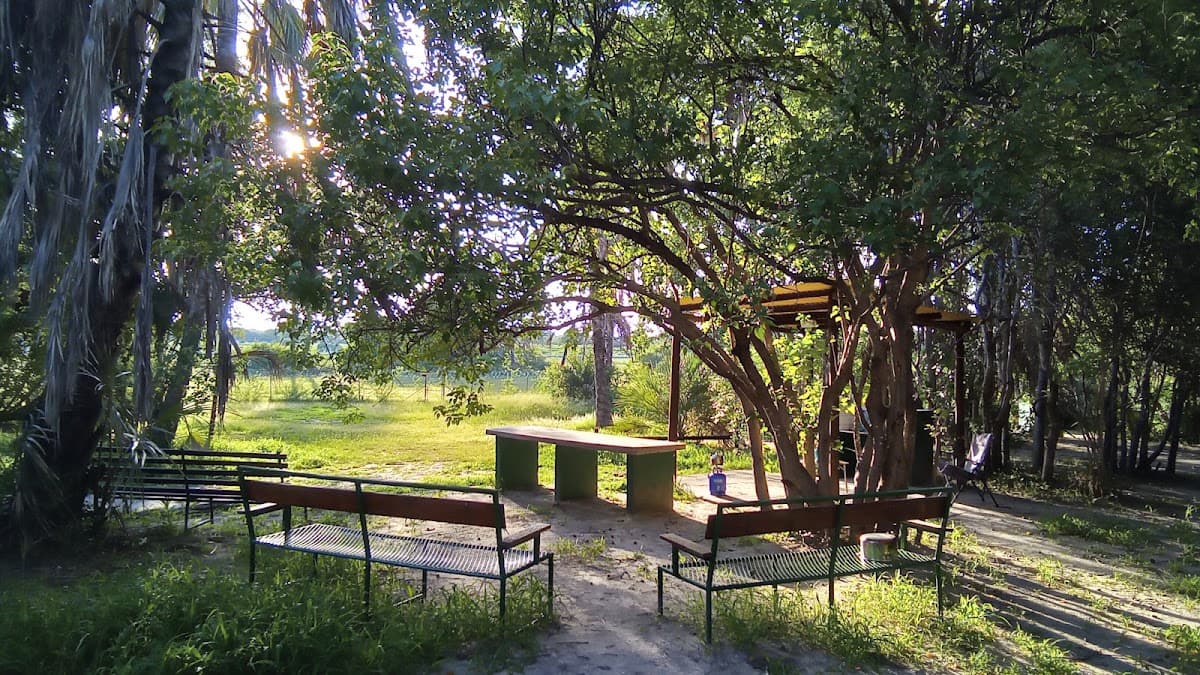
Maun
Botswana's gateway to the pristine Okavango Delta
Most people think of Maun as just a pit stop. They're missing the point entirely. This dusty frontier town sits at the edge of one of Africa's greatest wilderness areas, and it's become the unofficial capital of Botswana's safari industry. Sure, the main street looks like any other African town - donkeys wandering between 4x4s, dust clouds following every vehicle. But step into any lodge or tour operator's office, and you'll hear stories that'll make your Instagram followers weep with envy. Maun isn't trying to be pretty. It's the launching pad for mokoro trips through papyrus channels, the place where bush pilots fuel up before flying over elephant herds that stretch to the horizon. The Thamalakane River runs right through town, bringing hippos practically to your hotel doorstep.
Best Months
MAY – OCT
~27°C · peak crowds
Culture & Context
FRONTIER VILLAGE OVERGROWN
Maun is technically still classified as a village, though don't let that fool you. With around 85,000 people and Botswana's busiest small airport, it punches well above its weight. It was founded in 1915 as the tribal capital of the Batawana people, and that frontier-town DNA is still very much alive.
Donkeys and goats share the roads with 4x4s and safari vans. Cement block houses sit next to traditional mud huts. The Thamalakane River runs through it, and red lechwe antelope still graze on the banks right alongside local livestock.
Here's the thing: most visitors treat Maun as a one-night pit stop before flying into the delta. That's a mistake. Spend an extra day, slow down, and the town's own character starts to show.
The Nhabe Museum, housed in a building the British military put up in 1939, covers the environmental and cultural history of the Ngamiland region. It's small but genuinely interesting, and the staff will actually talk to you. The Maun Wildlife Educational Park holds giraffes, wildebeest, kudu, zebra, and warthogs within walking distance of town.
And out in Matlapaneng, you can watch village basket-weavers work while buying directly from them. Maun also serves as the headquarters for dozens of safari and air-charter companies running operations into the Okavango Delta, Moremi, Linyanti, and beyond. The airport is genuinely one of Africa's busiest by movement count during peak season.
Local Customs
GREET BEFORE BUSINESS
Always greet before getting to business. Walking up to a shopkeeper or taxi driver without saying 'Dumela' first is considered rude. A greeting isn't optional here, it's a social contract..
Use your right hand, or both hands together, when giving or receiving anything, whether it's change, a business card, or a gift. One-handed casual exchanges can come across as disrespectful.. Respect for elders is non-negotiable.
Offer your seat, speak respectfully, and never interrupt an older person mid-sentence.. Dress modestly when visiting villages or rural communities outside of Maun. Tourist-heavy areas are more relaxed, but covering up is always the safer call..
Do not photograph government buildings, military facilities, or police stations. It is illegal and you will be stopped.. Never buy or take animal trophies, horns, tusks, or skins.
Botswana has strict laws against this and prison conditions are reported to be very harsh.. Tipping around 10% is appreciated in restaurants. Safari guides especially rely on tips as a significant part of their income..
Homosexuality has been legal in Botswana since 2019, but public displays of affection can draw unwanted attention in smaller communities. Be discreet outside of tourist-facing establishments.
Safety
WATCH PETTY THEFT
Botswana ranked third most peaceful country in Africa in the 2024 Global Peace Index. That said, Maun is where most of the country's crime is concentrated (relative to its small population). Petty theft is the main issue: pickpocketing, snatch theft, and vehicle break-ins.
Don't leave bags visible in parked cars. Don't walk alone at night. Have your hotel or lodge call a licensed taxi (blue plate numbers) rather than flagging one down after dark and always agree on the fare before getting in.
Around wildlife, follow your guide's instructions without exception. Anti-malarial medication is strongly recommended, especially during the wet season (November-April). Get vaccinations updated for Hepatitis A and B and typhoid before you arrive.
Drink bottled water, not tap. Emergency numbers: police 997, fire 998, medical 997. The Delta Medical Center on Tsheke Tsheko Road handles general emergencies, and Maun Private Hospital (opened 2021, Sedia road) is the main private option.
MedRescue International covers wildlife emergencies in remote areas.
Getting Around
CHARTER FLIGHTS DOMINATE
Maun International Airport (MUB) sits about 5km from the town center, basically in the middle of everything. Flights connect regularly from Johannesburg, Cape Town, Gaborone, Kasane, and Windhoek, with seasonal routes to Zimbabwe and Ethiopia. Air Botswana, Airlink, and FlyNamibia all serve the route.
The airport is small and efficient. During peak safari season it becomes one of Africa's busiest airports by movement count, with charter planes hopping to delta camps every few minutes. Within town, taxis run 30-40 BWP for most rides.
Ask your hotel to call one rather than flagging one down at night. For anything beyond the paved roads — Moremi, Khwai, Makgadikgadi — you need a 4x4. Rental rates run BWP 400-1,200 per day depending on vehicle and operator.
Long-distance coaches connect Maun to Francistown and Gaborone (6-10 hours, BWP 150-600). Intercape covers some routes. For the delta itself, forget roads.
Most camps are accessible only by light aircraft or mokoro. Book your charter through your lodge or a local operator in town — several line Maun's main strip. Mobile phone coverage is good within about 20-25km of town.
Beyond that, you're in wilderness. Mascom has the widest network reach for remote areas.
Useful Phrases
Money-Saving Tips
- 1.Book Delta activities directly with local operators instead of through hotels - you'll save 20-30% on mokoro trips and scenic flights
- 2.Shop for supplies at Choppies or Spar supermarkets before heading to Delta camps where a bottle of water costs 25 pula
- 3.Negotiate multi-day packages with tour operators - they often throw in airport transfers and one meal per day
- 4.Avoid changing money at the airport - banks in town offer better rates, especially First National Bank near the main road
- 5.Pack lunch for Moremi day trips - the park has no restaurants and lodge meals cost 200+ pula per person
Travel Tips
- •Bring cash - most Delta operators don't accept cards, and ATMs sometimes run out of money during peak season
- •Pack layers for early morning game drives - temperatures drop to 5°C in winter months despite warm afternoons
- •Confirm scenic flight bookings the night before - wind conditions can cancel morning flights with little notice
- •Download offline maps before heading to the Delta - cell coverage disappears once you leave town
- •Book accommodation early for dry season (May-October) - options fill up months in advance, especially in July and August