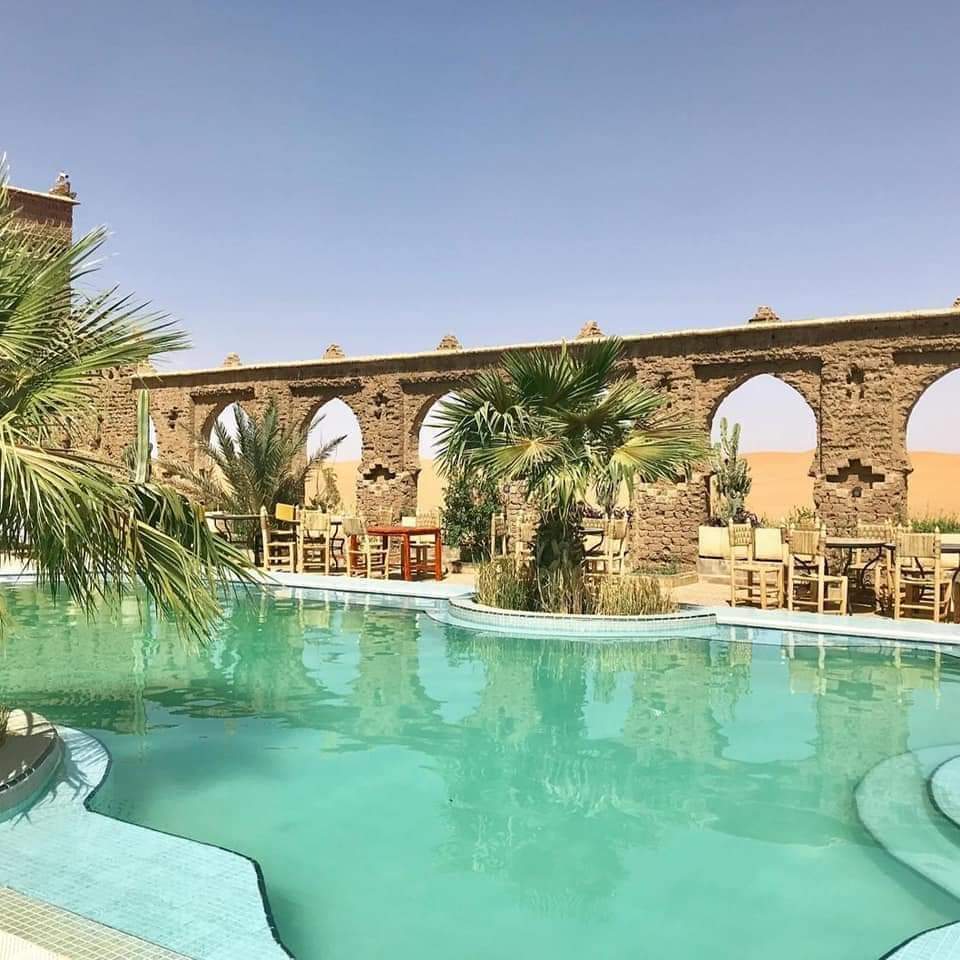
Merzouga
Gateway to the Sahara's golden dunes and starlit nights
Look, there's nothing quite like watching the sun disappear behind Erg Chebbi's towering dunes while sitting on a camel. Merzouga isn't your typical Moroccan destination — it's a tiny village that exists purely as your launchpad into the Sahara. Here, sand replaces cobblestones, silence replaces city noise, and the Milky Way replaces streetlights. You'll spend your days learning Berber traditions and your nights sleeping under more stars than you knew existed. But let's be honest: it's remote, dusty, and the nearest ATM is hours away. Come prepared, and you'll understand why people travel across continents just to sit in this particular patch of sand.
Best Months
JAN · FEB · MAR · APR · OCT · NOV · DEC
~26°C · moderate crowds
Culture & Context
BERBER & GNAWA ROOTS
Merzouga sits just 50km from the Algerian border in southeastern Morocco. The local population is overwhelmingly Berber (Amazigh), and that shows in everything from the music to the food to the way people greet you. This is not a city experience.
Life here is slower, quieter, and tied to the desert. Khamlia, a village 7km south, carries a distinct sub-Saharan African heritage. Its residents are descendants of enslaved people brought from Sudan, Mali, and Niger centuries ago.
They speak Berber as their native language and are famous for their Gnawa music, a hypnotic, rhythmic spiritual tradition. The museum there is donation-based, so go with cash. Sand bathing is a local wellness practice where you bury yourself in warm sand.
Locals genuinely believe it treats joint pain and skin conditions. It sounds odd, but it's been done here for generations. Understand that Ramadan 2026 falls around late February to late March.
Most restaurants will be closed during daylight hours. Evening meals after sunset become festive affairs, and the whole atmosphere of the village shifts. Not a bad time to visit if you're flexible, but plan accordingly.
Local Customs
GREET, SIP TEA, RESPECT
Greet before you ask for anything. Walking up to a shopkeeper or guide and launching into a question without a 'Salam' first is considered rude. The greeting always comes first..
Tea is not just a drink here. When someone offers you mint tea, it's an invitation to sit, slow down, and talk. Refusing it can feel like a snub.
If you're genuinely in a hurry, accept it anyway.. Dress modestly once you're in the village. The desert camps are more relaxed, but in the village itself, covered shoulders and knees are the expectation, for both men and women.
It draws far less unwanted attention and is simply respectful.. Bargaining is expected in markets but not in restaurants. Know when to haggle and when to pay the listed price..
Photography of local people, especially women, requires permission first. Always ask. Some people will say no.
Respect it.. The left hand is traditionally considered unclean. Use your right hand for greetings and passing food or objects..
Don't drink tap water. Stick to sealed bottled water, even for brushing your teeth if you have a sensitive stomach.. Fossil shops line the road to Merzouga.
The stone crafts are genuinely beautiful, but learn the difference between ethically sourced pieces and mass-produced tourist fodder before you spend big. Ask where the fossils were found.
Safety
VERY SAFE, SMART TRAVEL
Merzouga and the Erg Chebbi region are considered among Morocco's safest tourist destinations. Violent crime is essentially non-existent here. The Sahara Desert around Merzouga is politically stable, well-policed, and receives large numbers of international visitors without serious incident each year.
But there are a few real annoyances to know about. The main risks in Morocco generally are petty scams, unlicensed guides, and taxi overcharging — most of which are far more prevalent in Marrakech and Fes than in Merzouga. In the desert village, the common issue is being steered toward specific camps or tour operators by someone with a commission arrangement.
Book your camp directly or through a licensed agency. Confirm prices before anything starts. The border with Algeria is about 50km east of Merzouga.
Do not attempt to travel independently toward the border. It is a restricted zone. Road conditions south of Merzouga toward Taouz can be rough after rain.
Flooding events have damaged infrastructure in recent years, so check locally before heading off the main paved roads. Heat is the serious physical risk. Summer temperatures exceed 45°C.
If you visit June through August, limit outdoor activity to before 8am and after 5pm. Drink more water than you think you need. For women traveling solo: verbal attention is possible in the village, much less so than in the big cities.
Modest dress (covered shoulders, loose trousers or skirts) significantly reduces unwanted interaction and is the appropriate choice for this conservative community anyway.
Getting Around
LONG HAUL, REWARD YOURSELF
Getting to Merzouga takes commitment. From Marrakech it is a 10–11 hour drive (560km) through the High Atlas Mountains, or a 10-hour CTM/Supratours bus ride for around €15–25. From Fes it is 7–8 hours by road (470km), or a bus for €12–20.
The nearest airport is Errachidia (ERH), from which you can get a grand taxi to Rissani and then onward to Merzouga. Shared grand taxis from Errachidia run from around 30 MAD per seat. Within Merzouga, the village is small enough to walk.
Between villages (Hassilabied, Khamlia, Rissani), you hire a local taxi or arrange a 4WD through your accommodation. To Rissani is about 40 minutes. The Supratours bus from Merzouga toward Ouarzazate departs early in the morning — buy the ticket on arrival in Merzouga to guarantee your seat.
There are no rental car agencies in Merzouga itself. If you're self-driving, rent in Marrakech or Fes. Roads from Ouarzazate south through the Draa Valley and on to Merzouga are paved and generally well-maintained.
The Ziz Valley route via Errachidia from the north is also paved and genuinely beautiful.
Useful Phrases
Money-Saving Tips
- 1.Bring cash — ATMs don't exist in Merzouga, and the nearest one is in Erfoud 50km away
- 2.Negotiate camel trek prices with multiple operators, rates vary wildly between 200-500 MAD for the same sunset ride
- 3.Book desert camps through your accommodation for better rates than direct booking
- 4.Stock up on water and snacks in Erfoud before arriving — village shops charge premium prices
- 5.Tip your camel guide 20-50 MAD and camp staff 10-20 MAD per person for good service
- 6.Group bookings for 4+ people often get discounts on desert experiences and day trips
Travel Tips
- •Pack layers for extreme temperature swings — 30°C days can become 5°C nights in winter
- •Bring a headlamp and extra batteries for navigating camps at night
- •Protect electronics from sand with ziplock bags or waterproof cases
- •Book accommodations in advance during peak season (October-April) as options are limited
- •Learn basic French or Arabic phrases — English isn't widely spoken outside tourist areas
- •Bring toilet paper and hand sanitizer — desert camp facilities vary in quality
- •Download offline maps before arriving — cell service is spotty in the dunes
- •Pack sunscreen and lip balm — desert sun and wind are harsh even in winter