El Salvador
Central America's Hidden Gem of Volcanoes and Surf
El Salvador packs serious adventure into the smallest Central American country. Active volcanoes tower over Pacific surf breaks that draw pros from around the world. Street food costs under $2, colonial towns feel frozen in time, and you can hike a volcano crater in the morning and catch sunset waves in the afternoon. But here's what most travelers miss: El Salvador isn't just budget-friendly—it's authentically Central American in a way that feels increasingly rare. The crowds haven't arrived yet, which means real conversations with locals and empty lineups at world-class breaks.
Culture & Context
El Salvador is the smallest country in Central America and the most densely populated.
Its Spanish dialect — called Caliche — blends standard Spanish with Nahuatl roots from the indigenous Pipil people, plus layers added by 20th-century migration to the United States. Salvadorans use 'vos' instead of 'tú' (the voseo conjugation), similar to Argentina. Many everyday slang words trace directly back to Nahuat, the indigenous language, giving the dialect what locals describe as an "earthy and ancestral feel."
The country lived through a brutal civil war from 1979 to 1992, followed by decades of gang violence that peaked around 2015-2016 when San Salvador ranked among the world's most dangerous cities. The transformation since 2022 has been genuinely dramatic — areas that were completely inaccessible to outsiders are now safe to walk. Locals and returning Salvadorans consistently describe it as feeling like a different country.
El Salvador was the first country in the world to adopt Bitcoin as legal tender (2021). The experiment is real but uneven: major hotels, beach businesses, and some street vendors accept crypto via the Chivo wallet; rural areas run entirely on cash. The country's Bitcoin Beach (El Zonte) was the original proof-of-concept and still functions as the most crypto-integrated community.
Catholicism runs deep and shapes the calendar significantly — Semana Santa (Holy Week) effectively shuts down the country, and patron saint festivals anchor community life in every city and town. The patron of San Salvador is El Salvador del Mundo (the Transfigured Christ), honored during Fiestas Agostinas in August. Pupusas, the national dish, are both food and cultural identity — Salvadorans abroad maintain the tradition obsessively, and at home it is eaten multiple times per week across every income level.
Local Customs
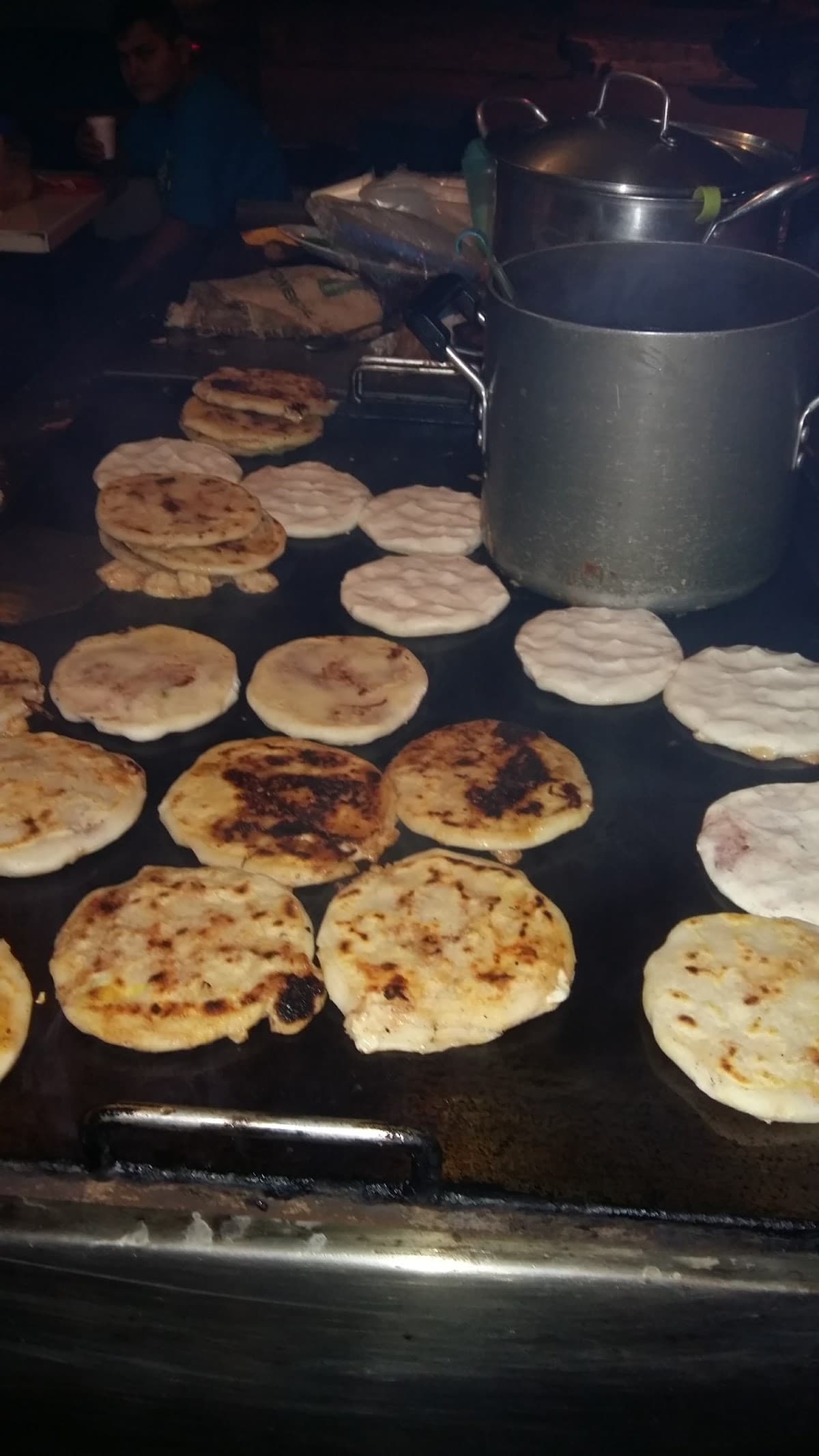
Pupusas are serious business.
The national dish is a thick corn tortilla stuffed with cheese, beans, chicharrón, or combinations thereof. They cost around $1 each at a comedor.
Eating them with curtido (fermented cabbage slaw) and salsa roja is non-negotiable.. WhatsApp is how everything works. Hotels, restaurants, taxis, tour guides — coordinate via WhatsApp.
Having a working local number (or eSIM) matters more than you'd expect.. Always carry small USD bills. Getting change for $50 or $100 bills is genuinely difficult outside of large supermarkets and hotels.
Stock up on $1, $5, and $10 bills before leaving the airport.. Bitcoin is legal tender but don't count on it everywhere. Major businesses and some beach vendors accept it via the Chivo wallet or Lightning Network.
Rural areas and local comedores? Stick to cash.. Carry ID at all times.
The ongoing security measures mean military checkpoints are common. A color copy of your passport works for daily walking; carry the original if traveling between cities.. Zero tolerance for tattoos associated with gangs (MS-13 or Barrio 18 iconography like the numbers 13 or 18, teardrops, specific fonts).
These can result in police attention. Plain decorative tattoos are fine.. Respect the soldiers.
You will see armed military on street corners, beaches, and tourist zones. This is normal. Don't photograph checkpoints or soldiers without asking..
Almuerzo (lunch) is the main meal of the day, typically eaten between noon and 2pm. A full set lunch at a local comedor runs $4–8 and usually includes soup, rice, beans, salad, and a main protein.. Don't drink tap water.
Bottled water is cheap and widely available. This is non-negotiable — stick to it even for brushing teeth outside major hotels.. Avoid intercity travel after dark.
This is a consistent recommendation from both the US Embassy and experienced travelers. Plan your routes to arrive before sunset.. Sunday at Parque Cuscatlán is a San Salvador institution.
Locals gather for open-air concerts, food vendors, and family time. Show up with no agenda and just absorb it.. Soccer (fútbol) runs deep.
If El Salvador's national team is playing, the country stops. Knowing the team's recent form is instant small talk currency.
Safety
As of January 2026, the US State Department upgraded El Salvador to Level 1: Exercise Normal Precautions — the lowest advisory level, placing it on par with Switzerland, Japan, and Australia.
This is the only country in Central America to hold this distinction. The transformation follows President Bukele's 2022 crackdown that arrested over 75,000 suspected gang members, collapsing the extortion networks that once controlled the country neighborhood by neighborhood. The 2024 homicide rate was reported at around 1.3 per 100,000 — lower than many US cities.
That said, smart travel behavior still matters: avoid intercity travel after dark, use Uber or registered radio taxis rather than hailing random cars, don't flash expensive jewelry or equipment, and carry ID at all times. Military and police presence is heavy and visible — soldiers with assault rifles on street corners are standard, not alarming. Credit card cloning does occur in restaurants and shops, so keep your card in sight. Beach rip currents are real and dangerous — red flags mean stay out. English is spoken at major hotels and tourist hubs but is rare in rural areas and local markets, so basic Spanish is genuinely useful. Drug enforcement is strict — even small amounts of marijuana can result in immediate imprisonment without a quick trial.
Getting Around
El Salvador is compact — you can travel from mountain to ocean in under two hours.
Main transport options in 2026:
PUBLIC BUSES ("CHICKEN BUSES"): Fares run $0.20–$1.86. Ultra-cheap and culturally immersive, but they can be slow and are a common site for petty theft. Buses mainly run 5am–7pm. Avoid late-night buses, displaying your phone or wallet, and traveling alone on isolated secondary routes.
UBER: Works throughout greater San Salvador and is the strongly recommended option for tourists in the capital. Reliable, trackable, and avoids the gringo-pricing problem of random taxis. Have the app loaded and a working data connection before you need it.
RADIO TAXIS: Available citywide. Major hotels work with executive transport companies. Authorized airport taxi drivers wear visible ID badges. Pre-arrange airport pickups when possible.
CAR RENTAL: $40–60/day in 2026. Good for flexibility on the Ruta de las Flores, volcano day trips, and coastal exploration. Drive with doors locked, windows up, and stick to main highways. Navigation apps sometimes route you off safe roads into dangerous areas — use Waze and cross-check. Avoid driving outside major cities after dark.
AIRPORT: Monseñor Óscar Arnulfo Romero International Airport (SAL) is the main gateway, located about 44km from San Salvador center. Pre-arrange your hotel transfer — don't take random rides outside the terminal.
INTERCITY SHUTTLES: Tourist shuttle services connect San Salvador, El Tunco, Santa Ana, and Suchitoto. Pricier than buses but far more comfortable and reliable for foreigners.
BITCOIN PAYMENTS: Accepted at many businesses via the Chivo wallet or Lightning Network, but always carry USD cash for rural areas, comedores, and street vendors.
Useful Phrases
Explore Cities
Explore the Region
El Salvador Itineraries
Seven Days of Volcano Trails, Surf, and Salvadoran Flavor
Weekend · $$$
Family Weekend in San Salvador: City, Volcano & Lake
Weekend · $$
Volcano Views & Lakeside Flavors in El Salvador
Weekend · $$
Slow Luxury Escape: Volcanoes, Colonial Towns & Pacific Beaches
Week · $$$$
San Salvador Weekend: Culture, Volcanoes & Pupusas
Weekend · $$
Money-Saving Tips
- 1.Pupusas cost $0.50 each at street stalls—three make a filling meal for under $2 total
- 2.Chicken buses connect all major destinations for $1-3, though comfort varies wildly
- 3.Hostels in surf towns like El Tunco run $15-25 per night with kitchen access
- 4.Local beer costs $1 at corner stores, $3 at beach bars—stock up before heading out
- 5.Negotiate taxi day rates—$40-60 covers most volcano or ruins trips with waiting time
- 6.Coffee plantation tours cost $5-10 and include tastings of premium beans
- 7.Beach comedores serve massive seafood platters for $8-12 that easily feed two people
- 8.Volcano hiking permits are free—just register at park entrances before starting trails
Travel Tips
- •Learn basic Spanish—English isn't widely spoken outside tourist areas and hotels
- •Carry small bills—many vendors can't break $20 bills for small purchases
- •Start volcano hikes by 7am to beat afternoon clouds and heat
- •Surf breaks work best 2-3 hours before and after high tide
- •Pack layers—mountain towns get surprisingly cool at night even in dry season
- •Download offline maps—cell coverage gets spotty in rural areas
- •Try different pupusa fillings—loroco (flower bud) and ayote (squash) beat plain cheese
- •Book weekend accommodation in advance—locals flood beach towns Friday-Sunday