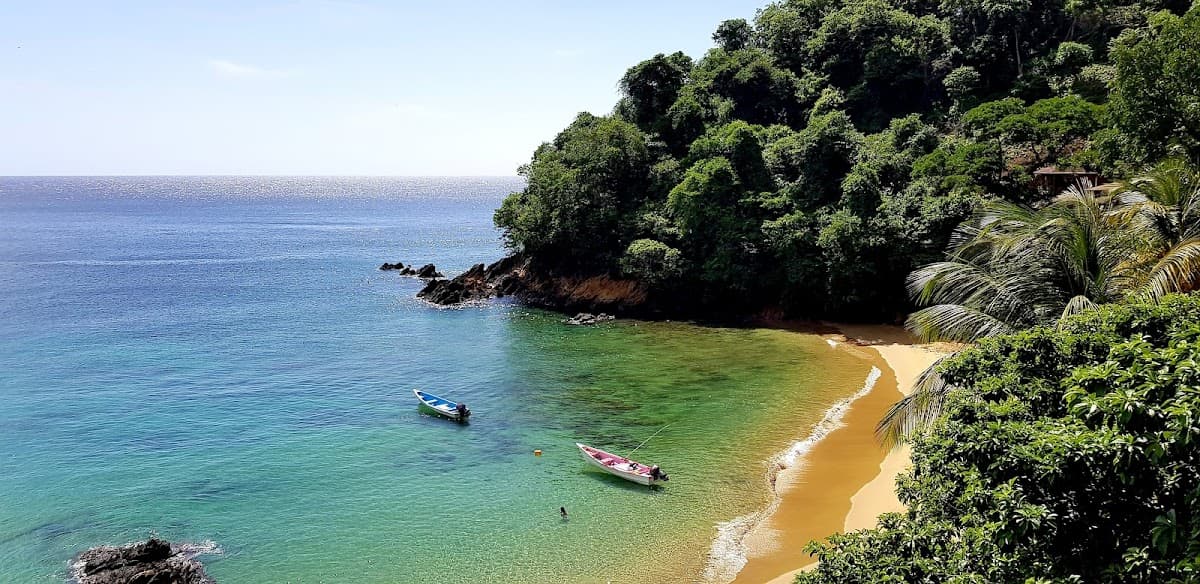
Tobago
Unspoiled Caribbean gem with pristine beaches and rainforest
Forget what you think you know about the Caribbean. Tobago isn't about mega-resorts or cruise ship crowds. This is the island where leatherback turtles still nest on empty beaches, where the Main Ridge Forest Reserve protects 300-year-old trees, and where you can snorkel with manta rays without fighting for space.
Trinidad's quieter sibling keeps things refreshingly simple. The beaches here rival any in the region — Pigeon Point's powdery sand stretches for miles, while Englishman's Bay hides behind a curtain of coconut palms. But Tobago's real magic happens beyond the shoreline. Hike through the oldest protected rainforest in the Western Hemisphere. Watch scarlet ibis paint the sky red at sunset. Eat curry crab and dumplings at a roadside stand where the cook knows your name by day three.
Here's the thing: Tobago moves at its own pace. Buses run on island time. Restaurants close when they feel like it. And that's exactly the point. This isn't a place to check boxes — it's a place to remember what vacation actually feels like.
Best Months
JAN – MAY
~29°C · peak crowds
Culture & Context
LIMING & LIVELIHOODS
Tobago is the quieter, smaller sibling of Trinidad. About 60,000 people live here. The island changed hands 33 times during the colonial era (Dutch, French, British, Spanish all took a turn), and that history shows up everywhere — in the place names, the food, the music, and the way people carry themselves.
The culture is deeply rooted in West African traditions blended with French Creole and British colonial influences. Church is not optional here. On Sundays, you'll see entire families in their finest heading to services that last most of the morning.
Religion shapes the social calendar in ways visitors don't always expect. The concept of "liming" — essentially hanging out with no particular agenda, cold drink in hand — is basically a civic duty. Tobagonians are, by general consensus, warmer and more laid-back than their Trinidadian counterparts.
That reputation is well-earned. The island also has a distinct cultural identity separate from Trinidad, with its own dances (heel-and-toe, congo bélé), unique folk traditions, and a fierce pride in preserving them. Here's the thing about the Harvest Festival: you can literally walk into a stranger's yard during the celebrations, eat their food, and nobody thinks it's strange.
That's just how things work here.
Local Customs
GREET FIRST, ALWAYS
Always greet before asking for anything. In shops, on taxis, before asking directions — you say 'good morning' or 'good afternoon' first. Skipping this is considered rude, not efficient..
'Tobago time' is real. If someone says they'll meet you at 2pm, 2:45pm is not unusual, and an apology even less so. Build this into your plans.
Don't build resentment into them.. Religious faith runs deep, especially in Tobago. Sunday mornings belong to church.
Businesses may open late or not at all. Dress modestly when passing through villages on Sundays.. Tipping works differently here.
Route taxi drivers don't expect tips, but in Tobago where tourism is the main economy, about 10% is standard for taxis. Restaurants often add a service charge — check the bill before adding more.. The 'len' hand' tradition: if you're on a beach and local fishermen are pulling in their nets, you're welcome to help.
It's a genuine community custom, not a performance. If the catch is good, they'll share some fish with you.. Village Harvest Festivals happen throughout the year in different communities.
These are genuine community events — church service, then feasting and music. Strangers walking in and joining the food are expected and welcomed.. Don't mock the Carnival traditions, local accents, or religion.
These are the three quickest ways to lose goodwill with Tobagonians who are otherwise among the warmest people you'll encounter anywhere in the Caribbean.. Dress modestly away from the beach. Wandering into Scarborough in just a swimsuit and cover-up is frowned upon.
Beach attire stays at the beach.
Safety
SCARBOROUGH CAUTION REQUIRED
As of March 2026, the Government of Trinidad and Tobago has declared a nationwide State of Emergency due to violent crime. The US State Department currently rates T&T as Level 3: Reconsider Travel. The critical distinction: the serious violence is concentrated on Trinidad, particularly Port of Spain's eastern suburbs and gang-affiliated neighborhoods. Tobago has a significantly lower crime profile than its sister island. That said, petty theft targeting tourists does happen in Scarborough, and you shouldn't be complacent.
Practical rules: Use only official taxis with 'H' plates (Hired). The unlicensed 'PH' taxis (private cars acting as taxis) lack insurance and accountability — skip them. Use ATMs inside bank branches, not street-side kiosks. Don't walk alone at night, especially in Scarborough or away from lit areas. Don't display expensive cameras, jewelry, or phones openly. Rental cars can be targeted, especially ones with obvious tourist markings.
The State of Emergency gives security forces expanded search, arrest, and detention powers without warrants. There are no curfews as of this writing, but that can change with little notice — monitor local media if you're there. Emergency numbers: Police 999, Ambulance 811, Fire 910.
Health note: No malaria risk, but dengue, Zika, and chikungunya are present. High-DEET repellent is non-negotiable if you're hiking the forest reserve or staying near standing water. A digital Immigration and Customs arrival form must now be completed within 72 hours before flying in.
Getting Around
ROUTE TAXIS & RENTALS
You fly into ANR Robinson International Airport (airport code: TAB) in Crown Point. Shortest US connection is from Miami, roughly 5h 55m. Caribbean Airlines runs multiple daily flights from Port of Spain's Piarco (POS) if you're island-hopping. The ferry between Port of Spain and Scarborough costs TT$50 one-way on the fast ferry (under 2 hours) or TT$37.50 on the conventional ferry (5.5 hours). Schedules change frequently — check the Port Authority of Trinidad and Tobago website before booking.
On the island itself, route taxis are the local workhorse — shared vehicles running fixed routes for cheap. Maxi-taxis (minibuses) connect Scarborough with Crown Point, Buccoo, and other areas during the day. For late-night Carnival events or getting to remote beaches, a private taxi or rental car makes more sense.
Renting a car costs around US$46/day on average. Book it outside the airport — airport locations run about 23% more expensive. The most commonly rented car is an intermediate SUV (Suzuki XL7 type), but economy options are around a third cheaper. The island is small enough that Crown Point to Charlotteville takes 1 hour 45 minutes by car. You can realistically do a lot in a day. Drive on the left. Don't drive at night if you can help it — road quality and lighting vary significantly once you leave the main Claude Noel Highway.
Prepaid SIM cards from Digicel or bmobile start at around TT$100 from their stores. Both run GSM networks. Digicel uses 850/1900MHz bands; bmobile uses 1800MHz.
Useful Phrases
Money-Saving Tips
- 1.Route taxis cost just TT$5-15 between towns versus US$30+ for private transfers
- 2.Local food vendors charge half what hotel restaurants do for the same curry crab
- 3.Visit during wet season (May-November) for 30-40% lower accommodation rates
- 4.Buy groceries at Penny Savers supermarket instead of hotel shops to save 50%
- 5.Book diving packages directly with operators rather than through hotels
- 6.Rent snorkel gear in town (TT$25/day) instead of at beach clubs (TT$50/day)
- 7.Happy hour at rum shops runs TT$8 beers versus TT$25 at resort bars
Travel Tips
- •Bring reef-safe sunscreen — many local shops only carry brands harmful to coral
- •Download offline maps before exploring — cell service gets spotty in remote areas
- •Pack insect repellent for rainforest hikes and evening beach walks
- •Carry small bills for route taxis and local food vendors who rarely have change
- •Book turtle watching tours in advance during nesting season (March-August)
- •Rent a car with good insurance — roads are narrow and winding
- •Learn basic Trinidadian phrases like 'liming' (hanging out) to connect with locals
- •Bring a waterproof phone case for snorkeling and water activities