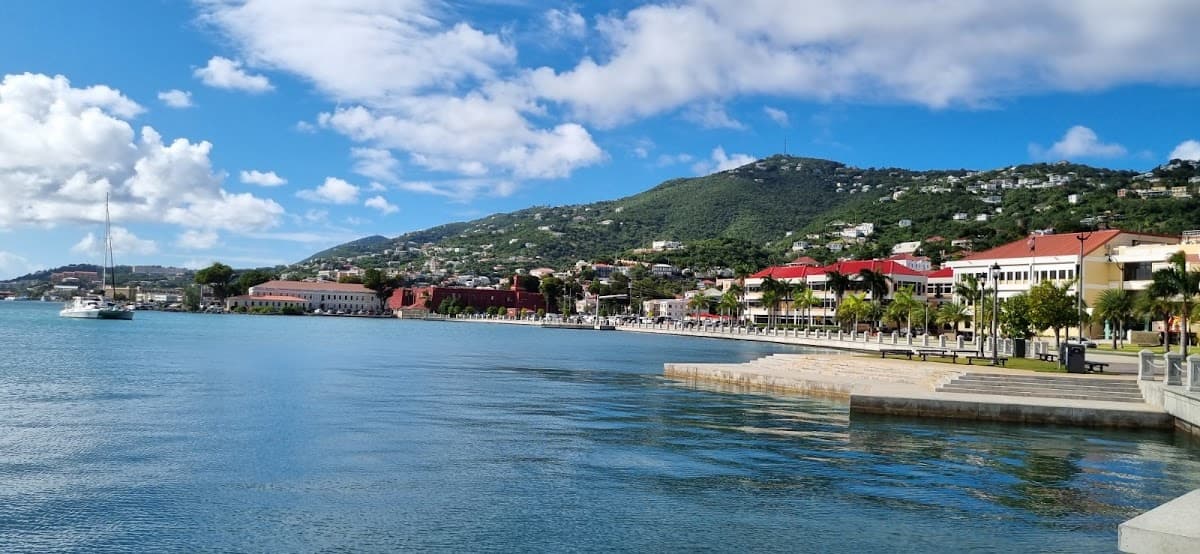
US Virgin Islands (St. Thomas)
Duty-Free Shopping and Cruise Ship Capital
St. Thomas doesn't pretend to be an undiscovered paradise. This is the Caribbean's retail therapy capital, where cruise ships dock daily and duty-free shopping reigns supreme. But here's what the day-trippers miss: beyond Charlotte Amalie's jewelry stores and perfume shops lies an island with some of the most accessible beaches in the Caribbean, world-class snorkeling, and a nightlife scene that actually exists year-round. The US Virgin Islands' most developed island offers something most Caribbean destinations can't — you can use your phone, spend dollars, and skip the passport drama if you're American. Sure, it gets crowded when three cruise ships are in port simultaneously. And yes, you'll pay resort prices for everything from gas to groceries. But St. Thomas delivers exactly what it promises: easy Caribbean living with American conveniences and enough beaches to find your own slice of paradise.
Best Months
JAN · FEB · MAR · APR · MAY · DEC
~29°C · peak crowds
Culture & Context
CARIBBEAN CREOLE SOUL
St. Thomas has been a trading port for centuries — Danish colonial architecture still lines the streets of Charlotte Amalie, and the island's history includes Dutch settlers, enslaved Africans from across West Africa, French, Spanish, and British influences, all layered together. The result is a culture that's genuinely Caribbean while technically being American soil. That dual identity is real and sometimes complicated for locals.
English is the official language, but you'll hear Virgin Islands Creole in everyday conversations — a rhythmic, musical blend of English with West African grammatical structures and Dutch, Danish, Spanish, and French vocabulary sprinkled in. The Thomian dialect is distinct from St. Croix's Crucian, and locals notice the difference immediately.
Carnival is not a tourist event that locals tolerate. It's 74 years of community tradition. If you attend, you're a guest in someone's cultural celebration. Show up with that energy, and you'll have an extraordinary time. Wear clothes you don't mind destroying at J'ouvert. Don't be the tourist filming everything instead of participating.
Duty-free shopping is a genuine local institution — St. Thomas has been a free port since the Danish era, and there's no sales tax on any goods or food. The price you see is the price you pay. Budget accordingly, because it's tempting.
Local Customs
GREET BEFORE ASKING
Always greet people before getting to business — saying 'good morning' or 'good afternoon' before asking for help or placing an order is basic courtesy here. Skipping it reads as rude, not efficient.. Cash is king for taxis, ferry terminals, and many local vendors and food stalls.
Don't assume your card will work everywhere — carry actual bills.. Swimsuits are for the beach, not for walking downtown or eating at a restaurant that isn't right on the sand. Island casual means real clothes once you're off the beach..
Tipping follows US mainland standards: 15–20% at restaurants. It's expected, not optional.. At J'ouvert during Carnival, you will get paint, powder, or water on you.
This is the whole point. Don't wear anything you care about.. Reef-safe sunscreen only.
Regular sunscreen with oxybenzone damages coral reefs, and locals and dive operators take this seriously.. GPS often fails on St. Thomas because the island lacks standardized addresses.
Get a paper map from your car rental company and actually use it.. When using the safari bus, ask before boarding if it's a dollar ride and confirm where it's heading. Boarding without checking can end in confusion or an unexpected fare.
Safety
PETTY THEFT WATCH
St. Thomas is generally safe for tourists — the US State Department rates it Level 1 (exercise normal precautions). Over 1.6 million visitors pass through annually, most without incident. But it's not Aruba. Crime exists, and it's worth being realistic about it.
Petty theft is the most common issue affecting visitors. Don't leave bags unattended on the beach while you swim. Don't leave valuables visible in a rental car. Charlotte Amalie at night is best avoided unless you're staying near Frenchtown or on the Waterfront Highway — both are fine after dark, but the residential areas inland are not tourist territory after sunset. Red Hook for dinner and drinks at night is perfectly normal and well-lit.
Taxi overcharging is a real nuisance. Rates are legally fixed by the Taxicab Commission, but some drivers test unsuspecting tourists. Agree on the total price before the car moves. Separately, watch for 'tour guides' near cruise ports offering exclusive beach trips that turn out to be public shuttle rides at inflated prices.
Medical facilities exist (Schneider Regional Medical Center on St. Thomas handles most situations), but serious emergencies may require evacuation to Puerto Rico or Miami, which can cost upwards of $20,000 without travel insurance. Get the insurance. Tap water at major resorts is treated and safe; smaller villas may use cistern (rainwater) systems, in which case stick to bottled water. The Caribbean sun is serious — reef-safe sunscreen is a must, both for your skin and for the coral ecosystems you'll be snorkeling over.
Getting Around
LEFT SIDE DRIVING
Getting around St. Thomas is one of those things you need to figure out before you arrive, because there's no Uber. At all. Your main options: rent a car, grab a taxi, or ride the safari bus. And here's the critical thing locals forget to warn visitors about — you drive on the LEFT side of the road. American cars, left-side driving. It's disorienting at first.
Car rental runs $65–85/day from Avis, Budget, and Hertz at Cyril E. King Airport. Recommended if you want flexibility. GPS often fails because the island lacks a standard address system, so get a paper map from the rental company.
The safari bus is the budget move. These are open-air trucks retrofitted with bench seats in the bed. A dollar ride (the informal shared version) costs $1–2 per trip along common routes. Some safari buses are regular taxis using the same vehicles, so before boarding, confirm it's a dollar ride and ask where it's heading. Pay cash when you get off. They don't go to Magens Bay, so you'll need a taxi for that.
Taxis are flat-rate, set by the USVI Taxicab Commission — no meters. Airport to Charlotte Amalie is roughly $10–15/person; airport to Red Hook is $20–25/person. Always confirm the total price before the vehicle moves. Stick to taxis with official USVI taxi license plates, usually large vans. Unlicensed 'gypsy taxis' are unregulated.
Ferry to St. John departs from Red Hook and takes about 20 minutes. $8 one-way, $16 round-trip for adults. Pay cash at the terminal. A quick ferry from Crown Bay Marina reaches Water Island in about 10 minutes ($10 round-trip). VITRAN, the government bus system, is technically available but widely considered unreliable by residents — schedules slip, routes change. Don't plan around it.
Useful Phrases
Money-Saving Tips
- 1.Buy duty-free liquor and perfume in Charlotte Amalie — savings can reach 30-50% compared to mainland US prices
- 2.Rent a car instead of taking taxis for multiple stops — daily rates often cost less than round-trip taxi fares to popular beaches
- 3.Pack snorkeling gear to avoid $15-25 daily rental fees at beaches and dive shops
- 4.Shop for groceries at Cost-U-Less or Plaza Extra for significant savings over hotel mini-marts and convenience stores
- 5.Visit during shoulder seasons (May, November) for 20-30% lower hotel rates while still enjoying good weather
- 6.Book excursions directly with operators rather than through cruise lines to save 20-40% on tours and activities
- 7.Eat lunch at local spots like Gladys' Cafe instead of resort restaurants to cut meal costs by 50-60%
- 8.Take advantage of happy hour specials at beach bars — many offer half-price drinks and appetizers from 4-7pm
Travel Tips
- •Download offline maps before arriving — cell service can be spotty in remote areas despite being US territory
- •Bring reef-safe sunscreen — many beaches now prohibit chemical sunscreens that damage coral reefs
- •Pack a waterproof phone case for water activities — sand and salt water are hard on electronics
- •Learn basic cruise ship schedules to avoid crowds — Wednesdays and weekends typically see the most ships
- •Carry cash for local restaurants, bars, and beach vendors — many don't accept cards or charge processing fees
- •Book restaurants in advance during peak season — popular spots fill up quickly with limited seating
- •Rent snorkeling gear for multiple days rather than daily rentals to save money and ensure proper fit
- •Check ferry schedules to St. John before planning day trips — services can be reduced during rough weather
Frequently Asked Questions
Explore US Virgin Islands (St. Thomas)
BUILD YOUR
US VIRGIN ISLANDS (ST. THOMAS) PLAN
Insider picks, smart timing, and a plan ready when you are.
Start Planning