Big Island
Hawaii's volcanic wonderland of black beaches and flowing lava
The Big Island isn't just big—it's still growing. Every day, Kilauea Volcano adds new land to Hawaii's youngest island, creating a landscape that feels more Mars than Earth. You'll find black sand beaches that sparkle like crushed diamonds, lava flows that glow orange against the night sky, and some of the clearest stargazing on the planet from Mauna Kea's summit.
But here's what makes the Big Island special: it's raw and unpolished compared to Maui or Oahu. The tourism infrastructure is spread out across an island the size of Connecticut, which means you can still find empty beaches and quiet hiking trails. The trade-off? You'll need a rental car, and some of the best spots require a bit of effort to reach.
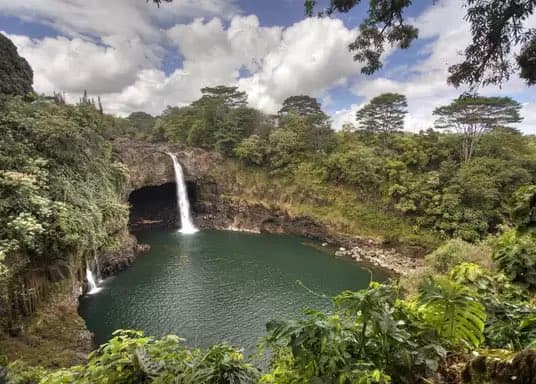
The island has two distinct sides. The Kona coast stays dry and sunny year-round, perfect for beach days and resort lounging. The Hilo side gets regular rain showers that keep everything green and lush—think waterfalls, botanical gardens, and that fresh post-rain smell. Most visitors stick to one side, but the real magic happens when you explore both.
Best Months
APR · MAY · SEP · OCT · NOV
~29°C · moderate crowds
Culture & Context
LANGUAGE RECLAIMED, CULTURE SACRED
The Big Island sits at the center of the Hawaiian cultural revival. The Hawaiian language (ʻōlelo Hawaiʻi) was suppressed after American annexation, and by the 1980s fewer than 50 children could speak it. The language is now being actively reclaimed through immersion schools and is an official state language.
That history matters when you're here. You'll see street signs, business names, and place names in Hawaiian constantly. Take them seriously.
The island is also home to the Merrie Monarch Festival, widely regarded as the world's premier hula competition, which signals how central cultural preservation is to everyday life here. Locals can spot tourists who treat the island like a theme park and those who don't. The difference matters.
Don't touch the honu (sea turtles), don't ignore kapu (keep out) signs, and don't wander onto private or sacred land for a photo. The paniolo (Hawaiian cowboy) culture in Waimea adds another layer, mixing ranching traditions from the 1800s with island life. And yes, the Kona coffee farms in the upland areas around Holualoa are working agricultural operations, not just photo backdrops.
Local Customs
SAY MAHALO, SHOW RESPECT
Say mahalo instead of just 'thanks'. It's used constantly and locals notice when visitors don't bother.. The shaka hand gesture (thumb and pinky extended, other fingers folded) is used everywhere, especially when drivers let each other merge.
Use it freely and genuinely.. Kama'aina discounts are real. If you're a Hawaii resident, always ask.
Visitors can't use them, but it's good to know why the person ahead of you got a lower price.. Don't touch or approach sea turtles (honu). Federal law requires you stay at least 10 feet away.
This is enforced and fined.. Reef-safe sunscreen isn't just a suggestion. Hawaii bans sunscreens containing oxybenzone and octinoxate.
Buy the right kind before you go or on arrival.. Don't walk on new black lava fields without asking. Some areas are technically open but the crust is fragile and can collapse.
Others are on private land.. Remove your shoes before entering someone's home. This is non-negotiable in local culture..
Respect heiau (sacred temple sites). These are not photo props. They are active sites of cultural and spiritual significance.
Observe from a distance unless there's a designated path.. The plate lunch is the working lunch of the island. Two scoops rice, one scoop mac salad, and your protein.
Order one from a local spot, not a resort restaurant.. Don't refer to anyone as a 'haole' yourself. The word means foreigner or non-native Hawaiian.
It's not always derogatory but it's not your word to use as a visitor.
Safety
WATCH NATURE, WATCH THEFT
The Big Island is generally safe. Petty theft from vehicles is the most common issue tourists encounter, so don't leave bags visible in rental cars. Downtown Hilo has elevated property crime near Prince Kuhio Plaza.
Pahoa in Puna has a higher crime rate than most of the island. The natural hazards are the bigger concern. Vog (volcanic smog from Kilauea) drifts across the island and can trigger symptoms in people with asthma, heart conditions, or respiratory sensitivities.
Check air quality before Volcanoes National Park. In the ocean, rip currents, sea urchins, and Portuguese Man-of-War jellyfish are the main threats. Swim only at beaches with lifeguards when possible, and if conditions look rough, stay out.
Flash floods can hit fast, especially in valleys and near rivers on the wet east side. Don't underestimate the sun. SPF 50 minimum, reef-safe formulas required (Hawaii law bans certain chemical sunscreens that damage coral).
And at Mauna Kea, altitude sickness is real at nearly 14,000 feet. Drive up slowly, don't run around, and skip the summit if you have any respiratory conditions. The volcano itself is contained within Halemaʻumaʻu crater in the national park.
Lava moves slowly and the park gives ample warning. Don't breach roped-off areas regardless of how close others get.
Getting Around
RENT A CAR MANDATORY
You need a rental car. Full stop. The Hele-On Bus exists but won't get you to Volcanoes National Park, green sand beach, or the Kohala Coast.
Budget $350–700/week for a rental with taxes. Gas will run $5.00–5.
80/gallon and you will use more of it than you expect. The island is enormous. Two airports: fly into Kona (KOA) if you're staying west side, Hilo (ITO) if you're based east side.
A split-base itinerary of 3 nights Kona and 3 nights Hilo is the smartest move for first-timers. It saves driving time and cuts costs since Hilo accommodation and food run significantly cheaper. Parking along Ali'i Drive in downtown Kona has been a known headache.
Get there early or expect a walk. Directions here use mauka (toward the mountain) and makai (toward the ocean) instead of compass points. Get comfortable with that fast.
Useful Phrases
Money-Saving Tips
- 1.Book rental cars 2-3 months ahead to avoid price spikes and limited availability
- 2.Stay in vacation rentals with kitchens to save on restaurant costs—groceries are expensive but still cheaper than dining out every meal
- 3.Visit during shoulder seasons (April-May, September-November) for 30-40% lower hotel rates
- 4.Buy groceries at Costco in Kona or Target in Hilo rather than resort shops
- 5.Pack reef-safe sunscreen from home—it costs $15-20 per bottle in Hawaii stores
- 6.Fill up your rental car whenever you see a gas station—prices vary widely and remote areas charge premium rates
- 7.Book manta ray tours directly with operators rather than through hotel concierges to avoid markup fees
- 8.Download the GasBuddy app to find cheapest fuel prices across the island
Travel Tips
- •Bring layers—temperatures drop 3-4 degrees for every 1,000 feet of elevation gain
- •Download offline maps before exploring remote areas with spotty cell coverage
- •Pack closed-toe shoes for volcano viewing—lava fields are sharp and unforgiving
- •Respect sea turtle viewing areas—maintain 10 feet distance and never touch or feed them
- •Check Volcano National Park alerts before visiting—eruptions can close roads and trails
- •Bring a red flashlight for stargazing at Mauna Kea to preserve night vision
- •Book popular restaurants 2-3 days ahead, especially in Kona and Waimea
- •Carry cash for farmers markets and small local vendors who don't accept cards
- •Start early for popular hikes—parking fills up and afternoon heat can be brutal
- •Learn to pronounce place names correctly—locals appreciate the effort and it shows respect