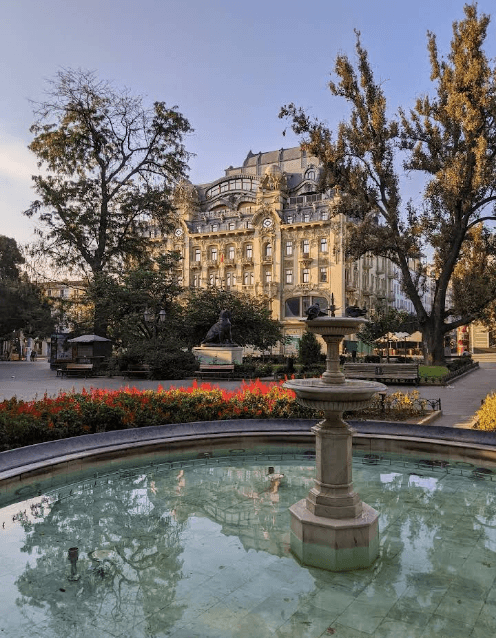
Odesa
Ukraine's pearl by the Black Sea with imperial grandeur
Odesa doesn't just sit by the Black Sea — it commands it. This port city built by Catherine the Great still carries itself like royalty, with grand boulevards that end in sandy beaches and an opera house that rivals Vienna's. But scratch beneath that imperial polish and you'll find street art covering Soviet-era buildings, underground jazz clubs, and locals who'll argue passionately about the best place for borscht at 2am.
The city survived empires, wars, and revolutions while keeping its sense of humor intact. Walk down Deribasivska Street and you'll hear Russian, Ukrainian, and a dozen other languages mixing in the warm sea air. Here's a place where you can spend your morning in the world's most beautiful opera house and your evening dancing until sunrise in a basement club that doesn't officially exist.
Best Months
MAY – SEP
~26°C · high crowds
Culture & Context
COSMOPOLITAN LITERARY SOUL
Odesa has always been its own thing. Founded in 1794 as a Black Sea port under Catherine the Great, it became one of the most cosmopolitan trading cities in Eastern Europe within decades. At its peak, the population was roughly 40% Jewish, alongside Greek, Italian, Armenian, and Polish communities.
That mix is baked into the city's personality. Odesa humor, dry and self-deprecating and quick, is famous across the former Soviet Union. Locals call themselves Odesites and they will tell you the joke before you've even asked.
The UNESCO-listed historic center (declared a World Heritage Site in January 2023, the same day it was added to the List of World Heritage in Danger due to Russian bombing) carries neoclassical, baroque, and Renaissance Revival architecture side by side. Isaac Babel wrote here. Pushkin lived in exile here.
Eisenstein's Battleship Potemkin immortalized the city's stairs on film. That cultural weight is real, and locals know it and wear it lightly. Ukrainian is the official language and is increasingly dominant since 2022.
Russian was historically common in Odesa — many older residents still use it — but speaking Ukrainian, even badly, earns you immediate goodwill. Since the full-scale invasion, Russian is politically charged and socially fraught. Stick to Ukrainian phrases.
Local Customs
ODD FLOWERS, STRICT THRESHOLDS
Flowers must come in odd numbers. Even numbers are for funerals. Yellow flowers signal separation and loss — avoid those too..
Don't shake hands across a doorstep or threshold. Step fully inside first. Ukrainians take this seriously..
Remove your shoes when entering someone's home. You may be handed slippers.. The host starts the meal, often with a toast.
Wait for that cue before eating. The standard toast is 'Budmo!' (Let us be!
). Be ready to give one of your own.. Refusing food is considered rude.
Try everything offered, even if just a bite.. Tipping is expected. About 10% at restaurants.
Some places add it to the bill automatically — check before you leave extra.. Don't refer to the city as 'Odessa' (double-S) in mixed company. The Ukrainian spelling is Odesa (single S).
The double-S mirrors Russian usage. Since 2022, the distinction matters more than it used to.. The number 40 is considered unlucky.
Don't mention it in the context of birthdays.. When invited to someone's home, bring a small gift. A bottle of wine, a cake, or flowers (odd number, not yellow).
It's polite to refuse the first offer of more food or drink — then accept on the second or third.
Safety
ACTIVE WAR ZONE
Let's be direct: Odesa is in an active war zone. The US State Department maintains a Level 4 "Do Not Travel" advisory for all of Ukraine. The UK, Australia, and most Western governments say the same.
This is not bureaucratic caution — it reflects real, ongoing risk. Odesa has been hit by missile and drone strikes, including attacks on port grain facilities occurring regularly into 2026. Rolling blackouts hit the city 8–12 hours per day following strikes on Ukraine's power infrastructure.
A nightly curfew is in effect throughout Odesa and the surrounding region — get your hotel's curfew time on day one and don't push it. Air raid sirens are part of daily life here. When you hear one, stop everything and move to the nearest shelter immediately.
Ask your hotel on arrival where their basement shelter is. Don't normalize the sirens. That said, travelers who have visited recently report that daily life in the city center carries on — restaurants and bars do business, people walk parks and beaches, and the city is not a ghost town.
The risk is real but so is the city's functioning life. If you go, register with your country's embassy, download the Air Raid Siren app, know which land borders are open, carry comprehensive travel insurance (most standard policies exclude war zones — check carefully), and have a realistic exit plan. Don't go if you're not comfortable with genuine unpredictability.
Standard street crime: watch for taxi overcharging (always confirm price before you get in), fake currency exchanges on the street (use banks or official exchanges only), and pickpockets on Deribasivska Street and around Privoz Market.
Getting Around
CHISINAU GATEWAY, WALKABLE CENTER
No commercial flights land in Ukraine. To reach Odesa, fly to Chisinau (Moldova) — that's your gateway airport. From Chisinau, around 80 buses a day run directly to Odesa's central bus station.
The cheapest tickets start at $15–16 if you book midweek or in the evening. Journey time is roughly 3–5 hours depending on the border. The border crossing itself takes 30–60 minutes for passport processing.
Inside the city, trams, trolleybuses, and marshrutky (minibuses) are cheap and frequent. A single ride costs well under $1. The city center is very walkable — most sights on Primorsky Boulevard and Deribasivska Street are within easy walking distance of each other.
The Odesa funicular connects the port area on Primorska Street to the top of the Potemkin Stairs on Primorsky Boulevard, and runs for a nominal fare. Bolt and Uber both operate in Odesa, with a typical city ride costing $2–10. Book through the apps — do not accept rides from unlicensed drivers at the bus station or train station.
Kyiv–Odesa trains also run (roughly 9–10 hours) for those coming from other Ukrainian cities, though schedules can be disrupted by air raid alerts or security situations. Always book in advance via the Ukrzaliznytsia app or website.
Useful Phrases
Money-Saving Tips
- 1.ATMs are everywhere in the center, but always use ones attached to banks rather than standalone machines to avoid fees
- 2.Many restaurants add a 10% service charge automatically — check your bill before tipping extra
- 3.The covered market at Privoz offers the best prices for food and souvenirs, but bring cash and be ready to negotiate
- 4.Tram day passes cost about €2 and cover unlimited rides — much cheaper than individual tickets if you're sightseeing
- 5.Happy hour at bars typically runs 5-7pm with drinks half price, perfect for pre-dinner cocktails
- 6.Book opera tickets directly at the theater box office to avoid online booking fees — they often have same-day availability
Travel Tips
- •Learn a few words of Ukrainian — locals appreciate the effort and it opens doors that Russian alone won't
- •The Potemkin Steps have 192 steps, not 200 as often claimed — count them yourself for a fun challenge
- •Dress codes at upscale restaurants and clubs are stricter than you might expect — pack at least one nice outfit
- •The opera house offers tours in English on weekdays — book ahead as they fill up quickly
- •Beach clubs rent umbrellas and chairs, but public beach access is free along most of the coast
- •Many museums close on Mondays, so plan accordingly if you're only in town for a few days