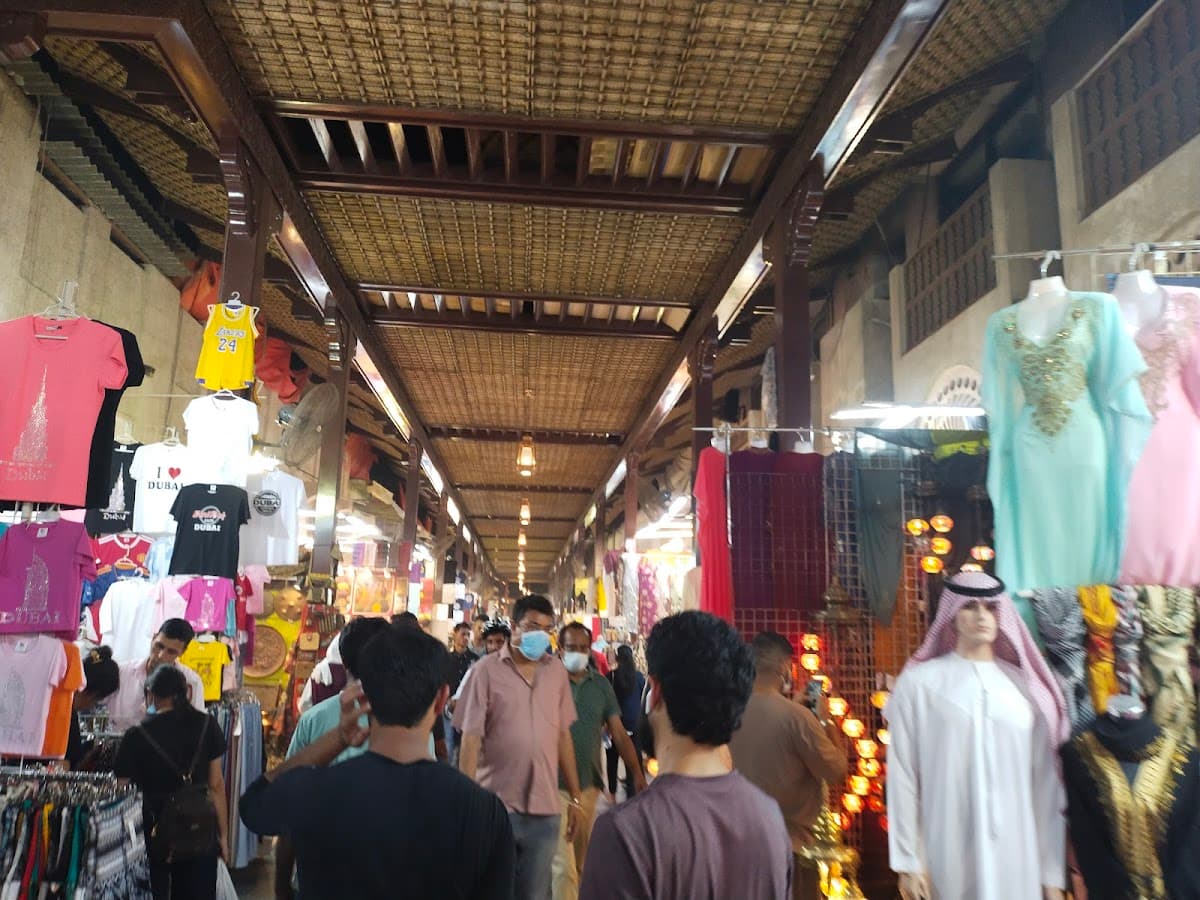
Old Dubai (Deira/Bur Dubai)
Traditional Dubai with souks, dhows and authentic culture
Forget the glass towers and shopping malls for a moment. Old Dubai — split between Deira and Bur Dubai by Dubai Creek — is where the city's soul lives. This is Dubai before the oil money, before the Instagram spots, before the world knew its name.
Here, wooden dhows still dock at the creek carrying cargo from Iran and India. Gold Souk vendors call out prices in multiple languages while frankincense smoke drifts from Spice Souk stalls. The call to prayer echoes from Al Fahidi mosque as abra water taxis ferry passengers across the creek for just 1 dirham.
But don't mistake this for a museum. Old Dubai pulses with daily life. Textile merchants haggle in Hindi, Pakistani laborers grab tea from roadside stalls, and Emirati families shop for Ramadan dates. The narrow lanes of Al Fahidi Historical Neighbourhood house art galleries and cultural centers, while Creek Park offers families a respite from the intensity.
This isn't polished Dubai — it's real Dubai. The kind of place where you'll spend half the price and twice the time actually talking to locals.
Culture & Context
ISLAMIC MODERNITY COLLIDES
Dubai is an Islamic city run as a modern international business hub, and those two identities coexist in ways that are sometimes surprising and occasionally contradictory. Around 90% of Dubai's population are expatriates. Actual Emirati nationals are a minority in their own city.
The result is a place where a conservative dress code applies in malls while a rooftop bar operates on the floor above. The city genuinely welcomes visitors — tourism is a deliberate national strategy — but it does so on its own terms. The legal system differs fundamentally from Western norms.
Things that would get you a cautionary look back home can get you arrested here. Surveys show Britons are among the most frequently arrested foreign nationals in the UAE, typically for public drunkenness, offensive behavior, or rude gestures that seem trivial at home. Look, the city is not trying to trap you — it just expects visitors to adapt rather than assuming their home rules apply.
Emirati culture places enormous value on hospitality, respect, and privacy. Traditional sports like camel racing, falconry, and horse racing connect locals to their Bedouin roots. The Dubai World Cup, the Dubai Racing Carnival, and events during Eid all carry genuine cultural weight beyond just being tourist spectacles.
The Friday-Saturday weekend (not Saturday-Sunday) still affects some business schedules, though many international companies now operate Sunday through Thursday. English is widely spoken in every hotel, mall, restaurant, and tourist zone. Arabic remains the official language and a few phrases go a long way toward building real goodwill.
Local Customs
MODEST DRESS, ZERO PDA
Dress modestly in public areas — malls, government buildings, restaurants, and all of Old Dubai. Shoulders and knees covered is the rule of thumb. At beaches and hotel pools, normal swimwear is fine.
At mosques, arms and legs fully covered; most mosques provide abayas and headscarves for women at the entrance.. Public displays of affection — kissing, overt hugging — are illegal and can result in fines or arrest. Holding hands is generally tolerated.
Keep everything else behind closed doors.. Use your right hand for greetings, passing food, and eating. The left hand is considered unclean.
This applies in Indian restaurants too.. Do not photograph strangers, particularly women, without explicit permission. Taking unauthorized photos of government buildings or military sites can get you into serious trouble.
When in doubt, put the camera down.. During Ramadan (approximately Feb 18 to March 19 in 2026), no eating, drinking, or smoking in public during daylight hours. This applies to non-Muslims.
Being discreet in quieter areas matters — restaurants near tourist zones are usually more relaxed about enforcement.. Alcohol is only available in licensed hotel bars, restaurants, and clubs. No drinking in public spaces — not on JBR beach, not in Dubai Marina, nowhere outside a licensed venue.
Being visibly drunk in public is an arrest offense.. Swearing, rude hand gestures, and even pointing fingers at people are illegal in Dubai and can result in fines or imprisonment. Road rage gestures while driving have resulted in deportations.
Keep it calm.. Dubai monitors social media activity. Avoid posting negative comments about Dubai, its leadership, or the UAE government.
Cybercrime laws are enforced, with fines up to AED 250,000 for violations.. Check medications before you travel. Several common Western prescriptions — including certain pain relievers, anxiety medications, and ADHD treatments — are banned in the UAE.
Carry original prescriptions and a doctor's letter for anything you're bringing.. Tipping is appreciated but not mandatory. A 5–10% tip at restaurants (if no service charge is included), rounding up taxi fares, and tipping hotel staff for good service is the norm.
Tip in cash and discreetly.. Since 2020, unmarried couples can legally stay together in Dubai hotels. Hotels no longer require proof of marriage.
Same-sex couples should be discreet in public — same laws on public displays of affection apply.. Hospitality is a serious part of Emirati culture. If offered Arabic coffee (gahwa) and dates, accept at least two small cups.
Refusing can come across as impolite.
Safety
SAFEST CITIES, STRICTEST RULES
Dubai consistently ranks among the safest cities in the world for violent crime. According to Reuters, the UAE was the second-safest country globally in 2025 behind only Iceland. Street muggings are extremely rare, and the city's surveillance infrastructure is among the most comprehensive anywhere.
But 'safe' needs some context for 2026 specifically. Earlier in the year — around February and March — regional military conflict between Iran and a US-Israel coalition led to missile and drone attacks targeting parts of the UAE. Dubai's air defense systems intercepted incoming threats, airports kept operating at full capacity, and hotel occupancy is already recovering toward pre-conflict levels as of spring 2026.
By April 2026, the situation had stabilized considerably. The real risks for tourists are different from what most people worry about. Traffic is genuinely dangerous by Western standards — speeding is pervasive and accident rates are high.
Use pedestrian crossings and avoid jaywalking. Petty theft exists in crowded tourist areas: the Gold Souk, Global Village, and busy market areas during major events see occasional pickpocketing. Cyber scams and online fraud are the fastest-growing crime category.
The biggest legal risks for tourists are behavioral — public drunkenness, PDA, rude gestures, and social media posts can all result in arrest or heavy fines. For solo female travelers, Dubai is consistently rated in the global top 10 for safety, with strong harassment laws and heavy policing. Check your government's current travel advisory for the latest regional updates before booking.
Carry copies of your passport and visa separately from the originals.
Getting Around
METRO & ABRA DOMINATE
The Dubai Metro is your best friend and worst enemy simultaneously. It's clean, fully air-conditioned, fast, and affordable. It also doesn't go everywhere, and in summer, a 500-meter walk to a station is genuinely punishing.
The Red Line is the one tourists use most — it runs from Dubai Airport (Terminals 1 and 3 both have direct stops) along Sheikh Zayed Road through Downtown (Burj Khalifa/Dubai Mall station), Mall of the Emirates, Dubai Internet City, and all the way to Expo City. The Green Line covers historic Deira and Bur Dubai, connecting the souks and old city districts. Get a Silver NOL card (AED 25, includes AED 19 travel credit) at any station.
It works on metro, buses, trams, and water buses. Fares are zone-based, running AED 3–7.50 per trip.
Tap in AND tap out — forgetting to tap out charges you the maximum fare. Metro runs roughly 5am to midnight on weekdays, 1am on weekends. The Gold Class cabin (front of the train) is worth trying for the driver's-eye view down the track.
No eating, drinking, or even chewing gum on metro platforms or trains. The fine is AED 100 and inspectors do check. For taxis: install Careem and select Hala Taxi for official metered RTA rides with no surge pricing.
Uber also operates. Pink-roof taxis are driven by women and are reserved for female passengers if preferred. For Old Dubai, take the abra across Dubai Creek between Bur Dubai and Deira — AED 1–2 per crossing and genuinely atmospheric.
The Dubai Tram connects Marina and JBR to the Palm Monorail (AED 30 return to the Palm). Avoid rush hours of 7–9am and 5–7pm if you can — roads and metro cars get genuinely crowded. For day trips to Hatta or Abu Dhabi, a rental car makes sense — international driving license required.
Download the RTA S'hail app for real-time schedules and route planning.
Useful Phrases
Itineraries coming soon
We're working on adding amazing itineraries for Old Dubai (Deira/Bur Dubai). In the meantime, try the app to create your own!
Money-Saving Tips
- 1.Abra rides cost 1 dirham — use them instead of taxis for Creek crossings
- 2.Haggle in Gold Souk but not Spice Souk where prices are more fixed
- 3.Street food meals cost 10-15 dirhams versus 50+ at tourist restaurants
- 4.Stay in Deira for cheaper hotels with easy access to main attractions
- 5.Metro day passes (22 dirhams) beat multiple taxi rides between districts
- 6.Shop for textiles on weekday mornings when vendors offer better deals
- 7.Free walking tours start from Al Fahidi Historical Neighbourhood daily
- 8.Carry small bills — many vendors can't break 100 dirham notes
Travel Tips
- •Download offline maps — GPS struggles in narrow souk alleys
- •Dress modestly, especially when visiting mosques or traditional areas
- •Carry tissues and hand sanitizer — public restrooms vary in quality
- •Learn basic Arabic greetings — vendors appreciate the effort
- •Avoid Friday afternoon shopping — many businesses close for prayers
- •Keep your hotel business card in Arabic for taxi drivers
- •Bring a small backpack for souk purchases — plastic bags tear easily
- •Stay hydrated — the dry heat is deceptive, especially while walking
- •Respect photography rules — ask before shooting in souks or near people
- •Keep cash handy — many small vendors don't accept cards
Frequently Asked Questions
Explore Old Dubai (Deira/Bur Dubai)
BUILD YOUR
OLD DUBAI (DEIRA/BUR DUBAI) PLAN
Insider picks, smart timing, and a plan ready when you are.
Start Planning