Port Douglas
Gateway to Great Barrier Reef and Daintree Rainforest
Port Douglas sits where the rainforest meets the reef, and honestly? It's hard to find a more perfect spot in tropical Australia. This former fishing village turned luxury escape gives you direct access to two World Heritage sites - the Great Barrier Reef and Daintree Rainforest - without the crowds of Cairns. Four Mile Beach stretches along the town's edge, while Macrossan Street buzzes with restaurants that actually know how to cook fresh barramundi. The marina fills with reef boats each morning, and by afternoon, you're snorkeling over coral gardens that most people only see in documentaries.
Best Months
MAY – OCT
~27°C · high crowds
Culture & Context
INDIGENOUS HERITAGE & REEF
Port Douglas sits on Kuku Yalanji Country, known locally as Manjal Jalunbuy. The Kuku Yalanji people have lived in relationship with these rainforests and reef systems for around 50,000 years — one of the oldest continuous cultural relationships with land anywhere on earth. The word 'Marrdja' means rainforest in Kuku Yalanji; 'Wujal Wujal' means many falls, the name for the Bloomfield Falls.
The town itself started as a fishing village in the 1870s and grew into an upscale resort destination. It sits between two UNESCO World Heritage sites — the Great Barrier Reef and the Daintree Rainforest — which shapes everything about how the place feels and functions. There's a strong local identity around environmental conservation. Building regulations in the Douglas Shire actively restrict beach-side development, which is why there are no high-rises blocking the view of Four Mile Beach. Locals fought hard for that and continue to.
The economy runs on tourism, hospitality, and fishing. The sugar cane industry around Mossman still operates — the Mossman Sugar Mill is one of the few remaining mills in Far North Queensland. Hemingway's Brewery actually makes a rum from cane juice sourced there, which is a nice local loop.
Port Douglas is meaningfully different from Cairns, its bigger southern neighbour. It's slower, smaller, more expensive, and deliberately so. The lack of chain restaurants isn't accidental — it's a community stance. Visitors who arrive expecting the scale or convenience of Cairns will be frustrated. Visitors who lean into the small-town pace will understand why some people come once and move here.
Local Customs
BYO WINE & TOAD RACING
BYO (Bring Your Own) wine is common and expected at several restaurants around town, including Star of Siam on Macrossan St and Menu Thai on Grant St. Check before you go — corkage usually runs A$5–10 and saves you real money on the wine markup.. The Sunday markets are a genuine local institution, not a tourist trap.
Get there by 8–8:30am for best produce and to beat the heat. Chatting with stallholders is normal and expected — don't just grab and go.. No McDonald's, KFC, Starbucks, or Hungry Jack's in Port Douglas.
The Domino's that existed is now closed as of 2026. This is deliberate and locals are proud of it. Don't complain about it..
The Kuku Yalanji people are the Traditional Owners of this land. When visiting Mossman Gorge, consider taking a guided tour with Kuku Yalanji guides rather than self-guiding — the cultural context they provide completely changes what you see.. Toad racing at the Iron Bar on Macrossan St sounds ridiculous and is.
It's been drawing in everyone from backpackers to visiting celebrities for years. Go at least once.. The prawn boat visits the Port Douglas jetty periodically and sells fresh local prawns direct — keep an eye on local Facebook groups or ask at the marina for the schedule.
It's a genuine local moment and prices are excellent.. During tourist season (July–September), restaurant waits get long. Pre-booking is strongly advised.
Some places fill up by 6pm on peak nights.. Port Douglas has two seasons, not four: wet (November–April) and dry (May–October). Locals will happily discuss which is better for weeks.
Dry season is peak tourism; wet season brings rain and lush green everything plus lower prices.. Swim between the red and yellow flags, always. This isn't casual advice — it's how you avoid stingers and the rare but real crocodile risk.
The stinger net at Four Mile Beach (near the surf club) is your friend from November to May.
Safety
STINGERS & CROCODILES
Port Douglas is genuinely safe as a town — crime is low and the main risks are environmental. But they're real ones worth knowing before you hit the water.
The big two are stingers and crocodiles. Stinger season runs roughly November to May. Box jellyfish and the smaller (and more terrifying) Irukandji can be present, and even tiny ones can get through mesh. During stinger season, stick to the netted swimming enclosure at Four Mile Beach near the surf club, wear a stinger suit if you can, and follow whatever the lifeguards are posting on the beach board that day. Lifeguards patrol and update conditions daily.
Crocodiles are not a constant threat on Four Mile Beach itself, but they do occasionally appear — lifeguards close the beach when one is spotted and track it until it leaves. The absolute no-swim zones are Dickinson's Inlet, around the Sugar Wharf Jetty, and near the Mowbray River mouth at the southern end of the beach. These aren't cautious suggestions. There could be very large saltwater crocodiles in those areas. Heading further north toward Cape Tribulation or Cooktown, the croc risk makes beach swimming unsafe entirely.
Standard beach rules: swim only between the red and yellow flags, don't swim alone at dawn or dusk, and never wade in creek or river mouths. Check the Queensland government's CrocWatch for current sighting reports.
Sun protection matters more than visitors expect. Australian UV intensity is extreme — reef-safe sunscreen, a hat, and reapplying often aren't optional extras. The Australian emergency number is 000.
Getting Around
WALKABLE, RENT A CAR
Port Douglas itself is compact and walkable. The town sits on a narrow spit of land with one main road in and out. Macrossan Street to Four Mile Beach is a 5-minute walk, and the full length of the beach esplanade takes about an hour on foot.
For getting around town: a local bus service runs every 15 minutes during the day, A$5 for a round trip. The Ballyhooley Steam Railway is a vintage train running between the Marina Mirage and St. Crispins — a genuinely charming way to move between those points. Taxis are available but expect delays Friday and Saturday evenings; flag fall is A$6.20 and roughly A$3.64 per mile.
For getting out of town: rent a car. The Daintree Rainforest and Mossman Gorge are both essential day trips and not doable without one (or a tour). Thrifty and Budget both operate in town, running around A$50/day for a small car. Roads are good and traffic jams are rare. The drive north along the Captain Cook Highway, with cane fields on one side and the Coral Sea appearing on the other, is genuinely spectacular.
Cairns is about an hour south and has the nearest major airport. The Sunbus runs between Port Douglas and Cairns and is the most affordable airport connection. Shuttle services also operate if you prefer door-to-door.
All reef tour boats depart from the Crystalbrook Superyacht Marina. Most operators pick up from accommodation in town, so check when booking. The best underwater visibility on the reef runs May to October.
Useful Phrases
Port Douglas Itineraries
Things to Do in Port Douglas
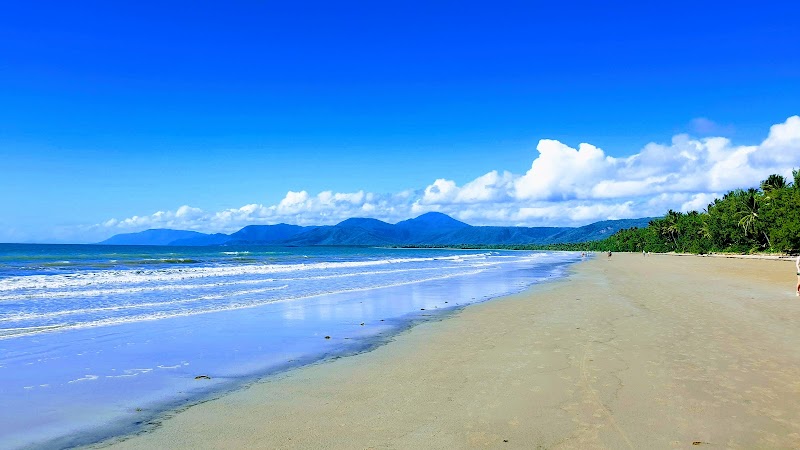
Four Mile Beach Morning Walk & Swim
Four Mile Beach · 90 min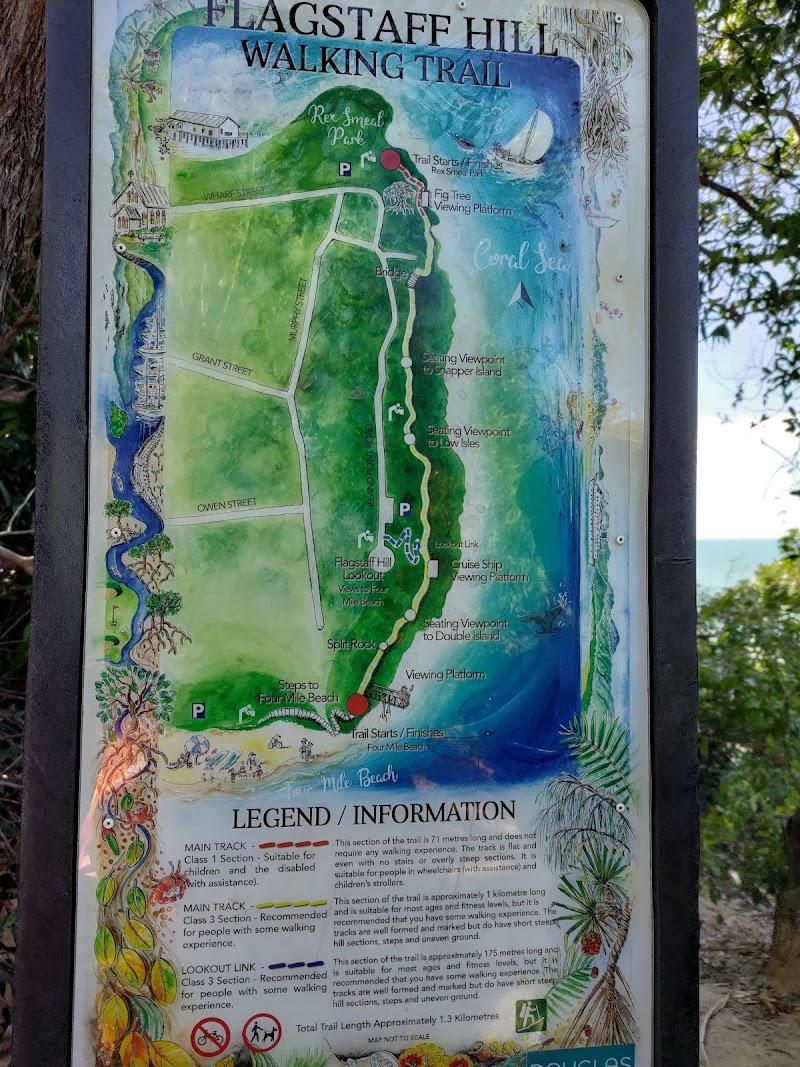
Flagstaff Hill Walking Trail & Lookout
Four Mile Beach / Macrossan Street · 60 min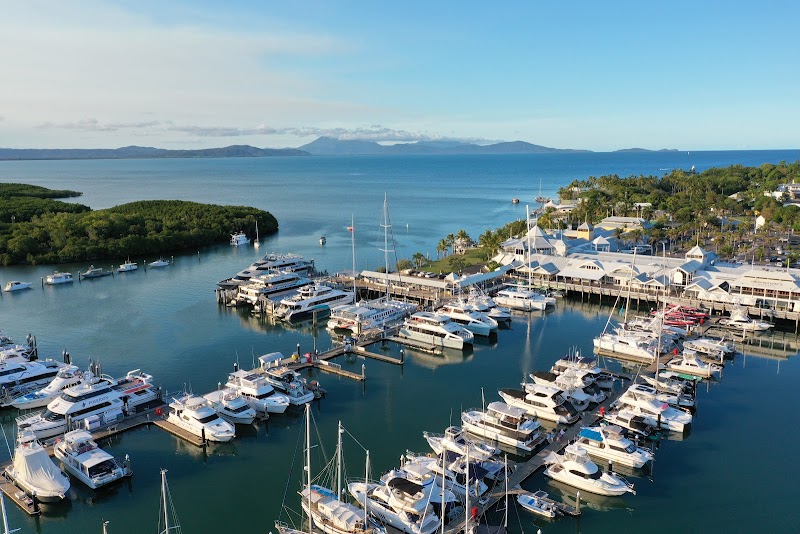
Crystalbrook Superyacht Marina Sunset Stroll
Crystalbrook Superyacht Marina · 90 minMoney-Saving Tips
- 1.Book reef tours directly with operators rather than through hotel concierges - you'll save 10-15% on commission fees
- 2.Shop at Coles or IGA for groceries instead of resort shops where a bottle of water costs $6
- 3.Visit during shoulder season (May or October) for 30% cheaper accommodation with perfect weather
- 4.Pack your own snorkel gear - rental fees add up to $25 per day on reef trips
- 5.Sunday markets offer fresh fruit and local products at half the price of tourist shops
- 6.Happy hour at Court House Hotel runs 4-6 PM with $5 beers and $12 cocktails
- 7.Free parking is available on most streets - avoid paid marina parking unless you're catching a boat
Travel Tips
- •Bring reef-safe sunscreen - regular sunscreen is banned on many reef tours to protect coral
- •Book reef tours 2-3 days ahead during peak season (June-September) - popular trips sell out
- •Pack insect repellent for rainforest walks - March flies and mosquitoes are aggressive
- •Download offline maps - phone coverage gets spotty in Daintree Rainforest
- •Wear stinger suits when swimming October-May - box jellyfish and irukandji are present
- •Bring a light rain jacket even in dry season - afternoon showers happen year-round
- •Exchange money before arriving - Port Douglas has limited ATMs and they charge high fees
Frequently Asked Questions
Explore Port Douglas
BUILD YOUR
PORT DOUGLAS PLAN
Insider picks, smart timing, and a plan ready when you are.
Start Planning