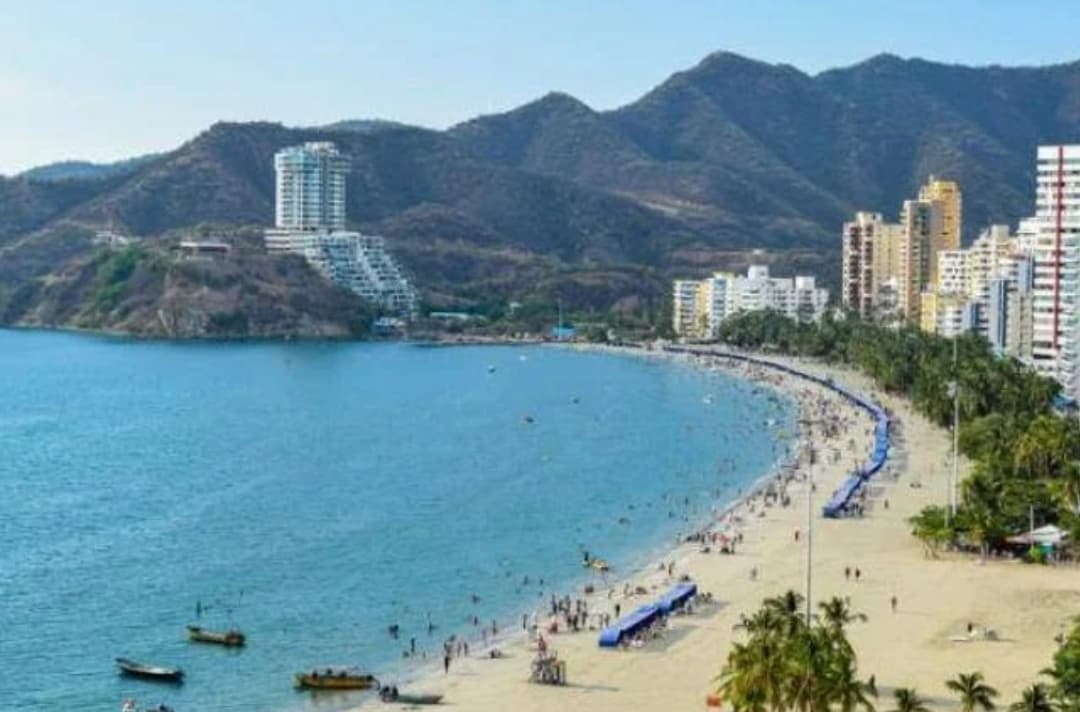
Santa Marta
Colombia's Caribbean gateway to beaches and mountains
Santa Marta sits where the Caribbean meets the Sierra Nevada mountains, creating Colombia's most geographically dramatic city. Founded in 1525, it's the country's oldest surviving settlement, but don't expect a sleepy colonial town. This is a launching pad for adventures that range from diving in Tayrona National Park to trekking to the Lost City. The historic center pulses with salsa music spilling from corner bars, while backpackers plot their next move over cheap beers. Sure, it's touristy compared to inland Colombian cities, but Santa Marta earns its popularity. You can swim in crystalline waters at Playa Blanca in the morning and be hiking cloud forest trails by afternoon.
Best Months
JAN · FEB · MAR · APR · DEC
~32°C · high crowds
Culture & Context
GLACIER PEAKS MEET CARIBBEAN
Santa Marta is Colombia's oldest surviving city, founded in 1525 by Rodrigo de Bastidas. It just hit its 500th anniversary in July 2025, which was a big deal for locals. The city sits at a genuinely rare geographic crossroads: Caribbean Sea to the north and west, Tayrona National Park to the east, and the Sierra Nevada de Santa Marta (the world's tallest coastal mountain range, topping out at 5,775 meters) literally right behind the city.
You can sit on a beach and look up at glacier-capped peaks less than 50 miles away. That's not a marketing line, it's just what the place looks like. The people here are Costeños, and they have a distinct identity separate from inland Colombians.
The dialect (called Costeñol) is fast, rhythmic, drops syllables, and has Caribbean and African influences woven through it. The city is also the birthplace of footballer Carlos Valderrama, singer Carlos Vives, and it's where Simón Bolívar died in 1830 at the Quinta de San Pedro Alejandrino estate. Vallenato music, the Colombian Caribbean's heartbeat genre, floats out of almost every open door.
The pace is slower and more sun-baked than Bogotá or Medellín. Locals run on their own schedule. And frankly, after a few days, you will too.
Local Customs
GREET EVERYONE, WATCH PAPAYA
Greet people with 'Buenas' at any time of day. Costeños do this constantly, even walking past strangers in a corridor. Skip it and you'll come across as cold..
A la orden means both 'at your service' and 'you're welcome.' You'll hear it from vendors, shopkeepers, and taxi drivers dozens of times a day. Respond with 'gracias' and smile..
No dar papaya is a Colombian saying you need to internalize fast. Literally 'don't give papaya,' it means don't make yourself an easy target. Don't walk around with your phone out, don't leave your bag unattended on the beach, don't wear flashy watches..
Haggling is normal at markets. It's not rude. Start lower than what you want to pay and meet in the middle..
Mealtimes run later than North American or Northern European visitors expect. Lunch (the main meal) happens 1–3pm. Dinner rarely starts before 8pm.
Show up at 7pm to a local restaurant and you might be eating alone.. Reggaeton and vallenato will be playing everywhere, loudly, at all hours. This is not a complaint from locals.
Earplugs are your friend if you're a light sleeper near the main plaza.. The local buses don't have fixed maps or printed schedules. Routes are posted in the front window.
Ask the driver or a local, they'll actually help you.. Tipping isn't required but rounding up for good service is appreciated. Some restaurants add a 10% propina (service charge) automatically.
Safety
PETTY THEFT, SMART MOVES
Santa Marta is generally considered one of the safer cities on the Colombian Caribbean coast, but that doesn't mean you switch your brain off. Petty theft (pickpocketing, phone snatching, bag grabs) is the real day-to-day concern, especially in crowded markets, on buses, and on beaches. Never leave your bag unattended when you go for a swim.
Keep your phone in your pocket, not in your hand, when you're walking around. The neighborhoods to avoid are Pescaito, La Paz, La Lucha, and Los Trupillos. Stick to the historic center, El Rodadero, Pozos Colorados, Taganga, and Bello Horizonte for a much calmer experience.
Nighttime requires a different approach: safety ratings drop significantly after dark (about 66% of people feel safe during the day vs. 39% at night). Use registered taxis or apps rather than walking down unlit streets.
In clubs, watch your drink being poured and don't accept drinks from strangers. Drink spiking has been reported. The 'undercover police officer wants to check your cash for counterfeits' scam exists in Colombia.
If someone flashes a badge and asks to inspect your wallet, don't comply. Ask to be escorted to the nearest police station (CAI) instead. Beaches at Tayrona require hiring guides for some routes, and solo hiking there has resulted in robberies at gunpoint.
Go with a group or a registered operator. Emergency number: 123.
Getting Around
COLECTIVOS & COASTAL CHAOS
Santa Marta runs on three main transport hubs. Simón Bolívar International Airport (SMR) is 10–17 km south of the city center, between Bello Horizonte and El Rodadero. From there, a taxi to the center runs about $5–8 USD; a local bus takes about an hour and costs under $1 but is awkward with luggage.
The long-distance bus terminal (Terminal de Transportes, Mamatoco area) handles routes to Barranquilla (~25,000 COP), Cartagena (~50,000 COP), Bogotá, and other cities. Multiple companies run the Cartagena route including Expreso Brasilia, Marsol, and Copetran. Expect 4–5 hours to Cartagena, sometimes longer.
Always bring layers because the AC on Colombian buses is set to Arctic. The Mercado Público in downtown is the departure point for regional colectivos to Minca, Tayrona Park, Palomino, and La Guajira. City buses (busetas) cost COP 2,000–3,000 per trip and the route is posted in the windshield.
Ask a local if you're not sure. Taxis within the center run COP 6,000–8,000. Outside the center (airport, Taganga, El Rodadero), prices go higher.
Meters exist but not all drivers use them. Agree on a price before you get in. Uber works in the city but operates in a grey zone.
Sit up front and act like you know the driver. Moto-taxis are everywhere and cheap but carry real risk. For trips to Tayrona, book a colectivo from the market area (around 10,000–15,000 COP each way).
No metro, no tram, no unified transport card.
Useful Phrases
Money-Saving Tips
- 1.Skip expensive tourist restaurants in Centro Histórico - walk three blocks inland for the same food at half the price
- 2.Buy bus tickets to Tayrona at the terminal, not from street vendors who add commission fees
- 3.Negotiate taxi fares before getting in - meters don't exist and drivers quote tourist prices
- 4.Stay in Taganga instead of El Rodadero to save $20-40 per night on accommodation
- 5.Pack lunch for Tayrona National Park - food inside costs triple the normal price
- 6.Book Ciudad Perdida treks directly with local operators like Turcol or Expotur to avoid agency markups
- 7.Use city buses (2,500 pesos) instead of taxis for trips to El Rodadero and Taganga
- 8.Buy snacks and drinks at corner stores before hitting the beach - resort prices are inflated
Travel Tips
- •Bring cash - many places don't accept cards, especially in Taganga and mountain areas
- •Pack reef-safe sunscreen for Tayrona National Park - regular sunscreen damages the coral
- •Download offline maps before heading to remote beaches where cell service is spotty
- •Book Ciudad Perdida treks at least a week in advance during dry season
- •Carry copies of your passport - originals can get damaged or stolen at the beach
- •Learn basic Spanish phrases - English isn't widely spoken outside tourist areas
- •Pack a rain jacket even during dry season - afternoon showers happen year-round
- •Use mosquito repellent in Minca and jungle areas, especially during rainy months
- •Store valuables in hotel safes - beach theft is common, especially in Taganga
- •Drink bottled water and avoid ice in street food to prevent stomach issues