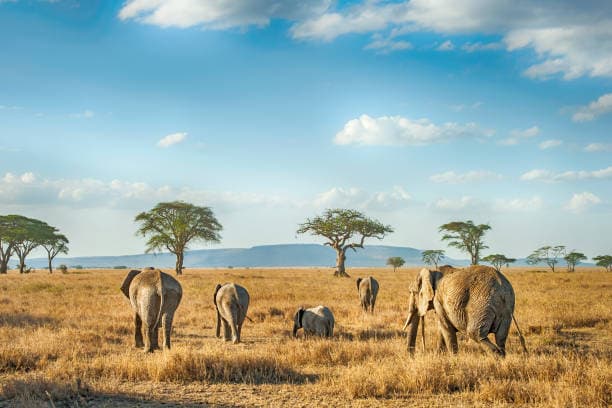
Serengeti National Park
Witness the greatest wildlife spectacle on Earth
The Serengeti isn't just a national park — it's the stage for the planet's most dramatic wildlife show. Picture this: two million wildebeest thundering across golden grasslands while lions wait in the shadows. This is where David Attenborough comes to film documentaries, where photographers camp for weeks to capture that perfect shot of a cheetah mid-sprint.
But here's what the glossy brochures won't tell you. The dust gets everywhere. Your Land Cruiser will break down at least once. And you'll spend hours driving between animal sightings, wondering if you've made a terrible mistake. Then a leopard appears in a fever tree, or you witness a river crossing during the Great Migration, and suddenly every uncomfortable moment melts away.
The Serengeti spans 5,700 square miles of Tanzania's northern plains, making it roughly the size of Connecticut. The name comes from the Maasai word "siringet," meaning endless plains — and they weren't kidding. This place operates on nature's timeline, not yours.
Itineraries coming soon
We're working on adding amazing itineraries for Serengeti National Park. In the meantime, try the app to create your own!
Money-Saving Tips
- 1.Book flights to Kilimanjaro Airport instead of Dar es Salaam — it's closer to Serengeti and often cheaper than connecting through European hubs
- 2.Safari operators offer significant discounts for bookings made 6+ months in advance, especially for travel during shoulder seasons
- 3.Shared safari vehicles cost 40-60% less than private ones, and you'll meet other travelers who often become lifelong friends
- 4.Pack lunch from your lodge instead of buying overpriced meals at visitor centers — most camps provide picnic boxes for day trips
- 5.Flying between camps costs $200-400 per person but saves 6+ hours of driving time that could be spent on game drives
- 6.Tipping guidelines: $20-25 per day for safari guides, $10-15 for camp staff, always in US dollars — Tanzanian shillings are harder for them to exchange
Travel Tips
- •Download offline maps before entering the park — cell service is spotty and GPS can fail when you need it most
- •Bring a portable phone charger and extra batteries — most safari vehicles have 12V outlets but they're not always reliable
- •Learn basic animal behavior signs from your guide — tail positions, ear movements, and body language reveal hunting intentions
- •Book hot air balloon rides at least 3 days ahead during peak season — they cost $550 per person but offer unmatched perspectives
- •Respect the 25-meter rule from wildlife — getting closer doesn't improve photos and stresses animals unnecessarily
- •Start game drives before sunrise — animals are most active in the first two hours after dawn when temperatures are cool
Frequently Asked Questions
Explore Serengeti National Park
BUILD YOUR
SERENGETI NATIONAL PARK PLAN
Insider picks, smart timing, and a plan ready when you are.
Start Planning