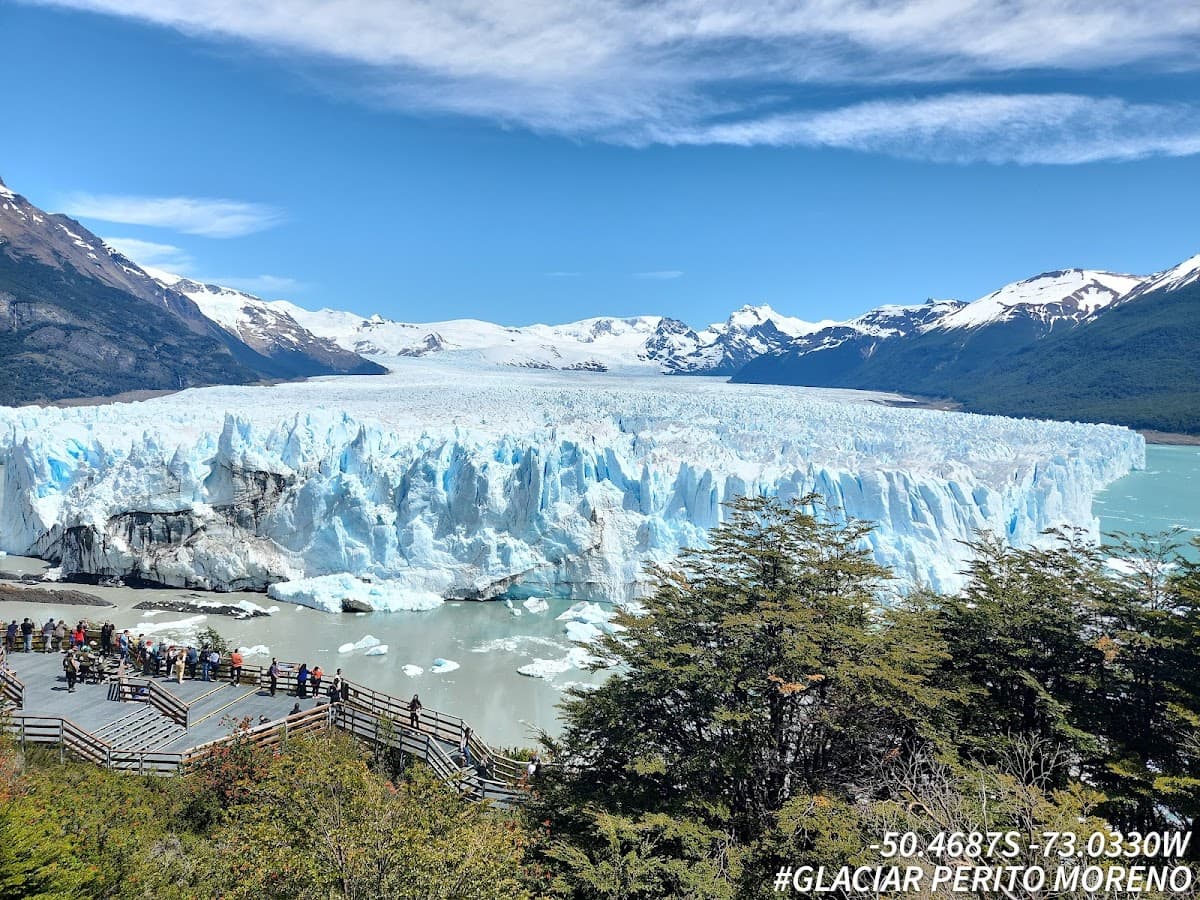
Perito Moreno Glacier
Witness the thunderous spectacle of advancing ice
The thunderous crack echoes across Lago Argentino as another chunk of ice the size of a building crashes into the milky turquoise water. This is Perito Moreno Glacier – one of the few glaciers in the world that's still advancing instead of retreating. Located in Los Glaciares National Park in Argentine Patagonia, this 250-square-kilometer ice mass moves about two meters per day, creating a constant show of calving ice and groaning sounds that'll make your spine tingle.
Unlike most glaciers you'll visit, Perito Moreno puts on a performance. The 60-meter-high ice wall stretches five kilometers across, and you can get close enough to hear the ice singing – those otherworldly creaks and pops as the glacier shifts and moves. The viewing platforms at Península de Magallanes offer front-row seats to this geological theater, but the real adventure begins when you strap on crampons and walk directly on the ice itself.
Culture & Context
GLACIER TOWN, LAMB & LEGEND
El Calafate is a purpose-built glacier tourism town of around 29,000 people on the southern shore of Lago Argentino — Argentina's largest freshwater lake. It's named after the calafate berry, native to Patagonia. Local legend says whoever eats one will always return.
The town revolves almost entirely around tourism: Avenida del Libertador is the main drag, lined with tour agencies, craft beer joints, gear shops, and restaurants serving Patagonian lamb slow-roasted on a cross-style spit (cordero patagónico). Argentina eats late — dinner before 9pm is unusual. Tipping around 10% in restaurants is customary.
Mate culture is everywhere; offering and sharing mate is a social ritual. The Glaciarium museum, 6km outside town, offers excellent context on the ice fields and has a GlacioBar made entirely of ice. El Calafate is also a regional transport hub connecting to El Chaltén, Puerto Natales (Chile), Ushuaia, and Buenos Aires.
Local Customs
MATE, LATE DINNERS, ASADO
Mate is serious business. Locals carry a thermos everywhere. If someone offers you a mate gourd, accept it — refusing is rude.
You sip, hand it back, and they refill it for the next person. Don't say 'gracias' until you're done; saying it signals you don't want another round.. Dinner starts late.
Restaurants don't fill up until 9–10pm. Showing up at 7pm means you'll be eating alone in an empty room. Roll with it..
The calafate berry legend is taken lightly but genuinely enjoyed — try calafate jam, ice cream, or beer. Locals get a kick out of tourists taking the legend seriously.. Tipping around 10% is standard at restaurants.
It's not always automatic on bills, so check and add it manually.. Hitchhiking (hacer dedo) is a culturally accepted practice in Patagonia for getting to the glacier on a budget. It's common and generally safe, though less reliable in low season..
Dogs roam freely around town and are generally friendly — they're a fixture of El Calafate street life. No pets are allowed inside Los Glaciares National Park.. Pay attention to layering culture.
Locals and guides are used to sudden weather swings; anyone in a single cotton layer is immediately identifiable as unprepared. Wind chill can make 15°C feel like 5°C at the glacier.. The asado (barbecue) is sacred.
Patagonian lamb on a cross-spit (al palo) is the regional specialty and worth every peso. Rushing an asado is a cultural offense.
Safety
WEATHER & WILDERNESS MATTER
El Calafate and the glacier are very safe by South American standards. The real risks here are environmental and logistical, not criminal. Petty crime is minimal — this is a small adventure town, not a city.
That said, a few things to know: Weather at the glacier changes fast and without warning. Wind chill can make conditions feel 10°C colder than forecast. Always carry a windproof and waterproof layer, even in January.
The boardwalks are metal grating and get slippery — wear actual hiking shoes, not sandals. Cell coverage is non-existent at the glacier; download offline maps before you leave town. Serious medical situations may require evacuation to Río Gallegos (300km+) or Buenos Aires — travel insurance with trekking coverage and emergency evacuation is strongly recommended for anyone doing Big Ice or remote activities.
Bring Argentine peso cash for the park entrance booth — card machines regularly fail in remote areas. The road between El Calafate airport and town has a mandatory police checkpoint with breathalyzers; standard procedure, not intimidating. Emergency number is 911 (English-speaking services only available in Buenos Aires).
Hantavirus is a documented risk in Patagonia — avoid contact with rodents, nests, or droppings, particularly in rural or camping areas.
Getting Around
TOURS OR DRIVE YOURSELF
The glacier is 80km from El Calafate via Provincial Route 11 — fully paved and in good condition. The drive takes about 90 minutes. Options: (1) Organized day tour ($80–100 USD) includes hotel pickup, bilingual guide, and 3–4 hours at the boardwalks.
Departs 8:00–8:30am, returns around 4–5pm. Most practical for first-timers. (2) Public bus from El Calafate bus terminal (Jean Mermoz 104) — CalTur and other companies run daily departures at 8:30 or 9:00am.
Budget option, no guide included. (3) Rental car — Hertz and Avis have offices in town. Free parking at the park.
Good option for groups of 3–4 splitting costs ($60–80/day for the car plus fuel). (4) Hitchhiking — surprisingly common and socially accepted in Patagonia. Walk to Ruta Provincial 11 and thumb it; easier during peak season.
Getting to El Calafate: Fly into Comandante Armando Tola International Airport (FTE), 23km from town. Aerolíneas Argentinas, Flybondi, and JetSmart connect to Buenos Aires daily (~3hrs). Shared airport shuttle to town costs $9–15 USD.
Direct buses connect to El Chaltén (3hrs), Río Gallegos (4hrs), and Puerto Natales, Chile (6hrs). No Uber in El Calafate — use remises (private taxis) or hotel shuttles. Ice trekking tours (Minitrekking and Big Ice) are exclusively run by Hielo y Aventura and include a boat crossing from Bajo de las Sombras port.
Book 3–4 months ahead for December–February peak season — permits cap at 100–120 participants daily and sell out completely.
Useful Phrases
Money-Saving Tips
- 1.Book ice trekking tours directly with Hielo y Aventura to avoid markup fees from El Calafate agencies
- 2.Bring cash in Argentine pesos for park entry – credit cards aren't accepted and ATMs charge hefty foreign transaction fees
- 3.Pack your own lunch for glacier visits instead of buying overpriced snacks at the park cafe
- 4.Stay in El Calafate during shoulder season (March or November) when hotel rates drop by 40-50%
- 5.Share transportation costs by joining group tours or splitting taxi fares with other travelers
- 6.Buy warm gear in Buenos Aires before flying to Patagonia – outdoor equipment in El Calafate costs double
- 7.Fill up your rental car in El Calafate before heading to the glacier – no gas stations in the park
Travel Tips
- •Arrive at viewing platforms before 10 AM or after 4 PM to avoid cruise ship crowds
- •Bring a thermos of hot coffee – glacier winds make even summer days feel cold
- •Download offline maps before visiting – cell service is spotty near the glacier
- •Wear sunglasses even on cloudy days – glacier reflection causes snow blindness
- •Keep your camera battery warm in an inside pocket between shots
- •Listen for the glacier's sounds – creaking and groaning indicate active ice movement
- •Book accommodation in El Calafate at least two months ahead for December-February visits
- •Check weather forecasts daily – Patagonian conditions change rapidly
- •Bring waterproof gloves for ice trekking – regular gloves will freeze to the ice
- •Allow extra time for the return drive to El Calafate – wildlife often blocks the road
Frequently Asked Questions
BUILD YOUR
PERITO MORENO GLACIER PLAN
Insider picks, smart timing, and a plan ready when you are.
Start Planning