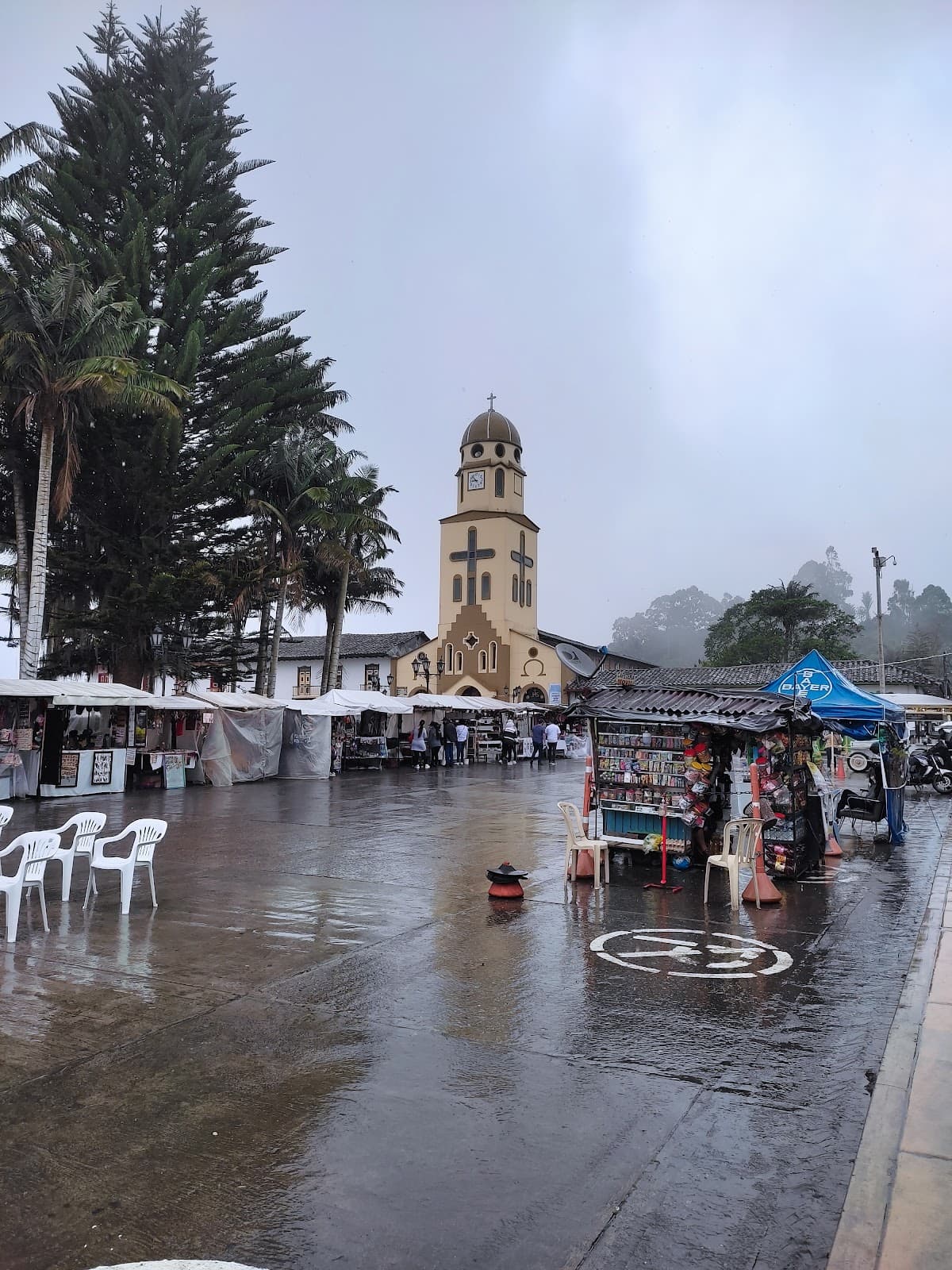
Salento
Colombia's coffee heartland nestled in Andean cloud forests
Salento sits 1,895 meters above sea level in Colombia's coffee triangle, where morning mist rolls through bamboo forests and the smell of roasting beans drifts down cobblestone streets. This small town of 7,000 people has become the unofficial capital of Colombian coffee culture without losing its authentic charm. You'll find more backpackers than tour buses here, and locals still outnumber visitors on the main plaza. The surrounding Valle de Cocora holds the world's tallest palm trees, while nearby coffee fincas offer tastings that'll ruin Starbucks for you forever.
Best Months
JAN · FEB · JUN · JUL · AUG · DEC
~25°C · peak crowds
Culture & Context
COFFEE TRIANGLE PRESERVED
Salento sits in the heart of Colombia's Eje Cafetero (Coffee Triangle), in the Quindío department of the central Andes. The town was founded in 1850 and is one of the oldest in the region. It's Paisa country, meaning the locals carry a distinct cultural identity: proud, warm, and deeply tied to coffee farming and cattle ranching.
Coffee here isn't a trend. It's the economy, the history, and the social fabric. Descendants of the original settlers still farm the surrounding hillsides.
The architecture tells that story too. White-walled houses with doors and window frames painted in cobalt, tangerine, and turquoise line the streets. Many of those buildings are original.
The main highway that would have "modernized" Salento was rerouted decades ago, which is exactly why the place looks like a late 19th-century postcard. On weekends, the Plaza de Bolívar transforms into an outdoor market with food stalls, artisan vendors, and local Colombians who come from surrounding cities to enjoy what their own country preserved here. It gets genuinely crowded on Saturdays and Sundays.
Plan accordingly. And yes, tourists have noticed. Souvenir shops and international restaurants have multiplied on Calle Real in recent years, which has diluted some of the authentic feel.
But walk a few blocks off the main drag and you're back among coffee workers, billiard halls, and corner bodegas.
Local Customs
TEJO & TINTO CULTURE
Tejo is Colombia's national sport and you absolutely need to try it while in Salento. The game involves throwing heavy metal discs at a clay-lined ring packed with small gunpowder packets. When you hit one, it explodes.
Los Amigos tejo cancha is on Carrera 4a, No. 3-32. Show up, buy a few beers or a bottle of aguardiente, and let the locals show you how it's done.
They genuinely enjoy watching tourists try.. Cash is king. Many restaurants, all local transport, and most street vendors are cash-only.
ATMs break down frequently and long lines form on weekends. Bring pesos from Armenia before you arrive.. On weekends, the Plaza de Bolívar fills with domestic Colombian tourists.
The bodegas (local bars/shops) overflow and it becomes a block party. This is great atmosphere but also means noise until late. If you want quiet, stay a few blocks from the main square..
Coffee culture etiquette: a tinto is a small black coffee, usually sweet and strong. Order it like a local. If you ask for 'coffee with milk' at a local spot, you'll get a huge glass of warm milk with a splash of coffee.
Say 'tinto' if you want the real thing.. Willy Jeeps are the unofficial taxis of Salento. The line of them along Plaza Bolívar runs to Cocora Valley and surrounding fincas.
Agree on the price before you get in. The standard shared jeep to Cocora Valley runs about 11,000 COP round trip.. Salento is generally safe and the locals are genuinely friendly.
Unlike some Colombian cities, people here often talk to you without an ulterior motive. Relax. But stick to the town center at night and use common sense about displaying expensive gear.
Safety
SAFE, HEALTHCARE LIMITED
Salento is one of the safer towns in Colombia, and that's not tourist-brochure spin. The place is small, well-trafficked with travelers and locals alike, and the streets in the center are well-lit at night. Petty theft is far less common here than in Medellín or Bogotá, but don't leave bags unattended in public or flash expensive cameras on empty streets.
The real practical safety issue is healthcare: Salento has only a small clinic. For anything serious, you're heading 45 minutes south to Armenia or 27km north to Pereira. Travel insurance with medical evacuation coverage is genuinely worth it here.
ATMs can also leave you stuck if they're out of service, so carry backup cash. And note: the area around Los Nevados National Park involves serious Andean altitude and unpredictable weather. If you're doing multi-day treks, go with a reputable guide agency and don't underestimate the conditions.
Getting Around
WALKABLE, WILLYS JEEPS
Getting to Salento almost always means passing through Armenia first. From Medellín's Terminal Sur, the bus takes about 6.5 hours and costs around 83,000 COP.
From Bogotá it's longer. From Armenia, catch a minibus for the final 30-minute mountain leg into town (about 7,000 COP). There are also private shuttles direct from Medellín that skip the transfer.
Pereira's Matecaña Airport (PEI), 27km away, is the closest and most practical airport for flying in or out. Once in Salento, you don't need much transport. The town covers just 12 by 10 blocks and is entirely walkable.
For Cocora Valley, join the line of Willys Jeeps on Plaza Bolívar. They depart when full (usually every 20-30 minutes) and cost about 11,000 COP round trip for the 20-30 minute ride. Bikes are available to rent if you want to explore the surrounding roads at your own pace.
Taxis don't exist in the traditional sense here, but tuk-tuks and the jeeps fill the gap.
Useful Phrases
Money-Saving Tips
- 1.Eat lunch at local fondas (family restaurants) instead of tourist spots on the plaza – same food for half the price
- 2.Buy coffee directly from farms rather than souvenir shops in town to get better quality and prices
- 3.Take the jeep Willys to Valle de Cocora instead of expensive tour packages – it's the same transportation locals use
- 4.Stay in hostels outside the immediate plaza area for cheaper rates and better sleep
- 5.Pack snacks and water for hiking instead of buying at inflated prices in Cocora valley
- 6.Visit during weekdays when accommodation prices drop and attractions are less crowded
- 7.Bargain at the weekend artisan market but pay fair prices – these are local craftspeople, not mass merchants
Travel Tips
- •Pack layers and rain gear – mountain weather changes quickly even during dry season
- •Start Valle de Cocora hikes early (7am) to avoid afternoon rain and crowds
- •Bring cash – many places don't accept cards and ATMs charge high fees
- •Learn basic Spanish phrases – English isn't widely spoken outside hostels
- •Book accommodation ahead during December-January peak season
- •Wear sturdy hiking boots for Cocora valley trails, which get muddy and slippery
- •Try different coffee preparations at various farms – each has unique processing methods
- •Respect photography rules at coffee farms – some don't allow photos of their processes
- •Don't drink tap water – stick to bottled or filtered water to avoid stomach issues
- •Check jeep Willys schedules as they can change during rainy season or holidays