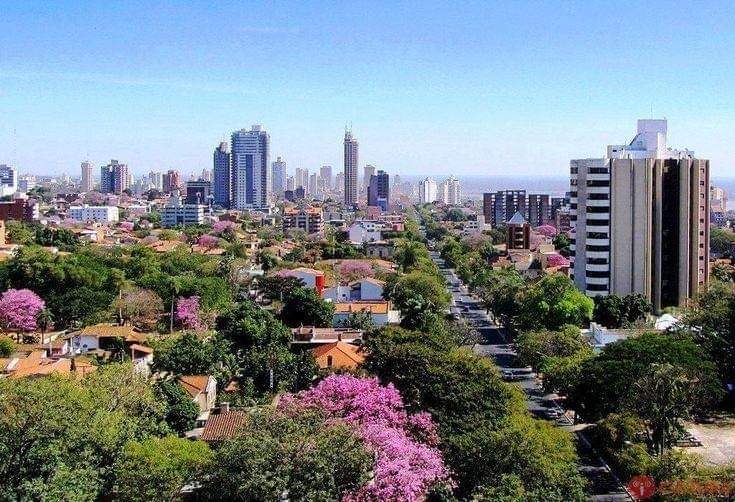
Asunción
Paraguay's Riverside Capital of Hidden Charms
Asunción sits quietly on the Paraguay River, watching South America's tourist crowds rush past to flashier destinations. But here's what they're missing: a capital city where you can wander colonial streets for the price of a coffee elsewhere, where street art tells stories of resilience, and where the sunset over the river costs absolutely nothing. Paraguay's capital won't overwhelm you with must-see attractions. Instead, it rewards the curious traveler with authentic interactions, incredible value, and the rare pleasure of exploring a South American capital that hasn't been Instagrammed to death.
Best Months
APR – SEP
~25°C · moderate crowds
Culture & Context
GUARANÍ & FOOTBALL OBSESSED
Paraguay is one of the only countries in the world where almost everyone genuinely speaks two completely unrelated languages every day. Spanish and Guaraní are both official, and the everyday blend (called Jopara) means you'll hear sentences that switch mid-phrase between the two. More than 90% of Paraguayans speak Guaraní.
When Sabrina Carpenter and Lorde both dropped Guaraní phrases during their Asunciónico 2026 sets, the crowd went absolutely wild. That tells you everything about how much the language means here. Football is the other religion.
The Cerro Porteño vs. Olimpia rivalry is massive, and catching a match at Estadio Defensores del Chaco (42,000-seat capacity) is one of those experiences that's worth the chaos. Tereré, the ice-cold herbal tea drunk from a shared guampa (cup) and bombilla (metal straw), is practically a social contract.
You pass it around with friends and strangers alike. Paraguayans are unhurried, genuinely warm, and not performing for tourists. English is limited outside hotels, business districts, and the younger generation in Villa Morra.
Download Google Translate with offline Spanish before you land.
Local Customs
TERERÉ RITUAL & MAÑANA TIME
Tereré is the national drink and a social ritual. Someone will offer you their guampa (the shared cup). Saying no is considered rude.
Just take a sip and pass it back.. Greet people when you walk into a small shop, pharmacy, or café. 'Buenos días' goes a long way.
Walking in and going straight to the counter without a greeting reads as cold.. Siesta is real. Between roughly 1pm and 3pm, smaller shops and businesses close.
Don't plan errands during this window.. 'Ahora después' literally means 'now after' but in practice means 'sometime later, maybe never.' If a repairman says he'll come 'ahora después,' adjust your expectations accordingly..
Dress moderately outside tourist zones. Shorts and crop tops in markets or local neighborhoods will get noticed. Nothing extreme, but a light layer of respect goes a long way..
Tipping 10% at restaurants is standard. Round up for taxi or rideshare drivers. Street vendors and market stalls don't expect tips..
Football matches (especially Cerro Porteño vs. Olimpia) can get rowdy. The US Embassy specifically advises avoiding large crowds after soccer matches, as celebrations can turn chaotic..
Paraguayan time runs loose. 'De hoy en 8' means a week from today, and even specific meeting times often shift. Build buffer into your schedule.
Safety
WATCH MOTORCYCLE THIEVES
Paraguay holds a US State Department Level 1 travel advisory (normal precautions), and according to the 2025 Global Peace Index, it ranks as the fourth most peaceful country in South America. That's a solid baseline. But don't let the relaxed pace of Asunción make you careless.
The city has a real urban crime profile. Motorcycle-based theft is the most common threat to tourists: riders approach fast, grab your bag or phone, and are gone in seconds. Keep your phone off the street when walking, especially in lower-traffic areas or near ATMs.
Use ATMs inside shopping malls or bank branches, not on the street. The Chacarita neighborhood (officially Barrio Ricardo Brugada) near the riverfront is a no-go zone for tourists without a local guide. Mercado 4 is worth visiting but requires active pickpocket awareness — keep phones deep in pockets and bags closed.
The main bus terminal attracts theft, so stay alert there. Skip street taxis. Bolt and inDriver are safer, cheaper, and keep a record of your driver.
In upscale areas like Villa Morra and Carmelitas, evening walks are generally fine. Downtown is safer by day. Women traveling solo should take extra care with nightlife and late-night transport.
The northern border departments (Amambay, Concepción, San Pedro) have organized crime activity — stay on the main Asunción-to-Ciudad del Este corridor and you won't encounter any of that. Dengue-carrying mosquitoes are present; DEET repellent is not optional. Tap water is officially treated but health guidance leans conservative — stick to bottled or filtered water.
Summer heat (December-February) can hit 40°C+ and is serious. Stay hydrated, especially outdoors.
Getting Around
BOLT & BUSES
You land at Silvio Pettirossi International Airport, 17km northeast of the city center. The easiest option is an official taxi from the rank outside arrivals: fixed rate of about $25, 30-45 minutes to the center depending on traffic. The budget option is city bus 30-A, which stops 200m from the terminal and costs 3,300 guaraníes (under $0.
50), but it takes about an hour and you'll be navigating with bags. Once in the city, a single bus fare is $0.50 flat.
Buses connect most neighborhoods but can be crowded and confusing if you don't speak Spanish — and two separate locals report having phones stolen on city buses over the years, so keep belongings close. For day-to-day movement, Bolt and inDriver are the way to go. They're cheap, drivers are tracked, and the safety difference versus street taxis is real.
Street taxis often don't use meters and will charge foreigners more. Monthly public transport pass is about $34 if you're staying long-term. Driving is not recommended unless you're confident in aggressive, rule-optional traffic.
No car insurance is legally required in Paraguay, which tells you everything about road culture. Long-distance buses to Argentina, Brazil, and other Paraguayan cities depart from the Terminal de Omnibus de Asunción — it's functional but attracts pickpockets, so stay alert and keep bags on your person.
Useful Phrases
Money-Saving Tips
- 1.Street food costs 50 cents to $2 per item and tastes better than restaurant versions
- 2.City buses charge about 50 cents for rides anywhere in the metropolitan area
- 3.Local markets sell fresh fruit for pennies compared to supermarket prices
- 4.Tereré (cold yerba mate) is free when locals invite you to share their gourd
- 5.Many museums charge $1-2 admission, making culture accessible on any budget
- 6.Bargaining works at Mercado 4 but not in regular stores or restaurants
- 7.ATMs charge fees, so withdraw larger amounts to minimize transaction costs
- 8.Hotel breakfast often costs more than eating at local bakeries
- 9.Taxi fares are negotiable for longer trips outside the city center
Travel Tips
- •Learn basic Spanish phrases - English isn't widely spoken outside tourist areas
- •Carry small bills for street vendors and bus fares
- •The siesta culture means many shops close 12-3 PM, plan accordingly
- •Paraguayans are incredibly friendly but respect personal space in conversations
- •Tipping isn't expected but rounding up bills is appreciated
- •Power outlets use Type C plugs, bring an adapter
- •Tap water is generally safe but bottled water tastes better
- •Dress modestly when visiting churches and government buildings
- •The sun is intense year-round - sunscreen and hats are essential
- •Keep copies of your passport, originals sometimes needed for hotel check-in