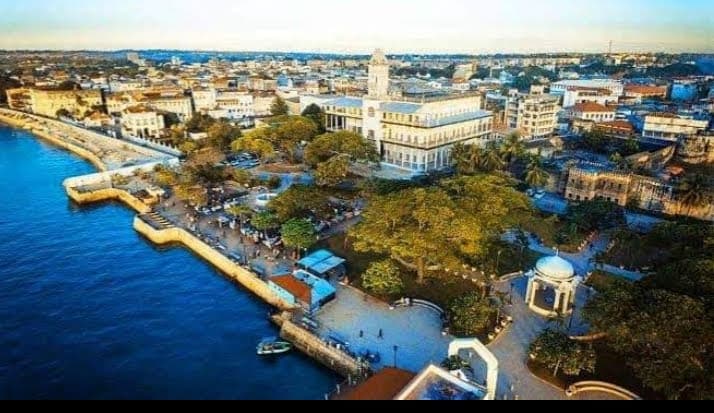
Stone Town
Zanzibar's UNESCO spice port with Swahili cultural fusion
Stone Town hits you like a wave of cardamom and ocean salt. This UNESCO World Heritage maze of coral stone buildings and narrow alleys tells the story of centuries of trade between Africa, Arabia, and India. You'll get lost here — that's the point. Every wrong turn leads to a hidden courtyard, a spice vendor calling your name, or a rooftop bar with views over the Indian Ocean. The former capital of the Zanzibar Sultanate pulses with Swahili culture, where Arabic doors frame Bollywood posters and the call to prayer mingles with Taarab music drifting from tea houses.
Best Months
JAN · FEB · JUN · JUL · AUG · SEP · DEC
~31°C · high crowds
Culture & Context
SPICE TRADE SULTANATE
Stone Town is the old capital of the Zanzibar Sultanate. It was the center of the Indian Ocean spice and slave trades for well over a century, and that history isn't buried, it's right there in the coral-stone walls, the Omani-style carved doors, and the old slave chambers under Christ Church Cathedral. The name comes from the reddish coral stone used to build everything here.
UNESCO designated it a World Heritage Site in 2000, and the rules that come with that status are part of why the old quarter still feels so intact. More than 560 historic doors survive, each one a different mix of Arab geometric carvings, Indian brass studs, and Swahili floral patterns. The population is over 99% Muslim and Zanzibar runs as a semi-autonomous region within Tanzania, with its own president and government.
Most locals identify as Zanzibari first and Tanzanian second. Taarab music, a slow, string-heavy genre blending African, Arabic, and Indian sounds, floats out of doorways in the evenings and it's worth stopping for. The spice trade that made this city rich is still very much alive: cloves, vanilla, cinnamon, nutmeg, and pepper all grow on working farms a short drive inland.
One concrete thing that surprises visitors: Swahili time starts counting at sunrise, not midnight, so 7am local clock equals "1 o'clock" in Swahili. Always confirm morning meeting times clearly.
Local Customs
DRESS CODE ENFORCED
The population is over 99% Muslim and dress codes are taken seriously. Cover shoulders and knees when walking through Stone Town and local areas. Zanzibar authorities can fine both men and women for inappropriate public clothing, and it is actually enforced.
Save the swimwear strictly for the beach.. Greetings are not optional. Rushing past someone without acknowledging them is considered rude.
Even if you only speak three words of Swahili, use them at the start of any interaction before getting to business.. Avoid pointing with your index finger at people or objects. Use your whole hand or a nod of the head instead..
Alcohol is not sold freely. Licensed hotels, resorts, and a small number of specific shops in Stone Town carry it. Being visibly drunk in public is considered deeply disrespectful.
Keep drinking to your accommodation or licensed venues.. Bargaining is expected at Darajani Market and with taxis, but not in restaurants or fixed-price shops. First quotes at markets typically start 30–40% above the real price.
Countering at half the asking price and meeting in the middle is the standard rhythm.. Tanzania banned single-use plastic bags in 2019. Do not bring any plastic carrier bags in your luggage as they can be confiscated at the airport..
Swahili time is genuinely confusing. Locals count hours starting from sunrise (6am), so what they call 'one o'clock in the morning' is 7am by Western clocks. When making plans, always specify morning, afternoon, or evening to avoid showing up six hours early or late..
Friday midday prayers affect business hours across Stone Town. Shops near mosques close for roughly an hour around noon on Fridays. Plan market visits accordingly..
LGBTQ+ travelers face genuine legal risk in Tanzania. Same-sex relationships are criminalized and there have been documented cases of harassment and deportation. This is not a theoretical advisory.
Safety
PETTY THEFT RISKS
Stone Town is broadly safe for tourists during the day. Violent crime against visitors is rare and the local economy depends heavily on tourism, which gives the community a genuine interest in keeping it that way. That said, a few things are worth knowing before you go.
Petty theft and pickpocketing are the main risks, concentrated around Darajani Market and the Forodhani waterfront. Keep your phone in a zipped pocket and don't carry more cash than you need for the day. The narrow alleys are safe to wander during daylight but get genuinely dark and disorienting at night.
Stick to lit streets after dark, and for anything beyond a short walk from your hotel, use a taxi arranged through your accommodation rather than an unofficial driver. Mandatory travel insurance of $44 per person is now required from the Zanzibar Insurance Corporation (ZIC) before arrival. This has limited coverage, so it does not replace comprehensive personal travel insurance.
Carry proof of the ZIC policy. The UK FCDO notes that incidents have occurred in Stone Town, at hotels, and on tourist beaches, and the US State Department issued a Level 3 advisory for Tanzania overall following post-election protests in October/November 2025, though safari and beach areas including Zanzibar were unaffected. The Aga Khan Hospital in Stone Town is the best-equipped medical facility on the island.
For serious emergencies, evacuation to Dar es Salaam or Nairobi may be required. Zanzibar is a malaria zone. Take prophylaxis, use repellent, and sleep under a net.
Do not drink tap water anywhere on the island.
Getting Around
WALKABLE ALLEYS
Stone Town is small enough (about 96 hectares) to walk almost everywhere, and the alleys are too narrow for cars anyway. Getting lost is part of the experience. There are street names, sort of, but nobody uses them.
Ask locals for directions as many times as you need. For getting onto the island: Azam Marine runs ferries from Dar es Salaam five times daily. The crossing takes about 1 hour 45 minutes and costs $35–50 tourist class.
It is the cheapest option if you are already in Dar. Abeid Amani Karume International Airport (ZNZ) sits 5–8km southeast of the old quarter. A taxi costs $12–40 depending on whether you negotiate well.
Pre-book through your hotel to avoid the aggressive unofficial drivers at arrivals. Within the island, dala-dalas (shared minibuses) are the cheapest way to move around. A ride within Stone Town runs $0.
20–0.40. Stone Town to Paje by dala-dala costs $2, versus $40 by private taxi.
Taxis have no meters, so negotiate the fare and confirm whether the price is per person or per vehicle before getting in. Scooter rental is available for $26/day, but you also need a Zanzibar driving permit for $11 to avoid police fines. The roads have potholes, sand patches, and unpredictable traffic.
Insurance on rentals is usually minimal. For ferries to Prison Island, negotiate a shared boat to bring the cost down from $26 to roughly $16 per person.
Useful Phrases
Money-Saving Tips
- 1.Bargain at spice markets — starting prices are usually 3x what locals pay
- 2.Eat at Forodhani Gardens night market for meals under $3
- 3.Take dalla dalla buses instead of taxis — 500 shillings vs $10+ for similar distances
- 4.Stay in Shaba or Malindi neighborhoods for cheaper guesthouse rates
- 5.Buy spices in bulk at Creek Road market, not tourist shops near the fort
- 6.Drink local Kilimanjaro beer ($1.50) instead of imported brands ($4+)
- 7.Book dhow trips directly with captains at the harbor, not through tour companies
Travel Tips
- •Carry cash — most places don't accept cards, even nice restaurants
- •Learn basic Swahili greetings — 'Jambo' and 'Asante' go a long way
- •Dress modestly, especially when visiting mosques or local neighborhoods
- •Download offline maps — GPS gets confused in the narrow alleys
- •Bring mosquito repellent — malaria is present on the island
- •Pack comfortable walking shoes — coral stone streets are uneven
- •Respect photography rules — always ask before taking photos of people
- •Try to visit during a full moon — the night markets are magical