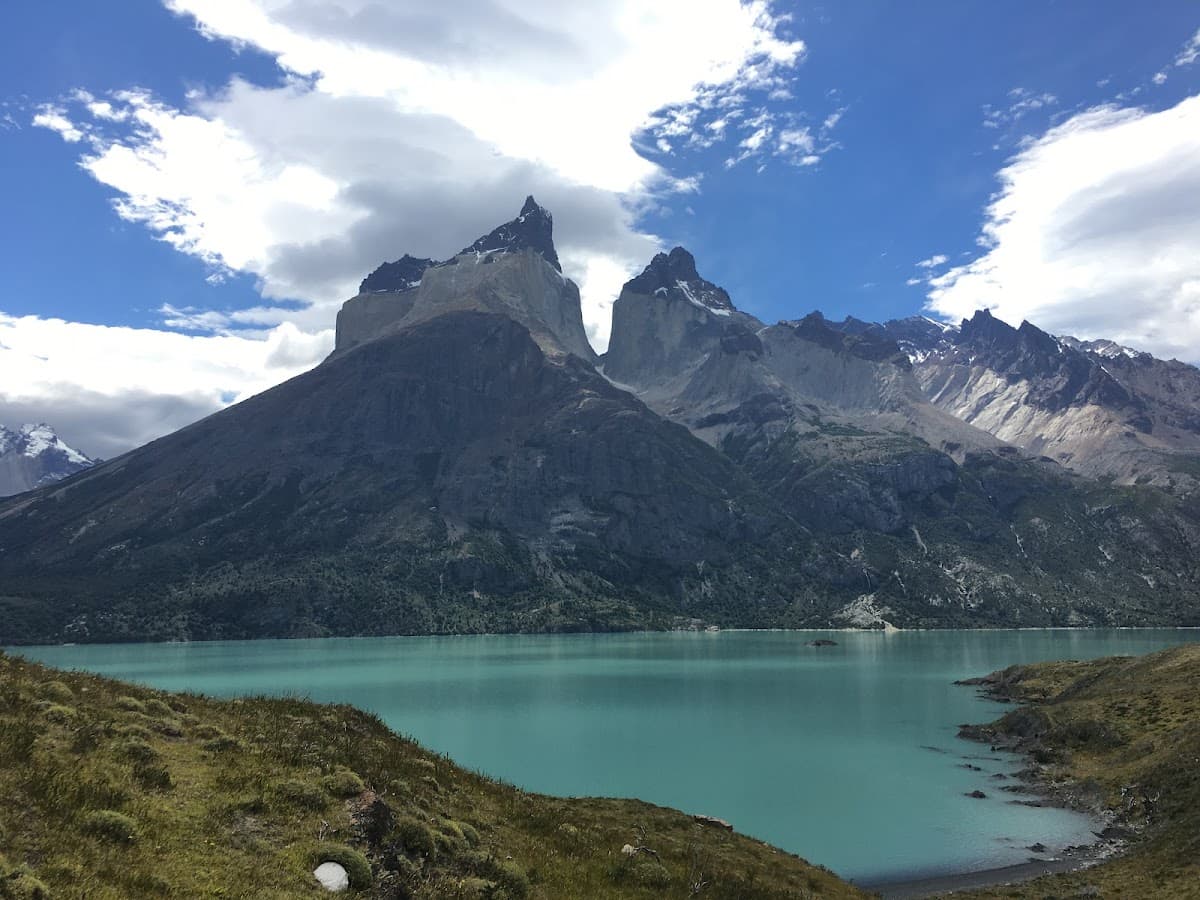
Torres del Paine
Patagonia's crown jewel of granite towers
Torres del Paine isn't just another national park — it's where Patagonia shows off. Those iconic granite towers jutting from the landscape like ancient cathedrals? They're the reason people fly 20 hours and spend their life savings to get here. But here's the thing: the towers are just the opening act. You've got glacial lakes that shift from turquoise to emerald depending on the light, condors circling overhead like they own the place (they do), and hiking trails that'll either make you feel invincible or question every life choice that led you here. The park sits in Chilean Patagonia, about 250 kilometers north of Puerto Natales, and it's basically nature's greatest hits album. Wind is a constant companion — pack accordingly.
Culture & Context
Torres del Paine sits in Chilean Patagonia's Magallanes region, a remote frontier zone shaped by 19th-century European settlers (mainly from Croatia, Germany, and Britain), indigenous Tehuelche heritage, and the ranching culture of estancias and gauchos.
Sheep farming still defines the landscape beyond the park boundaries, and cordero asado (spit-roasted lamb) is the region's signature dish. The population is sparse and resilient — locals are matter-of-fact about extreme weather and genuinely proud of their land.
Puerto Natales, the gateway town of ~20,000 people, has shifted from fishing port to trekker hub over the past two decades but retains a rough-edged charm. Expect colorful corrugated-metal houses, late-night bars full of international hikers, and locals who will tell you with complete sincerity that you can experience all four seasons in a single day — because you can. Conservation is a serious local concern; the 2011 wildfire that burned 17,000 hectares after a tourist's careless act is still part of every conversation about park ethics.
Local Customs
No campfires anywhere in the park — ever.
Only camp stoves in designated areas. This is non-negotiable and stems from the devastating 2011 wildfire.
Rangers will expel violators.. No drones. Flying one inside park boundaries gets you ejected and reported to Chilean civil aviation authorities..
No swimming in any water body. Glacial temperatures cause hypothermia almost instantly.. Move quietly on the trails.
Playing music through speakers is considered disrespectful — use headphones.. Stay on marked trails. Off-trail hiking is prohibited to protect fragile vegetation..
Pack out all your trash. Bins exist at campsites but are limited; carry a bag for trail waste.. Tipping is appreciated but not mandatory.
In restaurants, 10% is the norm. At guided tours and lodges, $100 USD per stay split among staff is a common suggestion.. Chileans are generally reserved at first but warm quickly.
A greeting goes a long way — always say 'buenos días' or 'buenas tardes' when entering a shop or passing a ranger.. Don't expect to find ATMs in the park. Withdraw enough Chilean pesos (CLP) in Puerto Natales before you enter..
Respect wildlife distances. Don't approach guanacos, foxes, or pumas (however exciting). Puma sightings are increasingly common near the park's eastern sector..
Pre-book everything. Park entrance tickets, refugio beds, and camping spots must be reserved in advance online. Walk-ups are not an option for multi-day treks.
Safety
Torres del Paine is physically demanding and weather-driven — take the risks seriously.
Wind is the main danger: gusts regularly exceed 100 km/h (62 mph) and can physically knock you down or fling rocks. There have been bus-flip incidents.
Always check forecasts before heading out on long hikes. The park can experience all four seasons in a single day — rain, sun, hail, and snow are all possible within a few hours. Dress in waterproof layers regardless of the morning forecast.
No swimming is allowed anywhere in the park; glacial water causes hypothermia almost instantly. There is no cell signal across most of the park. In emergencies, contact a ranger or a guide with radio equipment.
Park administrative HQ: +56 61 2360496. Carabineros de Chile: +56 61 2761139 (satellite phone only inside park). The nearest hospital is in Puerto Natales (1.
5 hours from park center); serious cases go to Clínica Magallanes in Punta Arenas (5 hours). All guides from established operators carry WFR (Wilderness First Response) certification. There are no puma attacks on humans on record in the park, but maintain respectful distances.
No fuel inside the park — fill up in Puerto Natales or Esperanza. Carry offline maps (Maps.me) as GPS signal can drop.
Sunburn at this latitude is a real risk even on overcast days — SPF 30+ is essential. Chile is generally very safe for travelers; petty theft is the main concern in urban areas, not in the park.
Getting Around
Getting here requires two flights for most international visitors: Santiago (SCL) is the main international hub, then either Punta Arenas (PUQ) — up to 6 flights daily in high season — or Puerto Natales (PNT), which has just 1 seasonal daily flight and fills fast.
From Punta Arenas, take a 3-hour bus to Puerto Natales (Buses Pacheco or Fernández direct from airport). From Puerto Natales, the park is 80–130km away (1–2 hours depending on sector).
Bus options: Multiple companies (Bus-Sur, Buses Pacheco, Buses Fernández, Buses María José, Cootra) depart from Terminal Rodoviario on Av. España 1455 daily during high season. Morning departures around 7:00–8:00 AM.
Cost: $10–16 USD one-way. The bus makes five stops: Laguna Amarga (eastern W Trek start and CONAF check-in), Pudeto (catamaran dock for Paine Grande), Camping Pehoé, Administración, and Hotel Lago Grey. Laguna Amarga is mandatory for CONAF documentation.
Car rental: Available in Punta Arenas (best selection and prices) or Puerto Natales. Roads inside the park are gravel with a 40 km/h speed limit. No fuel available inside the park — fill up in Puerto Natales.
If crossing to/from Argentina (El Calafate): bus via Paso Río Don Guillermo, ~5–7 hours. Confirm your rental car is authorized for border crossings. Within the park: The only internal shuttle runs between Torres Central/Norte Welcome Center and Laguna Amarga (several times daily, matches bus schedules).
The Lago Pehoé catamaran connects Pudeto with Paine Grande — a key W Trek link. Coming from El Calafate: Bus Sur and Turismo Zaahj both run the route at ~$30 USD.
Useful Phrases
Explore Subregions

Explore the Region
Money-Saving Tips
- 1.Book W Trek refugios 6+ months ahead to avoid camping in brutal Patagonian wind
- 2.Buy groceries in Puerto Natales — park store prices are 3x higher
- 3.Rent gear in Puerto Natales rather than buying if you're not a regular trekker
- 4.Fill up gas tank before entering the park — no fuel stations inside
- 5.Pack extra batteries and power banks — charging options are limited on trails
- 6.Consider staying in Puerto Natales and doing day trips instead of expensive park lodging
- 7.Bring US dollars or pesos — some park services don't accept cards
- 8.Download offline maps before you go — cell service is spotty throughout the park
Travel Tips
- •Pack serious wind protection — lightweight rain jackets will get shredded
- •Bring sunglasses and sunscreen — UV is intense at this latitude
- •Download offline maps and GPS tracks before entering the park
- •Check weather and trail conditions at park headquarters before heading out
- •Start early for popular hikes — afternoon winds make everything harder
- •Carry extra water — some streams may not be safe to drink from
- •Book accommodation well in advance, especially for peak season
- •Learn basic Spanish phrases — English isn't widely spoken outside tourist areas
- •Pack warm layers even in summer — temperatures drop fast when sun goes down
- •Respect wildlife viewing distances — pumas and condors require 25+ meter buffer
Frequently Asked Questions
Explore Torres del Paine
BUILD YOUR
TORRES DEL PAINE PLAN
Insider picks, smart timing, and a plan ready when you are.
Start Planning