Uluru-Kata Tjuta
Sacred monolith rising from Australia's red heart
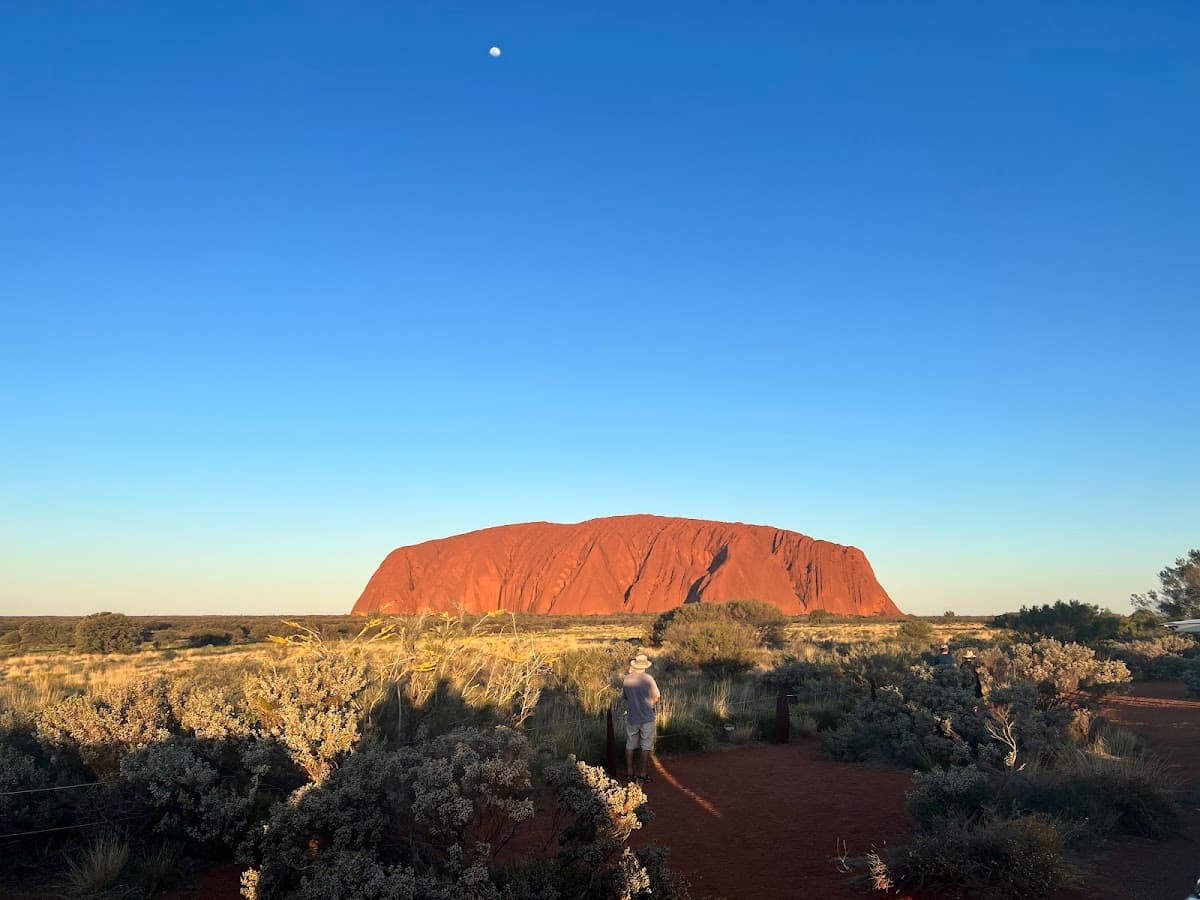
The sun hasn't even crested the horizon, but you're already walking through red sand toward something that's been here for 550 million years. Uluru rises from Australia's center like a sleeping giant, its rust-colored flanks catching the first light of dawn. This isn't just a rock formation—it's Anangu country, sacred land that's been home to Aboriginal people for over 60,000 years.
Most visitors see Uluru from the viewing areas, snap their photos, and leave. But the real magic happens when you slow down. The 36 domes of Kata Tjuta shimmer in the distance. Desert oak trees cast twisted shadows across the red earth. And if you listen closely during the cultural walks, you'll hear stories that predate written history.
Here's what you need to know about visiting one of Australia's most sacred places—and how to do it respectfully.
Culture & Context
SACRED ANANGU COUNTRY
Uluru is a 348-metre sandstone monolith rising from an otherwise flat desert in Australia's Red Centre, about 450 kilometres from Alice Springs. It's been here for roughly 600 million years, and the Anangu people (pronounced "arn-ung-oo") have lived alongside it for at least 10,000 of those. This is their Country, not a tourist backdrop.
The rock holds deep spiritual significance through the Tjukurpa, the Anangu system of law, knowledge, and stories that governs how the land is understood and cared for. Climbing has been permanently banned since October 2019, and that scar of a white trail you can still see on the rock is a reminder of what took too long to stop. The resort town of Yulara, about 18 kilometres from the rock, is the only place to stay.
Everything, from the five-star hotels to the campground, is operated by one company: Voyages Indigenous Tourism Australia. That monopoly shapes the whole experience, for better and worse. Prices are high.
But the Anangu stories and art you access here are genuine, and the guided cultural experiences are worth every dollar.
Local Customs
DON'T CLIMB. ASK FIRST.
Don't climb Uluru. Full stop. The ban has been in effect since October 2019.
The Anangu have asked visitors not to climb for decades before that. The white scar still visible on the rock is called the 'scar of Uluru'. There is no debate here..
Photography is restricted at certain sacred sites around the base walk. Mala Puta and Pulari are two sites specifically tied to women's cultural business. Signage is clear at the rock.
When in doubt, put the camera down.. Never photograph an Anangu person without asking their permission first. This is serious – people have been asked to delete photos on the spot..
The park is mostly alcohol-free. Drinking is only permitted at the Uluru Car Sunset and Uluru Bus Sunset viewing areas, and by licensed commercial tour operators with direct written approval from park management. Do not walk through the park with a beer..
Swimming in any waterhole inside the national park is not permitted. The resort pools exist for a reason.. Drones are banned in the national park.
Operating one without a permit is an offence under the EPBC Act. Penalties apply.. Use the name Uluru, not Ayers Rock.
The park officially uses Uluru/Ayers Rock, but the Traditional Owners have always called it Uluru. Calling it Ayers Rock at the cultural centre is a bit like calling Istanbul Constantinople to a local.. The park sometimes closes with very little notice for 'Sorry Business' – funeral and mourning ceremonies following the passing of community members.
This is culturally important and non-negotiable. Check the park website before your visit. The park closed on June 25–26, 2026, for exactly this reason..
Bring cash. Card machines at roadhouses occasionally fail, and Anangu artists selling work at the sunset viewing area and around the resort prefer cash transactions.
Safety
EXTREME DESERT CONDITIONS
The desert here is not forgiving. Summer (December to February) means temperatures regularly exceeding 40°C, and certain walking tracks close automatically when heat thresholds are reached – respect those closures. Heat-related medical emergencies happen every year.
If you're visiting May to September (the smart window), days are 15–25°C and manageable, but winter nights can drop below zero – that's not a typo. Layer up for any sunrise viewing. Carry at least 1 litre of water per person at all times on walks, more if you're doing the full 10.
6km base walk. Snake encounters are possible on bush tracks. Remain calm, do not try to touch them, and move away slowly.
Phone reception around the park is patchy; better at the resort and resort township. There is no taxi service and no public transport. If you're self-driving and break down on the road from Alice Springs (450km, mostly desert), you'll want to have told someone your itinerary.
The medical centre at Yulara Resort handles most visitor emergencies. For serious incidents, evacuation to Alice Springs is the route.
Getting Around
FLY OR SELF-DRIVE
Flying in is the easiest option. Ayers Rock Airport (AYQ) accepts direct flights from Sydney, Melbourne, and Cairns (roughly 3 hours). Book a window seat on the left side flying in for a view of the rock on approach.
No public taxi service exists at Uluru. Once at the resort, a free shuttle bus loops around all hotels, the campground, the town square, Gallery of Central Australia, and the camel farm every 20 minutes from 10:30am to 12:30am. It does not go into the national park itself.
For getting around the park, you have two real options. Hire a car (pick up at AYQ airport and go at your own pace) or buy the Hop-on Hop-off Bus 3-day pass ($230 AUD per adult, $115 per child, from April 2026). The hop-on bus covers Uluru viewing spots and includes two transfers to Kata Tjuta.
Note: your national park pass ($38 AUD per adult) is separate and must be purchased before boarding. Buying it online in advance saves queuing at the entry station. If driving from Alice Springs, it's 450km down a fully sealed road – doable in about 4.
5–5 hours in a standard 2WD vehicle. A 4WD is only necessary if you're approaching from Western Australia.
Useful Phrases
Itineraries coming soon
We're working on adding amazing itineraries for Uluru-Kata Tjuta. In the meantime, try the app to create your own!
Money-Saving Tips
- 1.Buy park passes online to skip entry station queues during busy periods
- 2.Pack plenty of water—resort bottles cost $4.50 each
- 3.Visit in shoulder seasons (May or September) for 40% lower accommodation rates
- 4.Book Ayers Rock Resort packages that include meals to control dining costs
- 5.Stay at Curtin Springs Station (50km away) to save $200+ per night on accommodation
- 6.Free ranger walks at Mala Walk save money on guided cultural tours
- 7.Annual park passes ($65) pay for themselves after two visits
- 8.Resort campground offers budget accommodation with excellent facilities
Travel Tips
- •Start walks before sunrise to beat heat and catch the best light on Uluru
- •Download the Uluru-Kata Tjuta National Park app for offline trail maps
- •Respect photography restrictions around sacred sites—look for the signs
- •Bring layers for 20°C temperature swings between morning and afternoon
- •Book Sounds of Silence dinner well in advance—it sells out during peak season
- •Free cultural walks at 8am provide insights into Anangu culture and history
- •Valley of the Winds walk closes at 36°C—check conditions before starting
- •Gaiters keep desert sand out of your shoes on windy days
- •The Cultural Centre provides essential context before exploring the rock
- •Sunset viewing area gets crowded—arrive 45 minutes early for good spots
Frequently Asked Questions
Explore Uluru-Kata Tjuta
BUILD YOUR
ULURU-KATA TJUTA PLAN
Insider picks, smart timing, and a plan ready when you are.
Start Planning