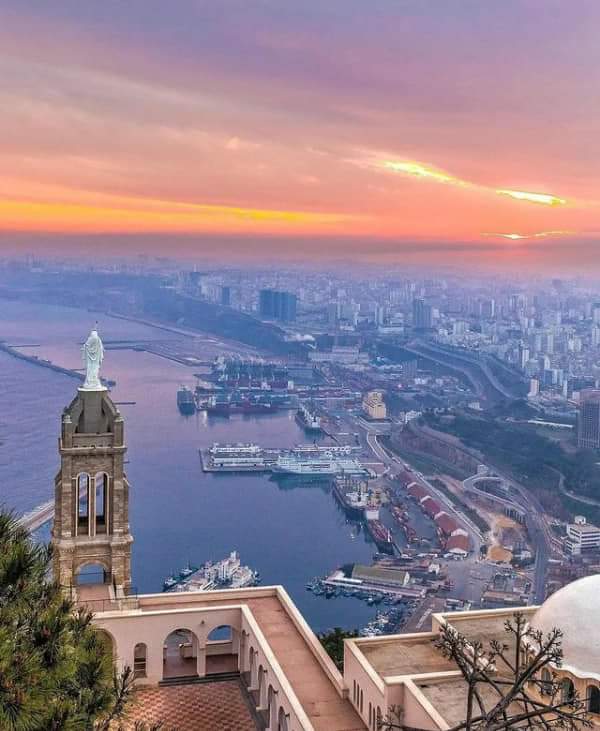
Oran
Algeria's vibrant Mediterranean port with French colonial echoes
Oran doesn't try to impress you — it just does. Algeria's second-largest city sprawls along the Mediterranean coast like a confident local who knows exactly what they're about. French colonial buildings stand shoulder-to-shoulder with Moorish architecture, while the port hums with the kind of energy that comes from being a crossroads for centuries. You won't find tour groups clogging the streets here. Instead, you'll discover a city that feels authentically North African yet unmistakably Mediterranean, where mint tea flows as freely as conversations in three languages.
Best Months
MAR · APR · MAY · SEP · OCT · NOV
~24°C · moderate crowds
Culture & Context
RAÏ MUSIC HEARTBEAT
Oran is Algeria's second-largest city and the undisputed capital of raï music, a genre that grew out of the Oranie region by blending Bedouin desert melodies with Spanish, French, and Arabo-Andalusian sounds. That history lives in the streets. You'll hear it from shop speakers, in taxis, drifting out of open windows.
The city has layers that feel genuinely different from Algiers: a Spanish colonial past left a mark on the architecture and even on local slang, which carries more Spanish loanwords than anywhere else in Algeria. French is everywhere too, mixed casually into Arabic conversation the way code-switching happens naturally when two languages have shared space for generations. Locals are warm but not performatively so.
Show up with a few words of Darja and the response is genuine, not just polite. The society is conservative — dress modestly, especially away from the seafront. During Ramadan, eating or drinking in public in the daytime draws real disapproval.
Photography is a delicate subject: never point a camera at police, military personnel, or government buildings. It's not a guidebook warning; it's a firm legal matter. And look, Algeria doesn't get swamped with tourists the way Morocco or Tunisia do, which means the interactions you have feel real.
Nobody's performing for your camera. But that also means less infrastructure — printed restaurant menus are rare, English is uncommon, and things run on their own schedule.
Local Customs
CASH, MODESTY, RESPECT
Dress modestly in public — shoulders and knees covered is the baseline expectation, especially away from the beachfront. This applies to all genders.. Cash is king.
Guesthouses, markets, street food, and local taxis are strictly cash-only. Carry enough DZD for the day plus a small emergency reserve.. Never photograph police officers, military personnel, or government buildings.
Equipment can be confiscated on the spot and it can escalate quickly.. Greet shopkeepers and hosts with 'Salam' before anything else. Diving straight into business without a greeting reads as rude..
During Ramadan, eating, drinking, or smoking in public during daylight hours is deeply disrespectful and can draw confrontational reactions.. Algerians mix Arabic, French, and occasionally Spanish in everyday conversation. Don't be surprised if someone switches mid-sentence — it's not for your benefit, it's just how people talk..
The Marché de la Bastille on Maghreb Square has per-kg price signs on produce. You don't need to haggle for vegetables, which is a genuine relief.. Tea or coffee offered to you in a shop is a hospitality gesture, not a sales trap.
Accepting it is polite. Refusing it is slightly awkward.. LGBTQ+ travelers should exercise serious discretion.
Same-sex relationships are illegal in Algeria.
Safety
MEDIUM CAUTION NEEDED
Oran is genuinely one of Algeria's safer cities. It benefits from enhanced police presence as the country's second-largest city and a major port. The bigger risks are standard urban ones: pickpocketing in crowded souks and markets, and taxi overcharging.
Don't hail random taxis at the airport — drivers will claim the meter is broken and charge multiples of the real fare. Use Yassir every time. Keep your phone in a zipped front pocket at Marché de la Bastille and Medina Jdida.
Solo women should use Yassir at night rather than walking; harassment is not constant but it happens. The serious no-go areas are nowhere near Oran — they're the remote southern and eastern border regions near Libya, Mali, Niger, and Mauritania. The US State Department, Canada, and Australia all flag those zones as do-not-travel.
Oran itself? Medium caution, standard urban vigilance. The black market currency exchange exists and locals might quietly mention it — stick firmly to official banks and exchange offices, as getting caught using parallel-market exchange is a legal problem with real consequences.
Photograph freely in markets and at historical sites but always confirm before pointing a lens at a person.
Getting Around
TRAM & YASSIR
Oran's tram is the easiest and cheapest way to get around the city center. A single ticket costs 40 DZD (about $0.30) and the network reaches major landmarks.
For anything off the tram lines, Yassir is your best friend — it works like Uber, locks in a price before you go, and a 3–4 km ride around Centreville costs roughly 200 DZD. From the airport (Oran Es Senia / Ahmed Ben Bella Airport, ORN), a shuttle bus runs 4.5 km to the Es Sénia tram terminus every 30 to 60 minutes for 100 DZD.
The airport is 15 km from Place du 1er Novembre in the city center, and the full trip takes about 30 minutes. If you're coming from Algiers, the SNTF train is the move: second-class one-way costs 855 DZD (around $6) for a journey of about 4–5 hours. Trains on this main line are relatively punctual from terminal stations but can drift off schedule at intermediate stops.
Buy tickets at the station window or via the SNTF app. Avoid local intercity buses for solo travel; they're less reliable and petty theft incidents are more common on them.
Useful Phrases
Money-Saving Tips
- 1.Bring cash — credit cards work only in major hotels and some upscale restaurants
- 2.Haggle at markets but not in regular shops with fixed prices
- 3.Taxis don't use meters — agree on the fare before getting in
- 4.Local restaurants cost 500-800 dinars per meal, hotel restaurants charge 2-3x more
- 5.Entry fees for museums and monuments are typically 100-200 dinars
- 6.Beach clubs charge around 300 dinars for day access including lounger
- 7.Bottled water costs 50 dinars in shops, 150 dinars in tourist areas
Travel Tips
- •Learn basic French phrases — it's more useful than English here
- •Dress conservatively, especially when visiting religious sites
- •Friday afternoons get quiet as many businesses close for prayers
- •The siesta is real — shops close 12-3pm in summer
- •Carry toilet paper — public restrooms rarely provide it
- •Download offline maps — internet can be spotty outside city center
- •Respect photography restrictions near government buildings and military sites
- •Ramadan affects restaurant hours and availability of food during daylight