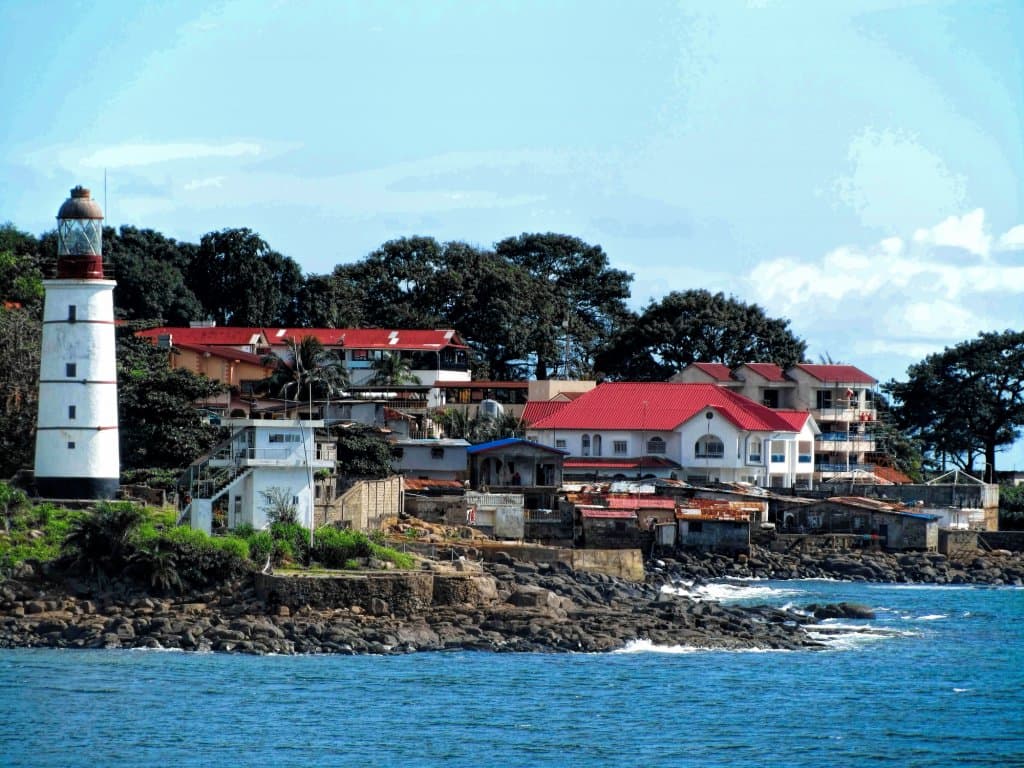
Freetown
Sierra Leone's vibrant capital with colonial history
Freetown catches you off guard. Sierra Leone's capital sits between forested hills and the Atlantic, where colonial-era buildings share streets with bustling markets and locals speak a mix of English, Krio, and tribal languages. This isn't your typical West African capital — it's grittier, more authentic, and far less visited than its neighbors.
The city wears its history openly. Cotton Tree, a massive kapok tree in the city center, has watched over Freetown since freed slaves first arrived in 1787. Today, it anchors a downtown where Lebanese-owned shops sell everything from fabric to phone credit, while fishing boats dock at Government Wharf with the day's catch.
But here's what makes Freetown special: it's still discovering itself as a travel destination. You'll eat incredible jollof rice for $2, explore beaches that see more locals than tourists, and navigate a city where every conversation becomes a cultural exchange. The infrastructure's rough around the edges, the power cuts are frequent, but that's part of the experience.
Best Months
JAN · FEB · MAR · APR · NOV · DEC
~32°C · moderate crowds
Culture & Context
FREED SLAVES' LEGACY
Freetown was literally built by freed people. On March 11, 1792, 1,196 Black settlers from Nova Scotia gathered beneath what became the Cotton Tree, and that founding fact hangs over everything in the city's downtown. Every colonial facade, every weathered church tower, every crumbling gateway is still arguing about who got to belong here and at what cost. This isn't ancient history you read about in museums. It's visible in the streets.
The city is majority Muslim and Christian, often within the same family. Sierra Leone has earned genuine praise from the UN for its religious tolerance, and you'll see it in action — mosques and churches literally sharing the same block. People are warm to strangers in a way that isn't performative. But look, this place is also raw. Power outages still happen, roads turn into rivers during the rainy season (May to October), and infrastructure is a daily negotiation. Freetown is scrappy and optimistic, but it doesn't apologize for being a work in progress.
The Krio-speaking Creole community gives the city its linguistic personality. English is official, but Krio is what you actually hear in taxis, markets, and beach bars. It's an English-based creole shaped by West African languages, French, and the speech patterns of freed slaves returned from the Americas and Caribbean. Learn a few phrases and people's faces change immediately.
Local Customs
RIGHT HAND ALWAYS
Eat with your right hand. Food at local homes often comes in a communal bowl, served first to the eldest man and passing down from there. Diving in with the left hand is a genuine offense — don't do it..
Haggle in markets. Start around 50% of the asking price for souvenirs and work from there. Prices at Kissy Market and the Big Market are not fixed, and sellers expect negotiation..
Dress modestly when visiting historical sites, churches, or mosques. The beach road is fine for casual wear, but cover up when heading into the city center or religious spaces.. New Year's is a big outdoor event.
Locals head to rivers, beaches, or hilltops to ring it in with masquerades and music. If you're in town, join the crowd at Lumley Beach — it's genuinely festive.. Don't openly display expensive gear.
Smartphones, watches, and cameras make you a target in crowded areas near the Cotton Tree and transport hubs. Use a basic phone for navigation, carry your good camera in a bag.. The greeting culture is serious.
Don't skip hellos. Walking into a shop or getting into a taxi without greeting the person first reads as rude. Start with 'Kushe' and you're already ahead..
Religious holidays shift the city significantly. On Eid days and major Christian holidays, most shops and banks close. Plan accordingly and carry cash before these dates.
Safety
USE COMMON SENSE
Freetown is manageable with common sense, but it's not a city where you switch off. Violent crime targeting tourists is rare. Petty theft is real, especially in crowded spots: Kissy Market, the Cotton Tree area, and transport hubs are where it tends to happen. Don't wander those areas with your phone out. Keep bags closed and close to your body.
After dark, incidents near clubs and bars in Lumley and Aberdeen have been reported — not constantly, but enough that you should keep your wits about you and avoid isolated streets. Use licensed water-taxi operators from Lungi. Unofficial "checkpoints" pop up occasionally on roads outside the city — ropes across the road with someone asking for a fee. Locals describe these as cheeky opportunists rather than genuine threats, but stay calm and don't show frustration.
Protests happen and can turn unexpectedly volatile. They often cluster around political issues or public holidays. The US State Department lists Sierra Leone at Level 2 (Exercise Increased Caution). Health infrastructure is genuinely limited — Choithram Memorial Hospital is the best private option in the city, but for anything serious, medical evacuation is the real plan. Medical evacuation insurance is not optional. Bring all prescription medications you need; pharmacies are not well regulated and local medications may not meet the standards you expect.
Getting Around
PODA-PODAS & TAXIS
Getting to Freetown is the first puzzle. The airport (Lungi/FNA) sits across the Sierra Leone River from the capital. Your options are a water taxi or ferry. Sea Coach Express and Sea Bird Express both run the crossing for $45 each way (about 30 minutes). Aberdeen Water Taxi is Sierra Leonean-owned and occasionally offers diaspora discounts. Book in advance, especially in peak season (December–March). Driving around from Lungi takes 3–5 hours via Port Loko, which is only worth it if you have serious luggage or severe motion sickness.
Once in Freetown, there's no metro, no tram, no tourist transport pass. Poda-podas (minibuses) are the cheapest option at $0.50 for a city loop — they display their route endpoints on the front. "Lumley" gets you to Lumley Beach via the southern bridge; "Aberdeen" goes via the north bridge from Murray Town. If you want downtown, ask for "Tong." They're packed and chaotic, but functional. Shared taxis are the step up ($3–5 short hops). Charter a taxi for about $5/hour or $50/day if you want flexibility. Kay-kays (tuk-tuks) and okadas (motorbikes) are also an option, with okadas being faster and slightly pricier. Negotiate every fare before you get in — meters don't exist. The road from Lumley to Aberdeen along the beach is complete and decent. Other roads vary wildly, especially after rain.
Useful Phrases
Money-Saving Tips
- 1.Bring US dollars in small bills — many places accept them alongside leones, and you'll get better rates than at banks
- 2.Negotiate taxi fares before getting in — meters are rare and drivers often quote tourist prices
- 3.Street food costs $1-3 per meal, while restaurant meals run $8-15 — eating local saves serious money
- 4.ATMs are unreliable outside downtown — withdraw cash when you find working machines
- 5.Tipping isn't expected but 10% is appreciated at restaurants and for good service
Travel Tips
- •Yellow fever vaccination is mandatory — carry your certificate, they check at the airport
- •Power outages are frequent — bring portable chargers and download offline maps
- •Learn basic Krio phrases — 'How di body?' (How are you?) opens doors everywhere
- •Carry toilet paper — public restrooms rarely provide it
- •Dress modestly outside beach areas — shoulders and knees covered shows respect
- •Rainy season floods streets quickly — waterproof shoes and bags are essential
- •Internet is slow and expensive — download entertainment before arriving