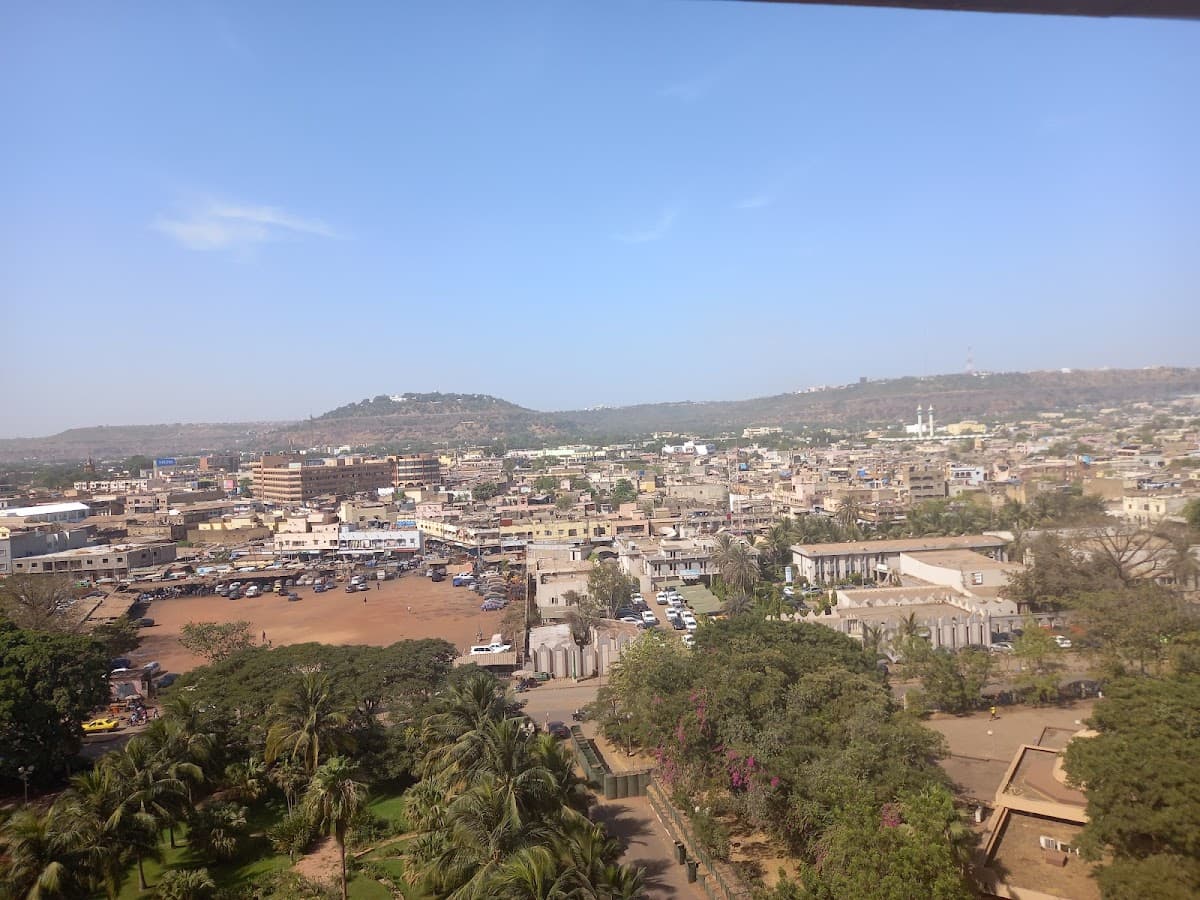
Bamako
West African rhythms pulse through Mali's riverside capital
Bamako sprawls along the Niger River like a city that grew up listening to music. Mali's capital doesn't try to impress tourists—it's too busy being itself. Griots tune their koras on street corners while motorcycle taxis weave through dusty boulevards lined with mango trees. The Grand Marché pulses with fabric vendors and spice sellers, and every neighborhood seems to have its own rhythm section rehearsing under the stars. This isn't the Africa of safari brochures. It's a working city where traditional culture runs so deep it shapes everything from morning prayers to late-night concerts.
Best Months
JAN · FEB · NOV · DEC
~35°C · moderate crowds
Culture & Context
MUSIC, ISLAM & RITUAL
Bamako means "crocodile's back" in Bambara, and the city lives up to that rugged name. It sprawls along the Niger River in Mali's southwest, one of the fastest-growing cities in Africa, with a population now pushing 4.5 million.
The city proper is divided into six communes, each with its own character. French is the official language, but Bambara (Bamanankan) is what you'll actually hear on the street. Around 80% of people can communicate in it.
Music is genuinely central to daily life here, not a tourist attraction bolted on. Salif Keita, Ali Farka Touré, Oumou Sangaré, and Fatoumata Diawara all came from this city. The sound you hear in the bars and courtyards blends kora, balafon, ngoni, and djembe with electric guitars, often landing somewhere warm and bluesy.
Islam shapes the daily rhythm. Mosques are everywhere, the call to prayer punctuates the day, and modest dress is expected from everyone. But animist traditions thread through the culture too, visible at the Fetish Stalls market near the Grand Marché.
Greetings are not a formality here. They are a serious social ritual that can run five minutes between two good friends, involving handshakes, hand-to-heart gestures, and questions about every member of the family. Skipping this to get to the point is considered rude.
The city is loud, dusty during dry season, and genuinely chaotic in traffic. But Malians tend to be warm to visitors who show up with a bit of patience and a few words of Bambara.
Local Customs
GREETINGS COME FIRST
Greetings come before everything else. Before asking directions, buying something, or starting any conversation, you greet properly — and that means asking about the person's family, their night, their health. It takes longer than you expect but opens every door..
Dress modestly everywhere, especially near mosques or markets. For women this means covering shoulders and knees at minimum. Men in shorts get side-eyes in more traditional neighborhoods..
Haggling is not optional at the Grand Marché or the Artisan Market. Opening prices for foreigners are often 2 to 3 times the actual price. Start low, stay friendly, and walk away slowly if needed..
When eating with a Malian family, use your right hand. Wash hands before and after meals, which is usually done communally with a small basin. Complimenting the cook (especially with 'i ni cɛ' or a direct compliment in French) is expected..
Never photograph people, markets, or government buildings without asking first. Some people will refuse. Others will want a small payment.
Military installations are strictly off-limits for cameras.. Tea culture is central. The Malian tea ceremony ('ati' in Bambara) involves three rounds of sweet green tea, each progressively sweeter.
Being offered tea is a sign of hospitality. Refusing is rude unless you have a genuine health reason.. Men hold hands while walking and talking — it signals friendship, not romance.
Don't pull away if a new local acquaintance reaches for your hand during a conversation.. Friday is a significant day for prayer. Government offices and some shops slow down or close around midday on Fridays.
Plan accordingly.
Safety
HIGH RISK — AVOID NOW
Look, this needs to be said clearly: as of 2026, the UK Foreign Office, US State Department, and most major Western governments advise against all travel to most of Mali and against all but essential travel to Bamako itself. This is not standard cautious-government boilerplate. The threat is real. The terrorist group JNIM (Jama'a Nusrat ul-Islam wa al-Muslimin) has been implementing blockades on key routes across southern and western Mali, including routes into the capital, targeting fuel trucks and conducting checkpoints. Kidnapping risk is high throughout the country, including in Bamako. Attacks can happen at any time. The security situation changes fast. Dogon Country was accessible in 2019 and is now largely off-limits.
If you travel anyway (some adventurous people do), practical steps: Register with your embassy immediately upon arrival. Avoid crowds, demonstrations, military installations, places of worship on Fridays, and government buildings. Don't travel at night. Use only reputable, pre-arranged transport. Have a personal emergency plan that doesn't rely on consular help arriving quickly. Travel insurance covering Mali is hard to find. IATI is one of the few providers that does cover it. Most travel insurance companies explicitly exclude Mali. Petty theft and pickpocketing are also common in crowded markets. Keep valuables out of sight, don't accept food or drinks from strangers, and keep copies of your passport somewhere separate from the original. Emergency: police 17, ambulance 18.
Getting Around
NEGOTIATE TAXI FARES
Getting from Bamako-Sénou International Airport (BKO) into the city takes 30 to 45 minutes depending on traffic. The airport sits about 15km south of the center. Yellow taxis are plentiful but have no working meters. Negotiate the fare before you get in. A typical airport-to-city ride runs 5,000–10,000 CFA (~$9–$18). Have small bills ready. Many hotels offer fixed-rate pick-up from arrivals. Worth asking in advance.
For getting around the city, you have a few options. The iconic yellow Mercedes or Peugeot taxis are everywhere. A 5–6km trip negotiated properly runs about 2,000–3,000 CFA. Establish the price up front, always in CFA. The SoRo app (available on Android) works like a basic ride-hail service with fixed prices from 400 XOF. More reliable than street hailing at night.
The SOTRAMA green minibuses are what locals actually use. Routes cost just 175–350 CFA per trip. The catch: no fixed stops, no timetables, confusing routes, and the young assistants hanging out the side door ("apprentigis") will sometimes claim they're going somewhere they're not. If you're on a budget and have patience, they're genuinely useful for understanding the city. If you're on a schedule, take a taxi. Moto-taxis weave through traffic and cost 200–500 CFA for short hops. Helmets are not always offered. Carry your own if you plan to use them regularly.
Self-driving is not recommended for tourists. Roads are poorly maintained, traffic laws are widely ignored, and security concerns outside the city make solo driving genuinely risky. Driving is on the right.
Useful Phrases
Money-Saving Tips
- 1.Negotiate taxi fares before getting in—drivers often quote tourist prices that are 2-3x normal rates
- 2.Change money at banks or official bureaux de change; street rates might be better but fake bills are common
- 3.Carry small bills (1,000 and 2,000 CFA notes) for street food and motorcycle taxis
- 4.Hotel prices drop significantly during hot season (March-May) and rainy season (June-October)
- 5.Buy phone credit in small amounts—power cuts can kill your phone battery faster than expected
- 6.Bargain at markets but not aggressively; start at about 60% of the asking price
- 7.Tipping isn't expected but 10% at restaurants shows appreciation for good service
Travel Tips
- •Learn basic French phrases—English isn't widely spoken outside tourist areas
- •Dress modestly, especially when visiting mosques; long pants and covered shoulders are essential
- •Carry toilet paper and hand sanitizer; public facilities often lack both
- •Download offline maps before arriving—internet can be spotty in some neighborhoods
- •Respect photography rules; always ask permission before photographing people
- •Keep copies of your passport and visa separate from originals
- •Pack a flashlight for power cuts, which happen regularly especially during rainy season
- •Malaria prevention is essential—bring repellent and consider prophylaxis
- •Friday prayers affect business hours; many shops close from noon to 3 PM