Brasília
Modernist Capital Where Architecture Meets Political Power
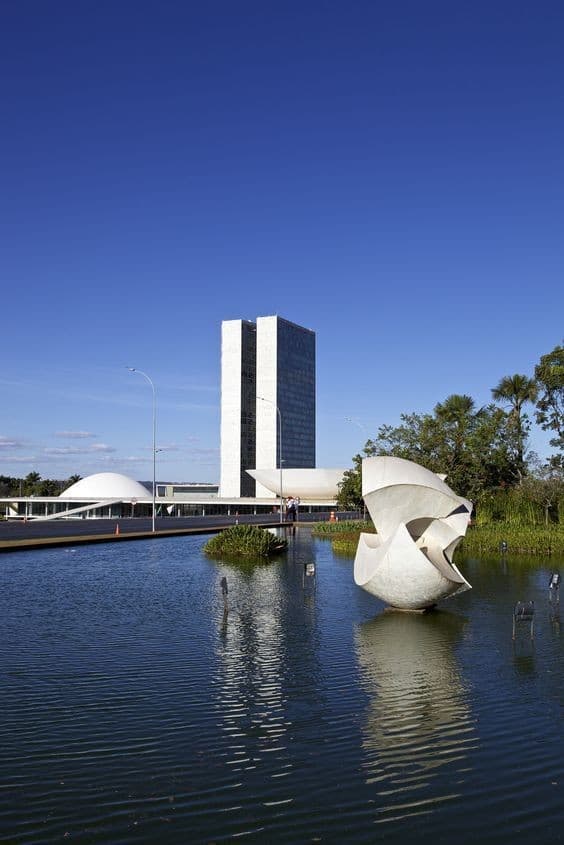
Brasília isn't your typical Brazilian city. Built from scratch in the 1950s to replace Rio as the capital, this planned metropolis looks like something out of a sci-fi movie. Oscar Niemeyer's concrete curves rise from the red earth of the cerrado, creating a city that feels both futuristic and frozen in time.
Here's the thing about Brasília — it divides people. Some find its wide boulevards and monumental architecture cold and sterile. Others see it as a masterpiece of urban planning and modernist design. But nobody disputes its importance. This is where Brazil's political power lives, where laws get made, and where you can walk through the most complete example of 20th-century city planning on Earth.
The city sits on a plateau 1,000 meters above sea level in the country's geographic center. It's hot and dry for half the year, then wet and humid for the other half. The layout resembles an airplane from above — the Plano Piloto forms the fuselage, with residential wings spreading north and south. Everything here was designed with cars in mind, so walking can feel awkward. But that's part of the experience.
Best Months
APR – SEP
~28°C · moderate crowds
Culture & Context
BLUEPRINT CITY
Brasília is a city built by decree. President Juscelino Kubitschek moved the capital here in 1960, dropping it on an empty central plateau in about three years. The whole thing was designed from scratch: Oscar Niemeyer handled the architecture, Lúcio Costa did the urban planning, and Roberto Burle Marx took care of the landscaping.
The result is a UNESCO World Heritage Site that looks like an airplane from above, with a central monumental axis and two residential "wings" stretching out from it. People either love it or feel vaguely uneasy by it. The city has no organic street corners, no accidentally charming alleyways.
Everything is deliberate. It draws people from across Brazil who come to work in government ministries and federal agencies, which creates an unusually diverse local population. Everyone's from somewhere else.
That also makes locals friendly and curious about visitors. The art and music scene is real but requires local connections to find — it doesn't announce itself the way it does in Rio or São Paulo.
Local Customs
GREET EVERYONE INDIVIDUALLY
Greet everyone in a room individually. Walking in and giving a general wave is considered cold. Brazilians do firm handshakes on first meetings, and among friends expect hugs and a kiss on the cheek.
Men hug men here. Don't overthink it.. Tipping is not automatically expected the way it is in the US, but a 10% service charge (taxa de serviço) is often already added to your restaurant bill.
Check before adding more. For exceptional service, rounding up is appreciated.. Arrive about 20 minutes late to casual social invitations.
Punctuality to a house party is genuinely unusual and can catch hosts off guard. Business meetings are different — aim to be on time.. Don't leave food on your plate at someone's home.
It reads as a criticism of the food. Take less if you're unsure — a second serving is always welcome.. Government buildings and churches enforce a dress code strictly in Brasília.
No shorts, tank tops, flip-flops, or miniskirts. This is more rigorously enforced here than almost anywhere else in Brazil — don't show up to the National Congress in beach clothes.. Physical contact during conversation is normal.
Brazilians will touch your arm or shoulder while talking. It's warmth, not pushiness. Don't pull back..
Avoid starting arguments about politics, religion, or crime in casual settings. These are loaded topics. Football is fine but tread carefully around club rivalries in mixed groups..
Sunset is a big deal here. Locals genuinely gather to watch it. The sky over the central plateau at dusk does things that are hard to explain.
Don't miss it.
Safety
PLANO PILOTO SAFE
Brasília is considered one of the safer Brazilian cities for tourists, especially in the main residential and monumental areas. The Plano Piloto — Asa Sul, Asa Norte, and the Esplanada — is where tourists spend most of their time, and these zones have heavy police presence and relatively low street crime. That said, the US State Department flags Brasília's satellite cities (Ceilândia, Santa Maria, São Sebastião, and Paranoá) as Level 4: Do Not Travel at night.
Avoid these entirely after dark. For tourists sticking to the Plano Piloto, the main risks are standard urban ones: petty theft, phone snatching, and pickpocketing in crowded areas. Don't flash your phone while walking.
Keep expensive cameras in a bag, not around your neck. Use Uber or 99 rather than walking after dark, even in relatively safe neighborhoods. Avoid public buses, especially at night.
Drink spiking in bars and clubs is a documented risk across Brazil — don't accept drinks from strangers and watch your glass. The daytime city is safe enough to walk alone. After dark, ride-share is the smart call.
Yellow fever vaccination is strongly recommended if you're visiting Brasília or plan to travel into the interior or Amazon from here.
Getting Around
UBER & RENTAL CAR
Fly into Presidente Juscelino Kubitschek International Airport (BSB), 11km from the Plano Piloto. An Uber or 99 to the hotel sector costs R$25–40 (~$5–8 USD). The metro has two lines and connects a few central stations and the main bus terminal (Rodoviária), but it doesn't reach most tourist sites directly.
For anything beyond walking distance on the Esplanada, you need a car or ride-share. Brasília was designed for automobiles — the road system is clear and well-signposted, though the sector naming system (SQN, SQS, SHTN, etc.) takes a day to decode.
Renting a car makes real sense if you want to explore beyond the Plano Piloto, especially for day trips to Chapada dos Veadeiros or the Itiquira Falls area. The city also has bike lanes everywhere, and you can rent bikes via app. For the airport, buses 102 and 102.
1 link it to the Rodoviária terminal if you want the cheap option. Brasília is well-connected by air to all major Brazilian cities: São Paulo (1.5h), Rio (1.
5h), Manaus (3.5h). Long-distance buses go to Goiânia (3h).
Useful Phrases
Money-Saving Tips
- 1.Government building tours are free but require advance booking and ID
- 2.The metro day pass costs R$15 and covers unlimited rides
- 3.Hotel prices drop significantly on weekends when government workers leave town
- 4.Lunch buffets at regional restaurants offer better value than dinner
- 5.Many museums offer free admission on Sundays
- 6.Uber is cheaper than taxis and more reliable
- 7.Buy groceries at Extra or Carrefour rather than convenience stores
- 8.The TV Tower observation deck is free and offers great city views
Travel Tips
- •Bring lip balm and moisturizer — the dry season is brutal on skin
- •Book restaurant reservations in advance, especially for upscale places
- •Carry ID at all times — security is tight around government buildings
- •Download offline maps — GPS can be unreliable in some areas
- •Pack layers — temperatures can vary 15°C between day and night
- •Learn basic Portuguese — English isn't widely spoken outside hotels
- •Respect photography restrictions near government buildings
- •Stay hydrated — the altitude and dry air are dehydrating
- •Plan extra time for distances — everything is farther than it looks
- •Visit on weekdays to see the city functioning as intended