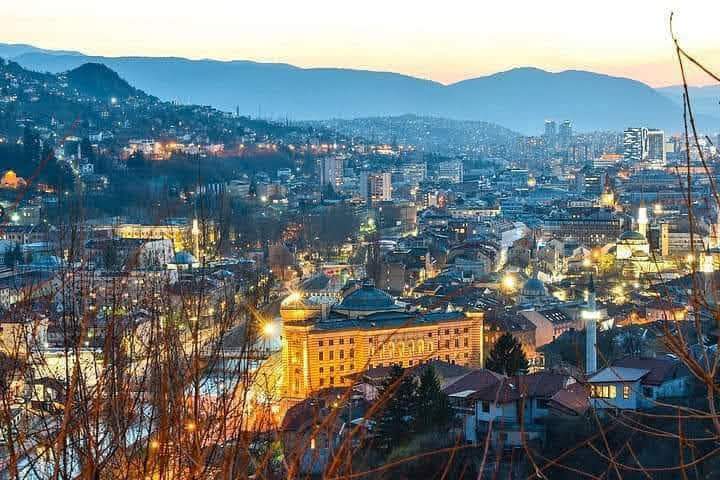
Sarajevo
Where East meets West in a resilient cultural crossroads
Sarajevo hits different. This city survived a brutal siege in the '90s and emerged stronger, wearing its scars like badges of honor. Walk down Ferhadija Street and you'll see what I mean — Ottoman mosques stand next to Austro-Hungarian buildings, while locals sip Turkish coffee in cafes that once served as shelters. The call to prayer echoes over church bells, and everyone just goes about their day like it's the most natural thing in the world.
Here's what makes Sarajevo special: it's authentically multicultural without trying to be. The city doesn't package its complexity for tourists — it just exists, beautifully complicated and surprisingly affordable. You can eat like royalty for €10, stay in the heart of the old town for €30 a night, and have conversations that'll stick with you for years.
Best Months
APR – SEP
~23°C · moderate crowds
Culture & Context
FOUR FAITHS, ONE SQUARE
Sarajevo is often called the 'Jerusalem of Europe' because a mosque, a Catholic cathedral, an Orthodox church, and a synagogue all stand within a few hundred meters of each other in the old city center. That's not a tourist-brochure boast — it's genuinely unusual and shapes the daily texture of the city in ways you notice. Walking west from Baščaršija through the neighborhoods is essentially a walk through different centuries of occupation: Ottoman bazaar, then Austro-Hungarian boulevards, then brutalist Yugoslav apartment blocks.
The 1992–1996 siege — the longest in modern warfare — is not ancient history here. You'll see building facades still pocked with shrapnel. The 'Sarajevo roses' (mortar impact craters filled with red resin) mark spots where civilians were killed on the street.
People carry this history quietly, not performatively. Sevdah is the city's traditional music — sometimes described as Bosnian blues. It's melancholy, slow, and genuinely beautiful.
Try to catch a live performance; some cafes in Baščaršija host sevdah nights.
Local Customs
BOSNIAN COFFEE RITUAL
Bosnian coffee is a whole ritual, not a drink. It arrives in a small copper džezva on a tray with a fildžan (ceramic cup), a glass of water, sugar cubes, and a piece of rahat lokum (Turkish delight). Take a sip of water first to cleanse the palate.
Then dip the sugar cube, bite it, and sip the coffee through it. Sit down. There is nowhere to be..
Never call Bosnian coffee 'Turkish coffee' in a Sarajevo café. You will be corrected. Immediately..
Smoking is essentially the city's second religion. Indoor smoking is common in cafes and restaurants. If you're sensitive to smoke, this is a real consideration when choosing where to sit..
Servers will not rush you. Waiting 10–15 minutes for someone to take your order is normal — even in places that look busy. Sitting for hours over one coffee is not weird; it's expected.
Locals refer to this slow-coffee pace as part of daily life.. Tipping is appreciated but not mandatory. Around 5–10% in restaurants is the norm.
Leave small change in coins at kafanas.. When visiting mosques — including the Gazi Husrev-beg Mosque — dress modestly. Shoulders and knees covered.
Remove shoes at the door. Women should have a headscarf.. Don't bring up the 1992–1995 siege unless a local opens the conversation.
Many people in Sarajevo lost family. The war is not an abstract historical event here — it's within living memory and the emotional reality of most adults you'll meet.. A firm handshake is the standard greeting for both men and women.
Younger people among friends do hugs and cheek kisses.. If a local invites you for coffee at their home, go. It means something.
Bring a small gift — chocolates, pastries, or flowers (odd number of stems only — even numbers are for funerals).
Safety
WATCH YOUR BELONGINGS
Sarajevo is generally safe and walkable. The biggest actual risk for tourists is pickpocketing — mostly on trams (especially Tram Line 3) and in crowded Baščaršija. Keep bags zipped, worn to the front on public transport, and don't leave phones sitting on cafe tables.
Licensed taxis have plates starting with 'TA' — always make sure the meter is running before you go anywhere. Don't accept rides from people approaching you inside the airport terminal; walk to the official taxi rank outside. For solo female travelers: the city is considered quite safe, and locals are generally respectful.
Standard caution in unlit areas at night applies. The 1992–1995 war left landmines in rural and mountain areas outside the city. Within Sarajevo itself, all mines have been cleared.
Stick to marked trails if hiking on the surrounding hills. Winter flying note: Sarajevo's airport gets heavy fog in winter, causing frequent delays and cancellations. Build flexibility into any winter itinerary.
Getting Around
TRAMS & WALKABLE
The tram is the backbone of getting around. A single ride costs 1.60 BAM (~€0.
80) from a kiosk — buy tickets before boarding because it's cheaper than paying the driver (1.80 BAM). Validate the ticket immediately when you board or risk a fine.
The main east-west tram line (Tram 3) runs right through the center from Baščaršija past Marijin Dvor — it covers most of what you'll need. The city center is very walkable. Most historic sites in Baščaršija and Centar are within 20 minutes on foot.
For neighborhoods further out, buses and trolleybuses fill in the gaps. Taxis are affordable by Western European standards. Always confirm the meter is on, or agree a price before moving.
The Trebević cable car (reopened 2018) takes you up the mountain for panoramic views and the abandoned Olympic bobsled track — a very worthwhile ride. Monthly public transport pass runs around $32. The airport is close to the city; a metered taxi to the center is reasonable.
Rideshare apps are available but less developed than in Western Europe — check availability before relying on them.
Useful Phrases
Money-Saving Tips
- 1.Eat at local buregdžinicas instead of tourist restaurants — burek costs 3 KM vs 15 KM for a restaurant meal
- 2.Stay in Centrum neighborhood instead of Baščaršija to save 20-30% on accommodation
- 3.Buy tram day passes (5 KM) rather than individual tickets to save on transportation
- 4.Shop at Markale Market for groceries — prices are 50% lower than tourist-area shops
- 5.Negotiate taxi fares upfront or use local apps instead of official airport taxis
- 6.Visit free sites like the Eternal Flame, Latin Bridge, and Gazi Husrev-beg Mosque courtyard
- 7.Drink at local kafanas instead of hotel bars — rakija costs 3 KM vs 10 KM
Travel Tips
- •Learn basic Bosnian phrases — locals appreciate the effort and open up more
- •Carry cash (KM) as many places don't accept cards, especially in the old town
- •Respect prayer times when visiting mosques — check schedules at entrances
- •Wear comfortable walking shoes for cobblestone streets and hillside neighborhoods
- •Don't photograph people without asking, especially older residents
- •Try to understand the siege history before visiting — it adds depth to everything you see
- •Book mountain day trips in advance during summer — transportation fills up quickly
- •Pack layers even in summer — mountain weather changes fast around Sarajevo