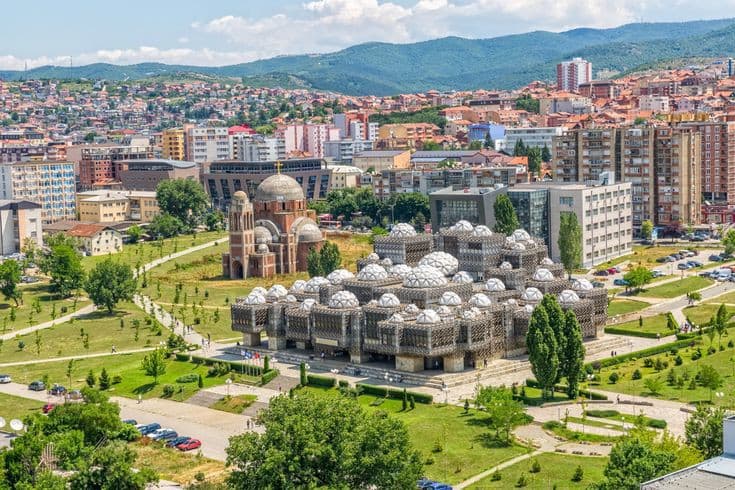
Prishtina
Kosovo's emerging capital with youthful energy and resilience
Prishtina doesn't try to impress you with ancient monuments or famous landmarks. Instead, Kosovo's capital wins you over with something more genuine — the infectious energy of a city that's writing its own story. Walk down Mother Teresa Boulevard and you'll see what I mean. Young entrepreneurs open coffee shops next to communist-era buildings. Street art covers walls that witnessed decades of struggle. And everywhere, there's this sense that something important is happening here.
The city center pulses with life around Bill Clinton Boulevard (yes, really). Students from the University of Prishtina fill sidewalk cafes, debating everything from politics to pop culture. Meanwhile, the old Çarshia bazaar area holds onto traditions that stretch back centuries. It's this mix of old and new, of determination and hope, that makes Prishtina unlike anywhere else in Europe.
Best Months
MAY – SEP
~27°C · high crowds
Culture & Context
YOUNGEST EUROPEAN NATION
Kosovo declared independence in 2008, making it Europe's youngest country. The population is over 90% Albanian, and the Gheg dialect of Albanian is what you'll hear everywhere. Kosovo has a deep, genuine affection for Americans and Brits because of the NATO intervention in 1999.
There is a statue of Bill Clinton on Bill Clinton Boulevard, and it is not ironic. People will thank you personally for what your country did. That is real.
Coffee culture here is serious. Locals sit in macchiato bars for hours. It's not a fast-in, fast-out situation.
The macchiato (a small latte, not a Starbucks thing) is the drink of choice. Order one, sit down, and expect no one to rush you out. The country skews young, energy is high, and people are remarkably open to strangers.
Local Customs
COFFEE IS SACRED TIME
Coffee is a social ritual, not a caffeine delivery system. Ordering a macchiato and leaving in ten minutes is technically possible but misses the whole point. Sit, chat, people-watch..
When you enter a Kosovar home, take your shoes off at the door. You may be offered slippers. Wear them..
If someone offers you food or a drink, accept it. Refusing hospitality — even a small sweet or raki — is genuinely considered rude. You don't have to finish it, but take it..
Bring chocolates or sweets if invited to someone's home for the first time. Small gesture, big impression.. Kosovars shake hands when greeting and again when leaving.
Close friends (men and women) exchange cheek kisses. Some men place their left hand on their heart while shaking yours — it signals respect or genuine happiness at seeing you.. Tipping about 10% is appreciated but not mandatory.
It won't be chased down if you forget it, but it matters.. Don't call Kosovo 'Yugoslavia' or refer to locals as 'Yugoslavian.' Kosovo has been independent since 2008 and people feel that strongly..
Avoid bringing up Serbian-Kosovar politics unless the local person opens the door first. It's a heavy topic and not your conversation to start.. Service in restaurants moves at its own pace.
Patience isn't optional here — it's just how it works. The food is worth it.. Don't point your feet at people when sitting.
It's considered disrespectful across Albanian culture.
Safety
WATCH PETTY THIEVES
Prishtina is safe for tourists by any reasonable measure. Violent crime against visitors is rare. The main thing to watch for is petty theft: pickpockets can operate in crowded markets and around the Newborn Monument.
Keep your bag in front of you in busy spots. Taxis are where most visitors get stung financially. Agree on a price before you get in, or insist on the meter.
Use your hotel to arrange airport taxis (€15-20 is the normal rate). Unofficial taxis will charge more. North Kosovo is a different story.
The UK's FCDO and the US State Department both advise against travel to Zvečan, Zubin Potok, Leposavic, and north Mitrovica (north of the river Ibar) due to ethnic tensions and a history of violent incidents. Prishtina itself is nowhere near these areas, but know the geography if you're traveling around the country. US and UK travelers are welcomed warmly here, in large part because of the NATO intervention in 1999.
Don't be surprised if people thank you for your country's role. Solo female travelers: Prishtina is generally fine, including at night in busy areas. Stick to lit and populated streets after dark, which is standard advice anywhere.
The LGBTQ+ situation is more complex. Urban younger crowds in Pejton are more accepting, but public attitudes across Kosovo remain conservative. Emergency number: 112.
Getting Around
WALKABLE CITY CENTER
Getting in: Prishtina Adem Jashari International Airport has direct flights from London, Vienna, Zurich, Istanbul, and a growing list of European cities. A taxi from the airport to the city center costs €15-20 if pre-booked through your hotel. If you're arriving by bus, Prishtina's main bus station connects to Prizren, Peja, and Skopje for €4 each way.
Getting around the city: The center is completely walkable. Most of the main sights are within 15-20 minutes on foot from Mother Teresa Boulevard. City buses run for €0.
27-0.50 per ride. There is no metro.
Taxis within the city center cost €3-5 for short trips. Agree the price first or use the meter. For day trips to Gračanica Monastery (10km south) or the Bear Sanctuary (20km southeast), local buses are the cheapest option.
Road trips to other parts of Kosovo are viable: fuel runs about €1.10/liter for diesel and distances are short. Kosovo is tiny — you can get from Prishtina to Prizren in under two hours.
Note: if you plan to cross into Serbia, you cannot enter Serbia from Kosovo's airport without a prior Serbian entry stamp. You'd need to enter Serbia from a third country first (like North Macedonia). Worth factoring in if Serbia is part of your itinerary.
Useful Phrases
Money-Saving Tips
- 1.ATMs are everywhere in the center and dispense euros — Kosovo uses the euro despite not being in the EU
- 2.Restaurant meals cost €3-8 for local places, €10-15 for upscale dining
- 3.Coffee culture means you can sit for hours over a €1.50 macchiato without anyone bothering you
- 4.Public transport is super cheap at €0.50 per ride, but walking is often faster in the compact center
- 5.Markets and street vendors often accept small tips for good service — round up to the nearest euro
- 6.Hotel prices double during summer diaspora season (July-August) so book early or visit shoulder season
Travel Tips
- •Download offline maps — cell service can be spotty in older parts of the city
- •Learn basic Albanian greetings like 'Mirëdita' (good day) — locals appreciate the effort
- •Carry cash for small purchases — many cafes and shops don't take cards under €10
- •Dress modestly when visiting religious sites, both Orthodox churches and mosques
- •Don't photograph government buildings or military installations without permission
- •The city center can get crowded on weekend evenings — plan dinner reservations ahead
- •Sidewalks can be uneven and have random holes — watch your step, especially at night
- •Many signs are in Albanian only, but younger people speak good English
- •Taxis don't use meters — always agree on price before getting in