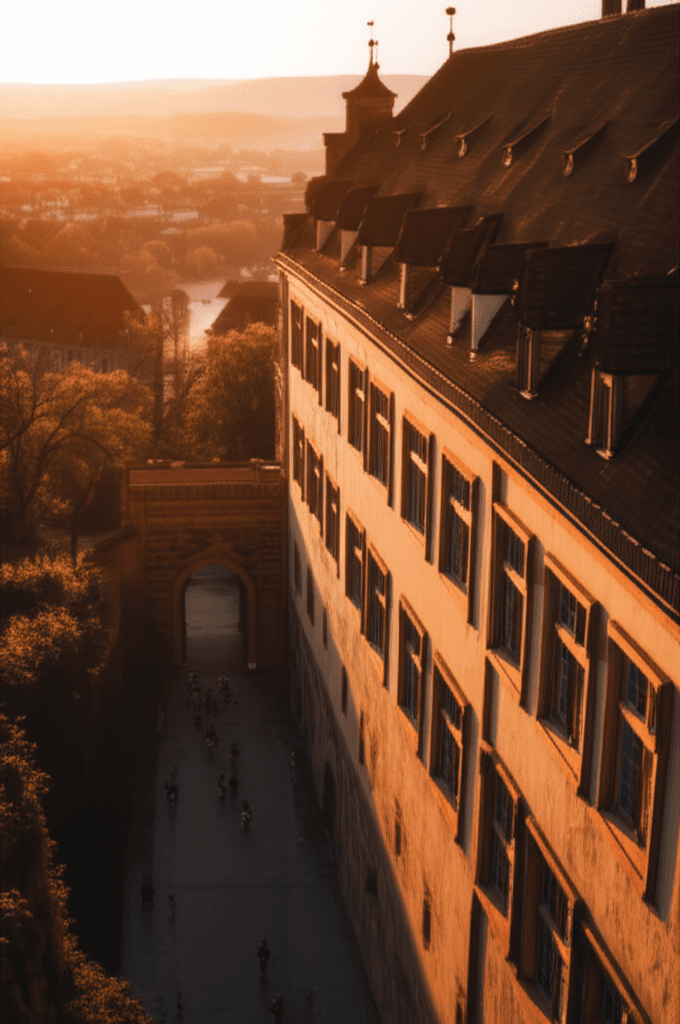
Nuremberg
Medieval charm meets profound history in Bavaria's cultural heart
Nuremberg hits different than other German cities. Sure, Munich gets the beer hall glory and Berlin claims the cool factor, but this Bavarian powerhouse serves up something more layered. Medieval walls wrap around a city that's grappled with its past and emerged stronger. The cobblestone streets of the Altstadt lead to world-class museums, while traditional bratwurst stands sit next to innovative restaurants. And come December? The Christkindlmärkte transforms the main square into something straight out of a fairy tale. But here's what travel guides won't tell you: Nuremberg works just as well in summer, when locals fill the beer gardens and the castle grounds offer perfect picnic spots. It's a city that respects its history without being trapped by it.
Best Months
MAY · JUN · JUL · AUG · SEP · DEC
~20°C · peak crowds
Culture & Context
FRANCONIA, NOT BAVARIA
Nuremberg sits in Franconia — technically part of Bavaria, but don't let that confuse you or lead you to assume it's culturally the same. Franconians are historically Protestant, culturally reserved-but-warm, and fiercely proud of their own food, beer, and dialect (Fränkisch/Nürnbergerisch). The city has a complicated historical weight: it was a center of the Holy Roman Empire, later became the propaganda capital of the Nazi regime, and then hosted the war crimes trials that shaped modern international law.
All three chapters are present and visible. The Christmas market is world-famous and absolutely packed in December. But the rest of the year, Nuremberg is a genuinely livable mid-sized German city with good food, serious brewing culture, and a lot less pretension than Munich.
Franconia has the highest density of breweries in the world, mostly small private operations within an hour of the city. The famous 5-Seidla-Steig (Five-Pints Trail) north of the city lets you hike between them. Lebkuchen (gingerbread) was invented here in the 14th century.
The Drei im Weckla — three small bratwursts in a white roll — is the street food that defines the place.
Local Customs
NEVER CALL THEM BAVARIAN
Never, ever call a Franconian a Bavarian. Franconians have a distinct cultural identity — their flag is red and white (not Bavarian blue and white), they're historically Protestant rather than Catholic, and they consider themselves linguistically and culturally separate from southern Bavaria. It's a bit like calling a Scot English.
You'll know you've done it wrong by the look you get.. Tipping at restaurants is customary but not mandatory — 5–10% is fine. Locals usually round up to the nearest euro or say a specific amount when handing over cash ('stimmt so' means 'keep the change')..
In beer gardens and festival settings, shared tables (Biertischgarnituren) are normal. If there's a free seat at a long table, you just ask 'Ist hier noch frei?' (Is this free?
) and sit down. You're expected to be social, not to guard personal space.. Sundays are genuinely quiet in Nuremberg.
Most shops are closed. Plan grocery runs for Saturday. Museums and restaurants still operate, but the city takes its rest day seriously..
Franconia has the highest density of breweries in the world — mostly small private operations. Locals would rather drink local Kellerbier than anything from the big Munich breweries. Ordering a Märzen and asking if it's local is a good conversation starter..
Cobblestone streets are everywhere in the Altstadt. Wear actual walking shoes. Heels are a bad idea, and you'll know it by the second bridge..
The Documentation Center at the Nazi Party Rally Grounds is a sober, important site. Treat it accordingly — keep conversations quiet, don't make it a photo op backdrop, and read the exhibits. The permanent museum has been closed for major renovations but a special exhibition is running and still worth the visit.
Safety
GENUINELY SAFE
Nuremberg is genuinely safe. The Numbeo crime index sits at 34.9 with a safety index of 65.
1 as of 2026. Standard urban caution applies — pickpockets do operate at the Hauptbahnhof, the Hauptmarkt, and during crowded festivals like the Christkindlesmarkt. Keep bags zipped and phones pocketed in busy areas.
Gostenhof and Südstadt have slightly higher crime rates than the rest of the city, so be more aware after dark in those neighborhoods. Cobblestones are a genuine physical hazard — wear proper footwear, especially in winter when they ice over. Public transport is safe including late at night; video surveillance is present throughout the U-Bahn network.
Women traveling solo report Nuremberg as comfortable and welcoming. Emergency number: 112 (EU standard). Police: 110.
Getting Around
U-BAHN & FEET
The public transport system (run by VGN — Verkehrsverbund Großraum Nürnberg) is clean, punctual, and genuinely easy to navigate. You've got U-Bahn (subway), S-Bahn (regional rail), trams, and buses all on one integrated ticket. The U2 and U3 lines are famously driverless — the first automated subway lines in Germany — and run directly from the airport into the city center, making arrival painless.
A single Zone A ticket costs €3.20. Day passes run €6–8 for one adult.
The Nürnberg Card (around €33 for 2 days) is the best deal for tourists: it covers all transport plus free museum entry. Night buses (N-lines) run on Friday and Saturday nights after the U-Bahn stops. For day trips around Bavaria, the Bayern Ticket (€34/person in 2026) covers all regional trains, U-Bahn, S-Bahn, buses, and trams across the whole state from 9am.
Much of the Altstadt is pedestrianized, so honestly, for central sightseeing, your feet are the main vehicle. The VGN app is worth downloading for real-time schedules.
Useful Phrases
Where to Stay in Nuremberg
1 recommended properties
Money-Saving Tips
- 1.Buy the Nürnberg Card for €31 (2 days) - covers public transport and museum entries including the Nazi Documentation Center
- 2.Eat bratwurst from street vendors (€3-4) instead of sit-down restaurants (€12-15) for the same authentic experience
- 3.Shop at REWE or Edeka supermarkets near Hauptbahnhof for picnic supplies - beer costs €1 vs €4 in restaurants
- 4.Book Christmas market accommodation by September or pay double the normal rates
- 5.Take regional trains for day trips instead of tours - Bamberg costs €15 return vs €60 for organized trips
Travel Tips
- •The Imperial Castle closes at 4pm October-March, so plan morning visits during winter months
- •Download the DB Navigator app for real-time train updates - regional services can run late
- •Restaurants close between 2-6pm, so plan lunch before 2pm or wait until evening service
- •The Christmas market's Kinderweihnacht section caters specifically to families with gentler crowds
- •Carry cash - many traditional restaurants and market stalls don't accept cards
- •The Nazi Documentation Center requires 2-3 hours minimum - don't squeeze it into a rushed schedule