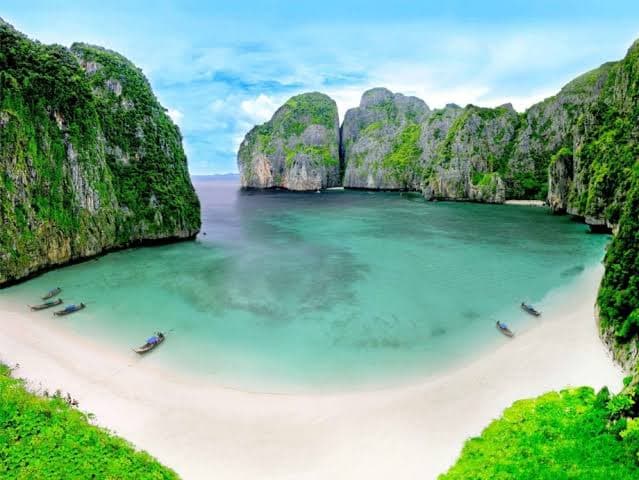
Koh Phi Phi
Thailand's stunning limestone paradise with vibrant nightlife and azure waters
Look, Koh Phi Phi isn't exactly a secret anymore. But here's the thing — this collection of limestone islands still delivers the kind of jaw-dropping scenery that made it famous in the first place. Maya Bay might be crowded, but Long Beach at sunset? That's still pure magic. The main island, Phi Phi Don, pulses with backpacker energy and beach bars that go until dawn. But venture to the quieter spots, and you'll find why people keep coming back despite the crowds.
Best Months
JAN · FEB · MAR · APR · NOV · DEC
~33°C · peak crowds
Culture & Context
MUSLIM LOCALS, PARTY TOURISTS
Phi Phi has an interesting cultural split that most visitors miss completely. The local permanent population is largely Muslim — there's a mosque at the eastern end of Tonsai Village — while the tourist economy runs on Thai Buddhist customs and a party-island vibe imported by backpackers. That tension is real.
Locals are patient, but you can sense they're getting tired of the constant tourist flood. The wai (pressing palms together, slight bow) is the standard Thai greeting; you don't have to do it for every shop owner, but doing it in a genuine social situation goes a long way. Heads are sacred in Thai culture — never pat anyone on the head, even kids.
Feet are considered the lowest part of the body, so don't point your feet at people or Buddha images. And yes, remove your shoes before entering homes and many local businesses. Tipping isn't mandatory but is appreciated.
Don't haggle aggressively over 100 baht with local shop owners — that's someone's livelihood, not a sport. Buddha statues and images require a special permit to export, and shells and coral taken from the beach or sea floor are illegal to remove.
Local Customs
SHOES OFF, HEADS SACRED
Greet with a wai (palms pressed together, slight bow) in social situations — especially with older Thai people or when meeting someone who wais you first. A smile and nod works fine in most casual tourist interactions.. Remove shoes before entering homes and many local businesses.
If you see a pile of shoes at the door, take yours off.. Never touch anyone's head, even children's heads. It's considered the most sacred part of the body in Thai culture..
The majority of the permanent island population is Muslim. The mosque at the eastern end of Tonsai Village is active — be respectful of call to prayer times, especially if staying nearby. Some accommodations around Loh Dalum Bay are close enough that you'll hear the sunrise call to prayer..
Dress modestly when visiting temples. That means shoulders covered and knees covered — sarongs are often available to borrow at temple entrances.. Don't feed the monkeys at Monkey Beach.
They're wild animals and will bite. Signs warn you; ignore them at your own risk (and medical expense).. Don't purchase souvenirs made from seashells, coral, or shark teeth — these are illegal to export and will be confiscated at customs.
Same goes for picking up shells from the beach.. Topless sunbathing is tolerated but not welcomed. Some hotels post specific notices asking guests not to go topless or wear G-strings by the pool..
Haggling is normal in markets but don't overdo it. Many Phi Phi shops post fixed prices because there are too many tourists to negotiate with individually. Save your energy for genuine market stalls..
Dial 191 for emergencies. The small clinic (closer to a first-aid station than a hospital) is at the western end of Ton Sai Bay. For anything serious, you're heading to Phuket.
Safety
WATCH YOUR DRINK
Petty theft — bag snatching, items stolen from unattended beach towels — is the most common problem. Keep valuables locked up, and when you go out at night, bring only the cash you plan to spend. The beach bars on Loh Dalum are fun but watch your drink.
Spiked drinks are a documented problem here, not just a rumor. Never leave a bucket or cocktail unattended, and trust your gut if something feels off. The notorious drink buckets (Red Bull, whiskey, mixer, sometimes paint-thinner-quality liquor) are genuinely potent — pace yourself.
Emergency number is 191. The island has a small clinic near the western end of Ton Sai Bay, but for anything serious, you're looking at a boat to Phuket. Bring travel insurance — this is not a suggestion.
Avoid Monkey Beach food feeding entirely; wild monkeys will bite without much provocation, and a rabies shot course costs far more than your ferry ticket. During monsoon season (May–October), seas can be rough and some ferries are cancelled. If ferry schedules change, you may be stuck a day longer than planned.
Budget accordingly. The scam to watch for: overcharging on long-tail boats and tour packages. Ask for prices upfront, write them down if needed, and don't book the first tour you're pitched at the pier.
Getting Around
BOATS ONLY, LONG-TAILS EVERYWHERE
There is no airport on Phi Phi. The only way in is by boat. Ferries from Phuket run about 2 hours and cost 350–500 THB — book ahead from November through April when tickets genuinely sell out.
Speedboats from Phuket (around 800 THB) cut travel time to roughly an hour but give a much rougher ride. From Krabi, the ferry is slightly shorter and similar in price. Fly into Phuket (HKT) or Krabi (KBV) — both have budget flights from Bangkok.
Once on the island, there are zero cars. You walk everywhere, or you take a long-tail boat. Long-tails cost around 150 THB per person for short inter-beach trips, though prices are negotiable (and expect pushback on negotiation during peak season).
For a full-day private long-tail to see Phi Phi Leh, Monkey Beach, Viking Cave, and the lagoons, split between four people the cost drops to 650–1,000 THB each, lunch and snorkeling gear included — negotiate directly with boat operators on the beach rather than booking through a tour desk. The national park charges 200 THB cash per person at Maya Bay and Bamboo Island — this is separate from your tour or boat fee, collected when you step off the boat. Don't forget to bring cash for these fees or you won't get onto the beach.
Useful Phrases
Money-Saving Tips
- 1.Book ferry tickets online in advance — walk-up prices at the pier are 20-30% higher
- 2.Bring cash in Thai baht — ATMs charge 220 baht withdrawal fees and many places don't take cards
- 3.Split longtail boat costs with other travelers — drivers are happy to make multiple stops for the same price
- 4.Buy water and snacks at 7-Eleven in Tonsai before heading to remote beaches where prices triple
- 5.Negotiate accommodation rates directly with guesthouses — online booking sites add hefty commissions
- 6.Pack reef-safe sunscreen from home — the stuff sold on the island is expensive and often fake brands
Travel Tips
- •Download offline maps before you go — cell service is spotty on remote beaches
- •Pack a waterproof bag for boat trips — longtails can get splashy and your phone won't survive a soaking
- •Bring flip-flops with good grip — the limestone rocks are sharp and slippery when wet
- •Start Maya Bay tours early morning to beat both crowds and heat
- •Keep your ferry ticket — you'll need it for the return journey and replacements cost extra
- •Respect the coral — even touching it damages these fragile ecosystems that are already under pressure