Málaga
Picasso's birthplace meets Mediterranean beach bliss and culture
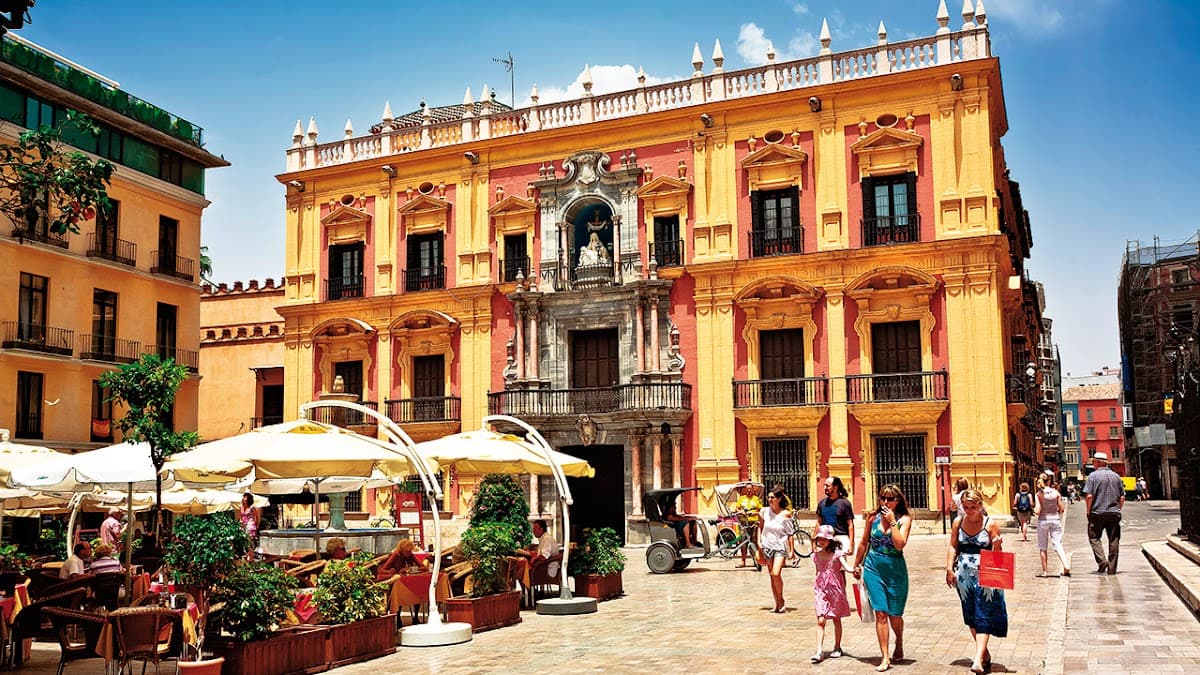
Málaga gets overshadowed by flashier Spanish cities, but that's exactly why you should go. This Andalusian port city serves up Picasso's artistic legacy alongside some of Europe's best urban beaches, all wrapped in 3,000 years of history. You can browse world-class museums in the morning, lunch on grilled sardines by the Mediterranean, and still catch flamenco in a cave bar by midnight. The historic center buzzes with tapas crawlers and art students, while Malagueta Beach offers actual swimming weather 300 days a year. Sure, it's not as polished as Barcelona or as grand as Madrid, but Málaga delivers something those cities can't: authenticity without the tourist circus.
Best Months
APR · MAY · JUN · SEP · OCT
~25°C · moderate crowds
Culture & Context
PICASSO & FLAMENCO ROOTS
Málaga is the birthplace of both Pablo Picasso and Antonio Banderas, which tells you something about the range the city covers. It spent centuries under Moorish rule before Ferdinand and Isabella retook it in 1487 — the August Fair still commemorates that exact date. That layered past shows up everywhere: the Alcazaba sits directly above a Roman theatre, and a glass pyramid in front of it covers ancient garum (fish sauce) production basins.
The city had a reputation for decades as a place people flew over on their way to the beach resorts of the Costa del Sol. That's changed fast. The Picasso Museum opened in 2003, the Centre Pompidou arrived in 2015, and the digital nomad visa launched in 2023 drove a wave of international arrivals and a 30-40% rent increase since 2022.
Locals are not uniformly happy about this. The historic centre now commands rents comparable to Madrid, and the influx of short-term rentals has pushed residents eastward toward El Palo and Pedregalejo. But outside the tourist core, the city is still very much a real Andalusian city where people eat late, live loudly, and greet strangers without irony.
The word 'boquerón' (anchovy) is what Malagueños call themselves, and they mean it as a badge of identity. The city's football club, Málaga CF, plays in the blue and white of the Mediterranean, and match days create a different, local energy worth experiencing if you're there for a weekend.
Local Customs
NINE COFFEE ORDERS
Coffee is an art form here. There are nine distinct coffee orders specific to Málaga, ranging from 'solo' (black) through 'mitad' (half and half) to 'nube' (mostly milk). Café Central on Calle Marqués de Larios has the orders listed on tiles on the wall.
Go there, read the tiles, then order correctly.. Lunch is the main meal and it happens late — 2pm to 4pm is normal. Dinner rarely starts before 9pm.
If you're sitting down to eat at 6:30pm, you'll be eating alone surrounded by staff setting up.. The biznaga is Málaga's unofficial flower. During the August Fair, street vendors (biznagueros) sell small bouquets of jasmine wired into the shape of a white ball.
Women carry them or pin them to their dress. Buying one and wearing it is one of the more charming things you can do during feria week.. Sevillanas are danced at the August Fair by everyone, not just professionals.
If someone holds out their hand and invites you to dance, say yes. Nobody expects you to know the steps perfectly. They expect willingness..
The 'botellón' is a pre-going-out drinking ritual where people — mostly younger locals — gather in public spaces with drinks bought from supermarkets before heading to the night fair or bars. It's not a student thing, it's a culture thing. During feria week it starts around 6pm in the squares..
Church dress codes are enforced at the Cathedral and Alcazaba. Shoulders and knees covered. If you forget, someone will tell you at the door..
Tipping isn't mandatory but rounding up is common. Watch out for the 'Suplemento Terraza' (a 10% surcharge for sitting outside) and the bread fee of €1-€1.80 that appears automatically at many restaurants.
Both are legal and normal but still catch visitors off guard.. Verdiales music is Málaga's own ancient folk tradition — a type of fandango played by groups called 'pandas' in colourful costumes with hats decorated in flowers. You'll hear it at the August Fair and at its dedicated competition on December 28.
It sounds unlike anything else in Spain.
Safety
VERY SAFE, WATCH PICKPOCKETS
Málaga is generally safe. Numbeo's 2026 data puts the crime index at 31.0 and safety index at 69.0 — low crime, comparable to or better than most major European tourist cities. And crime in Málaga actually fell 2% in the first half of 2025.
The main risk is petty theft and pickpocketing, not violence. Busy tourist areas on Calle Larios, Muelle Uno, and the port area are where it tends to happen. Classic tells: someone getting too close, unsolicited help with your bags, 'free' rosemary sprigs from women in the centre (say 'no gracias' and walk). The dropped wallet scam occasionally appears too.
At ATMs, use machines inside bank branches at night rather than street-level ones. Don't leave your phone on the café table or hang your bag on your chair. Pickpockets work in small groups looking for distracted diners.
Most neighbourhoods are fine at any hour. The old town, Soho, Muelle Uno, and La Malagueta are all perfectly safe to walk at night. Avoid Palma-Palmilla (near Carretera de Cádiz) at night — locals and taxis skip it, and so should you. Parts of La Trinidad and the area immediately around the María Zambrano train station feel grittier after dark but are not actively dangerous.
Tap water is safe to drink. Most beaches have lifeguards and a Red Cross tent in summer — always check the flag before swimming. Emergency number: 112. National police: 091. Local Málaga police: 092. There is a police station close to Plaza de la Merced in the downtown. Solo female travellers consistently rate Málaga as one of the more comfortable Spanish cities to navigate alone.
Getting Around
WALKABLE, METRO & BUS
Getting from the airport to the centre: the Cercanías C1 train (€1.80, 12 minutes) is the fastest and cheapest option. The EMT Airport Express bus Line A (€4, 25 minutes) drops you at Paseo del Parque in the centre. A taxi or Uber runs around €20-25. Skip the unofficial airport taxis — they overcharge, sometimes up to €50 for a €15 journey.
Within the city, most of central Málaga is walkable. But when you do need transport: the EMT bus network covers all 50+ lines reliably from around 6am to midnight, with night buses (N lines) on weekends. A single ticket costs €1.40. Buy a Bonobus card (€1.90 for the card, then €8.30 per 10 rides) at a kiosk or tobacco shop (estanco) — this drops each ride to €0.83 and can be shared between multiple people. Free transfers within 60 minutes. Download the EMT Málaga app for real-time tracking.
The metro has two lines meeting at El Perchel (near María Zambrano station). Line 1 runs to the university; Line 2 goes to the Palacio de Deportes. Single ticket €1.35, or €0.82 with a rechargeable card. Trains run every 6-7 minutes at peak times. By 2024 it was carrying 18.2 million passengers a year.
For the coast: the Cercanías C1 train runs south to Torremolinos and Fuengirola — cheap and frequent, and way easier than driving. During the August Fair, Line F buses run 24 hours between the city centre and the Cortijo de Torres fairground for €2, tappable by phone or card.
Uber, Cabify, and Bolt all operate and are reliable late at night when buses stop. A monthly combined transport pass costs €28. The city is genuinely car-free-viable — one of the only places on the Costa del Sol where this is true.
Useful Phrases
Things to Do in Málaga
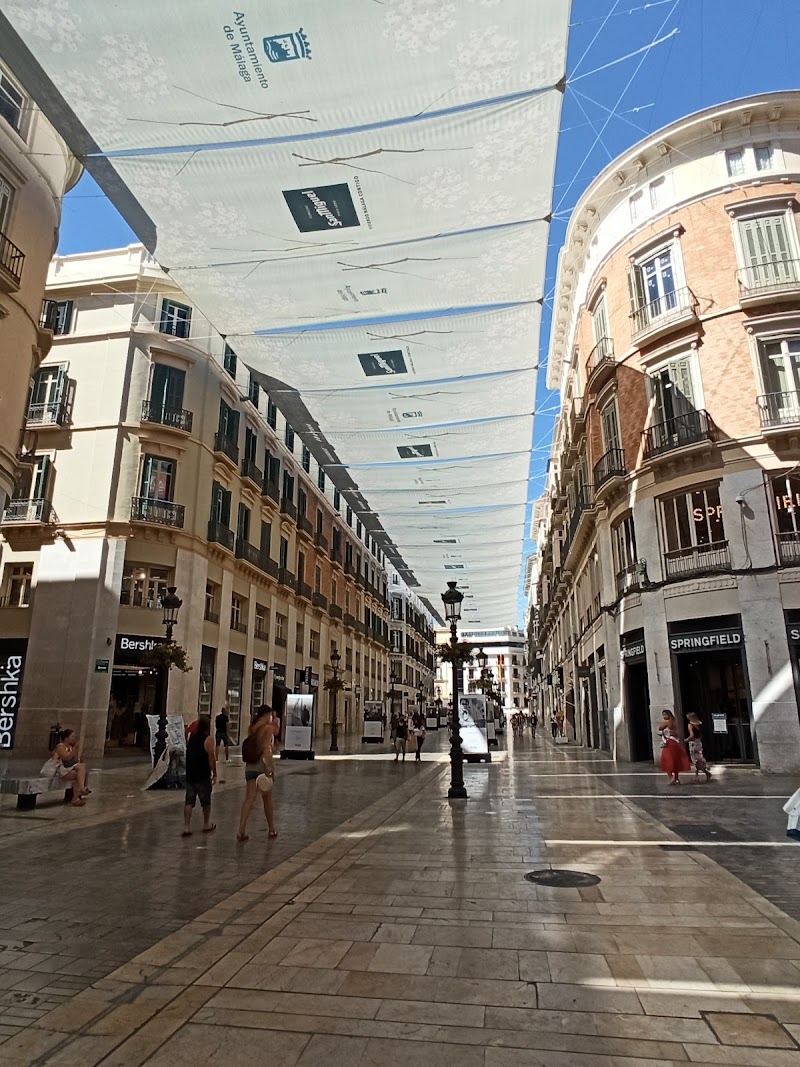
Calle Marqués de Larios & Centro Histórico Stroll
Centro Histórico · 90 min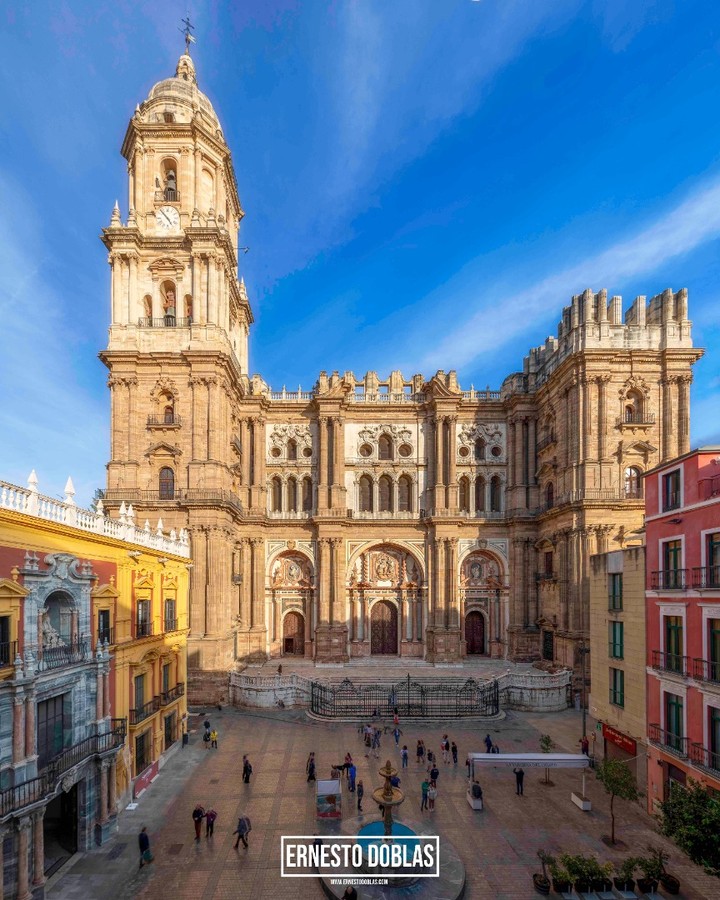
Málaga Cathedral (La Manquita)
Centro Histórico · 60 min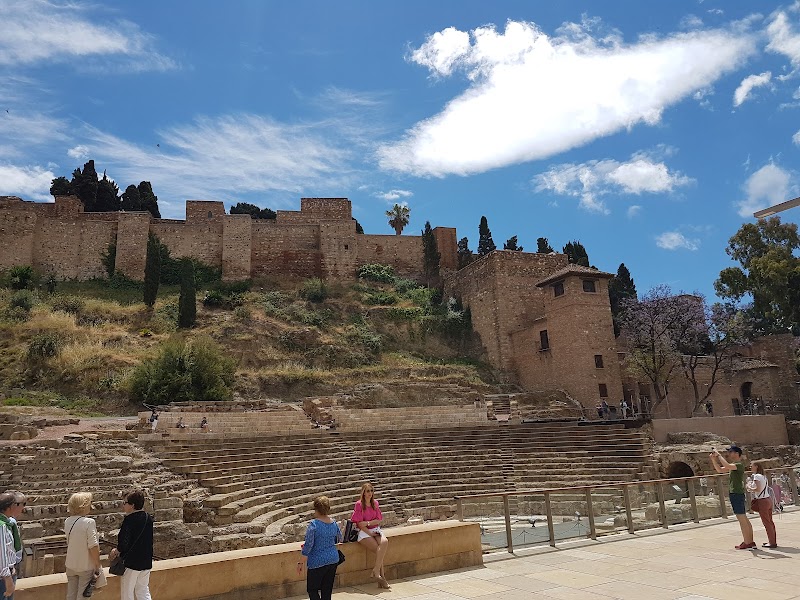
Roman Theatre & Alcazaba of Málaga
Centro Histórico · 120 minMoney-Saving Tips
- 1.Many museums offer free entry on Sunday afternoons for EU residents
- 2.Beach chiringuitos charge €15-20 for paella portions that easily feed two people
- 3.Buy a 10-ride metro card for €8.30 instead of paying €1.35 per trip
- 4.Lunch menus (menú del día) at local restaurants cost €12-15 for three courses
- 5.Free walking tours operate daily from Plaza de la Marina - tip €5-10 per person
- 6.Supermarket wine costs €3-5 per bottle vs €15-25 in restaurants
- 7.Many tapas bars still serve free small plates with drinks ordered at the bar
Travel Tips
- •Download the EMT Málaga app for real-time bus schedules in English
- •Book Alhambra tickets online before arriving - they sell out weeks in advance
- •Siesta hours (2-5pm) close most shops but beaches and museums stay open
- •Carry cash - many small tapas bars and beach vendors don't accept cards
- •The Cathedral roof tour offers the city's best views for €5 extra
- •Learn basic Spanish greetings - locals appreciate the effort more than in Barcelona
- •Pack layers in spring/fall - mornings can be cool while afternoons get warm
- •Avoid eating dinner before 9pm unless you want to dine alone
- •The Málaga Card includes museum entries and public transport for €22-39
- •Beach showers and bathrooms are free along the Malagueta promenade