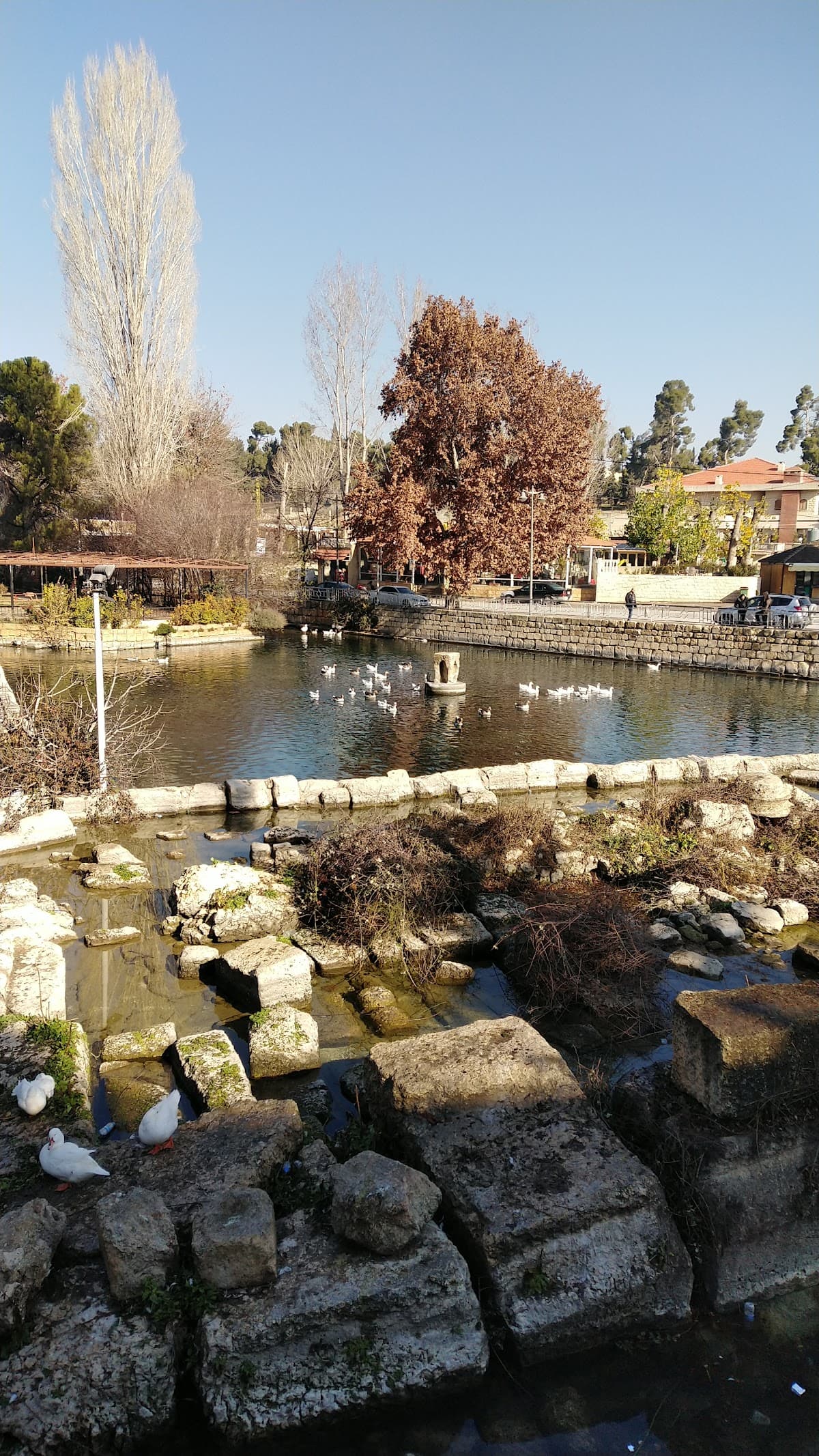
Baalbek
Lebanon's Colossal Roman Temples in the Bekaa Valley
Look, most people skip Lebanon entirely, let alone venture to Baalbek. Their loss. This ancient city in the Bekaa Valley houses some of the most jaw-dropping Roman ruins you'll ever see — and you'll likely have them mostly to yourself. The Temple of Jupiter here makes the Colosseum look modest. Built on a scale that defies logic, these 2,000-year-old stones still tower above the valley floor like ancient skyscrapers. But here's the thing: Baalbek isn't just about the temples. The surrounding valley grows some of Lebanon's best wine, the local food scene punches way above its weight, and the mountain backdrop shifts from green to golden depending on when you visit. Sure, it's not the easiest place to reach, and tourism infrastructure remains basic. That's exactly why it feels so authentic.
Best Months
APR · MAY · JUN · SEP · OCT
~27°C · moderate crowds
Culture & Context
LAYERS OF EMPIRES
Baalbek sits in Lebanon's Beqaa Valley, about 67 km northeast of Beirut, and it punches well above its weight. The city has been continuously inhabited for roughly 9,000 years. The Phoenicians built temples here to Baal, the sky god.
The name literally means "Lord of the Beqaa Valley." Then Alexander the Great renamed it Heliopolis — City of the Sun. Julius Caesar made it a Roman colony in 47 BC, and successive emperors poured staggering resources into a temple complex that ended up larger than anything they built in Rome itself.
Today the population is predominantly Shia Muslim, and the city is widely recognized as Hezbollah's political heartland. That context matters for how you move through town. Most of the population consists of Shia Muslims, followed by Sunni Muslims and Christians.
Baalbek's complex layers — Phoenician, Greek, Roman, Byzantine, Umayyad, and modern Lebanese — coexist in a single walk through the ruins and the old souks. Tourism has suffered through waves of conflict: the 1975–1990 civil war, spillover from the Syrian civil war, and the Israel-Hezbollah conflict since 2023. But the ruins themselves remain, and during stable periods, travelers describe the site as genuinely accessible and locals as warm to visitors.
English is spoken at most tourist-facing businesses. French phrases also work — a legacy of the French Mandate era. Do not casually raise politics, Hezbollah, or the Israeli conflict.
These are not dinner-table topics with strangers.
Local Customs
ASK BEFORE PHOTOGRAPHING
Dress modestly in town and at religious sites — Baalbek is a conservative, predominantly Shia city. Shoulders and knees covered for both men and women outside the ruins. Women visiting the Umayyad Mosque must cover their hair..
Accept hospitality when offered. If a shopkeeper or local invites you for coffee or tea, the right move is to accept. Refusing abruptly reads as cold.
Hospitality (karam) is central to Lebanese identity and is not a sales tactic.. Do not photograph military checkpoints, soldiers, government buildings, or anything that looks remotely official. This can lead to questioning and detention..
Ask permission before photographing locals, especially in the souk or near the mosque. Most people are fine with it — just ask first with a gesture and a smile.. A slight upward tilt of the head combined with a raised eyebrow means 'no.
' A downward nod means 'yes.' This trips up a lot of foreign visitors.. Use your right hand for eating and greeting.
The left hand is considered impolite.. Do not raise politics, Hezbollah, or regional conflicts with strangers. Not out of danger but out of respect — these are deeply personal topics in a city that has lived through the consequences firsthand..
Bargaining is expected and enjoyed in traditional souks. Start lower than you want to pay and enjoy the back-and-forth. The process is a social exchange, not a confrontation..
Do not leave Israeli stamps in your passport — that will get you denied entry to Lebanon at the border.. Power cuts are a daily reality across Lebanon. Pack a power bank and expect WiFi and phone signal to go down without notice.
Safety
AVOID SELF-DRIVING
Let's be honest about this. The Beqaa Valley and Baalbek-Hermel area are flagged by multiple governments for militia activity, terrorism risks, and drug-related violence. From January 2025, there have been deadly armed clashes between Lebanese and Syrian groups in border towns near Hermel.
The Lebanese Armed Forces have conducted raids against narcotics operations in the district. Airstrikes have occurred close to the highway near the Syrian border since March 2024. The US State Department ordered non-emergency government employees and their families to leave Lebanon on February 23, 2026.
Kidnapping risks exist, and foreign nationals are specifically named as potential targets in Baalbek. On the ground, travelers who arrive with a reputable local driver or tour guide consistently describe the ruins area as calm and welcoming. But self-driving is a poor idea.
Military checkpoints along the Beirut-Baalbek route are described as routine rather than threatening by most visitors — show your passport, answer a question, move on. Do not photograph military installations, checkpoints, or government buildings. Stick to the main roads.
Book transport through a trusted operator rather than hailing random taxis. Keep your valuables secure; crimes against tourists are mostly opportunistic, not targeted. Carry a power bank — power cuts across Lebanon can last 18-20 hours daily, which also means mobile coverage and ATM access can be intermittent in rural areas.
Getting Around
PRIVATE DRIVER RECOMMENDED
Getting here from Beirut takes about 2 hours by road — 90 km that can stretch with traffic and military checkpoints. The most practical option is a private driver, which runs around $50 USD for the day and gives you flexibility to pair Baalbek with Anjar and Ksara Winery on the same loop. Shared minivans (service taxis) run between Beirut and Baalbek for roughly $5 round trip, departing from the Cola transportation hub in Beirut.
Budget option, but you are squeezed in with strangers and the schedule is loose. Organized day tours from Beirut typically cost $80-115 USD per person and include transport, a guide, and sometimes Anjar or the winery. GetYourGuide and local operators like TourLeb both offer options.
Inside Baalbek itself, the major sites are walkable from each other. The Hajar al-Hibla quarry is about 1 km from the main ruins — easy walk or a quick taxi hop. Arriving at 9:00 AM sharp gives you roughly 90 minutes before the tour buses from Beirut start rolling in around 11:00 AM.
That quiet window is the real gift. There are no trains. Driving yourself is possible but not recommended unless you are very familiar with Lebanese roads, which are narrow, chaotic, and GPS-routed routes are not always the safest ones.
Useful Phrases
Money-Saving Tips
- 1.Temple entrance costs $10 for adults, but keep your ticket — some hotels offer discounts if you show it
- 2.Hire taxis for the full day rather than individual trips — daily rates start around $80 versus $8 per short ride
- 3.Buy wine directly from vineyards instead of restaurants — you'll pay half the price and can often negotiate bulk discounts
- 4.Eat lunch at local bakeries and save restaurant meals for dinner — a filling manakish costs under $3
- 5.Stay in Ksara village instead of Baalbek proper — accommodation costs 30% less and includes breakfast
- 6.Visit during shoulder season (April-May, September-October) when hotel rates drop significantly
- 7.Pack water and snacks for temple visits — the site's cafe charges tourist prices for basic items
Travel Tips
- •Download offline maps before visiting — cell service can be spotty in the mountains around Baalbek
- •Bring comfortable walking shoes with good grip — temple stones can be slippery and uneven
- •Carry cash in Lebanese pounds — most local businesses don't accept cards or US dollars
- •Learn basic Arabic greetings — locals appreciate the effort and it often leads to better service
- •Visit temples early morning or late afternoon to avoid harsh midday sun and get better photos
- •Respect local customs — dress modestly when visiting temples and cover shoulders and knees
- •Book winery visits in advance, especially during harvest season when tours fill up quickly
- •Keep your passport handy — you may encounter security checkpoints on roads leading to Baalbek
- •Bring sunscreen and a hat — the Bekaa Valley sun is stronger than you expect, especially in summer
- •Try to visit during a local festival or celebration for the most authentic cultural experience