Castries
Caribbean capital blending duty-free shopping with tropical charm
Castries doesn't try to be the flashiest Caribbean capital. Instead, it offers something more genuine — a working port city where cruise passengers browse duty-free shops alongside locals buying groceries at the Saturday market. The city sits in a natural harbor surrounded by green hills, with colonial buildings sharing space with modern shopping centers. You'll find decent restaurants, affordable guesthouses, and easy access to St. Lucia's famous beaches and rainforests. But here's the thing: Castries works best as a base camp rather than the main event. The real magic happens when you venture beyond the city limits.
Best Months
JAN · FEB · MAR · APR · DEC
~29°C · high crowds
Culture & Context
NOBEL PRIZE HARBOR TOWN
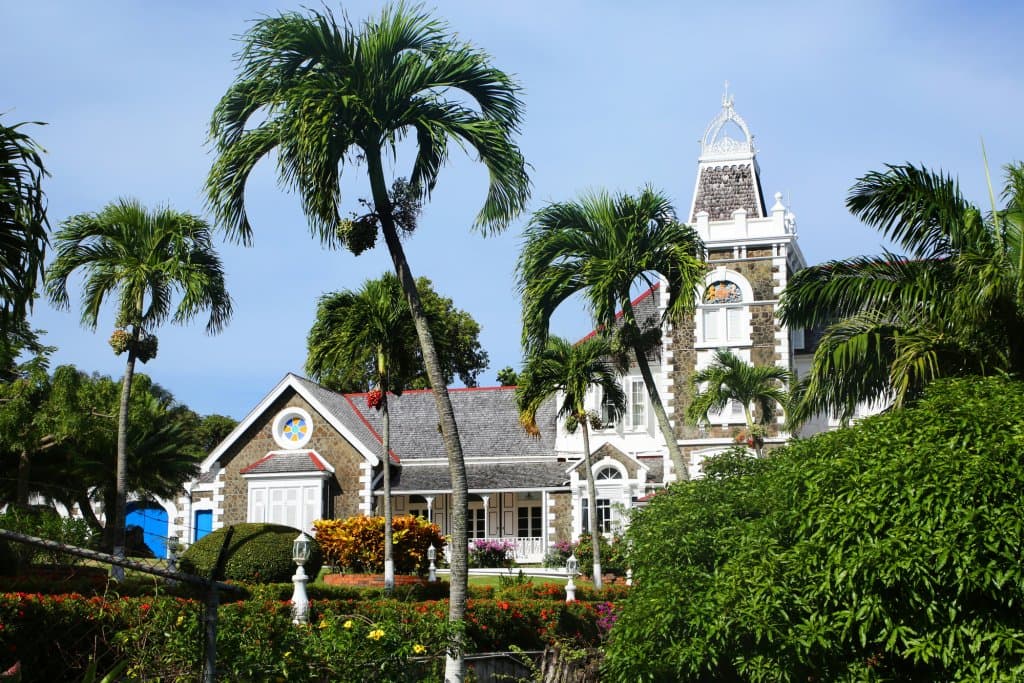
Castries is Saint Lucia's capital and main port. It's a working city first, tourist destination second. The 1948 fire burned most of the historic gingerbread architecture to the ground, so what you get now is a low-rise grid of concrete shops painted in faded pastels, not the colonial charm you might be expecting.
But here's the thing: the harbor is one of the deepest natural anchorages in the western hemisphere. Four mega-cruise ships can dock and there's still room for painted wooden pirogues bobbing nearby. When the ships leave by late afternoon, the city exhales.
Kwéyòl conversations take over, coal-pot fires light up near the market, and the place shrinks back to a town of about 20,000 who will cheerfully tell you that per capita, Saint Lucia has produced more Nobel Prize winners than any other nation on earth. Derek Walcott (Literature, 1992) and Arthur Lewis (Economics, 1979) both have squares and institutions named for them here. The Cathedral Basilica of the Immaculate Conception on Derek Walcott Square has murals by local artist Dunstan St.
Omer that reimagine biblical figures as Afro-Caribbean people. Worth stepping inside even if you're not religious. The market on the north side of town sells local spices, crafts, and produce and is far more honest about prices than the shops near the cruise terminals.
Local Customs
GREET, THEN KWÉYÒL
Always greet people when entering a shop, getting on a bus, or sitting near a stranger. 'Good morning' or 'Good afternoon' is enough. Not doing this is considered rude island-wide, not just in Castries..
Dress modestly away from the beach. Swimwear on the street or in a market is not appreciated and marks you as oblivious.. Camouflage clothing is literally illegal in Saint Lucia.
This includes kids' clothing with camo patterns. Items will be confiscated at the airport with no return.. Tipping: a 10–15% service charge is often pre-added to restaurant bills.
Check before you add more. For taxis and minibuses, tipping is not expected but rounding up is appreciated.. The word 'hello' is not used as a casual greeting here the way it is in North America.
Calling out 'hello' to someone on the street signals you want their attention, not that you're being friendly. Use 'good morning' or 'good afternoon' instead.. Kwéyòl (pronounced QUAY-eeOHL) is the mother tongue for most Saint Lucians.
English is official but Kwéyòl is what you hear between locals at the market, on the bus, and at rum shops. Making any effort at Kwéyòl phrases earns genuine goodwill.. Public displays of affection between any couple are uncommon on the street.
Saint Lucia has conservative social attitudes, especially outside Castries and Rodney Bay. LGBTQ+ travelers should be aware that same-sex activity is technically illegal under laws that are rarely enforced but remain on the books.. Chairman's Reserve is the local rum.
Piton is the local beer, brewed in Vieux Fort. Ordering either at a rum shop rather than a cocktail bar is the fastest way to stop paying tourist prices.
Safety
WATCH YOUR BELONGINGS
Castries is rated Level 1 by the US Department of State (exercise normal precautions), which is the lowest risk tier. Most visitors have no serious issues. But petty theft is real.
Pickpocketing and bag snatching happen at the Castries market, near the cruise terminals, and in crowds during Carnival and the Jazz Festival. Specific neighborhoods to avoid after dark: Wilton's Yard, Marchand, Chaussee Road, and Leslie Land. These are not tourist zones anyway, so most visitors will never wander near them.
The main hospital is the Owen King European Union (OKEU) Hospital in Castries. Emergency services dial 911. Response times in Castries and Rodney Bay are reasonable; in rural or southern areas they are significantly slower.
Private Tapion Hospital near Castries is an option for non-emergency care. Serious injuries may require medical evacuation to Miami or Martinique. Get travel insurance that covers evacuation.
Taxis have blue license plates with a TX prefix. Authorized minibuses have green plates with an M prefix. Do not get in unmarked vehicles.
During festival periods, taxi drivers sometimes inflate fares. Agree on the price before you get in, every time. The LGBTQ+ legal situation: consensual same-sex activity is technically illegal with penalties up to 10 years.
The law is rarely enforced, but public displays of affection between same-sex couples can attract unwanted and potentially hostile attention. Hurricane season runs June through November; September and October are the peak risk months.
Getting Around
MINIBUS & NEGOTIATED TAXIS
Minibuses are the backbone of local transport. Look for green license plates with an "M" prefix. Fares run EC$1.
50–2.75 (about US$0.55–1) for routes within Castries and the north coast, and up to EC$8 (about US$3) for longer runs south.
They leave when full, not on a set schedule. Expect to wait, or expect to leave immediately. The 1A Castries–Gros Islet route runs roughly 7am–10pm.
Most other routes stop around 4–7pm. Buses do not run on Sundays at all. For taxis, look for light-blue plates with TX prefix.
No meters anywhere on the island. Always agree on the fare before you get in. Short trips in Castries run $10–20 USD.
Cross-island to Soufrière or the airport runs $80–90 USD. There is modest room to negotiate on longer trips. The George F.
L. Charles Airport (SLU) is right next to Castries and handles regional inter-Caribbean flights. Most international arrivals land at Hewanorra International Airport (UVF) in Vieux Fort, about 35 miles south.
Budget roughly $80–90 USD for a taxi between the two. Rental cars go for around $66–70 USD per day. Visitors need a temporary local driving permit, which rental companies can arrange.
Drive on the LEFT. Roads in central Castries are manageable; mountain roads toward Soufrière are narrow and have sharp curves. Avoid driving at night outside the city.
There are no bike lanes and cycling is not recommended on main roads.
Useful Phrases
Money-Saving Tips
- 1.Shop duty-free only if you're actually leaving the country — locals pay full price at the same stores
- 2.Saturday market prices are in EC dollars — $1 USD equals about $2.70 EC
- 3.Taxi rates are fixed but negotiable for longer trips or multiple stops
- 4.Local buses cost 90% less than taxis and run frequently during daylight hours
- 5.Restaurants near the cruise terminal charge 30-50% more than places a few blocks inland
- 6.Hotel rates drop significantly during hurricane season (June-October) despite minimal actual risk
- 7.Water taxis and local ferries cost much less than private boat tours
- 8.Grocery shopping at IGA or Massy Stores saves money versus eating every meal out
Travel Tips
- •Download offline maps — cell service can be spotty in the mountains outside Castries
- •Bring cash in small bills — many local vendors can't break large notes
- •Pack reef-safe sunscreen — it's expensive locally and many brands aren't available
- •The Saturday market gets extremely crowded after 10am — arrive early for better selection and prices
- •Confirm taxi prices before getting in — some drivers quote rates in USD, others in EC dollars
- •Most restaurants close between lunch and dinner (2-6pm) — plan accordingly
- •Public restrooms are scarce downtown — use facilities at restaurants or the market
- •Cruise ship days (check schedules online) mean crowded attractions and higher prices