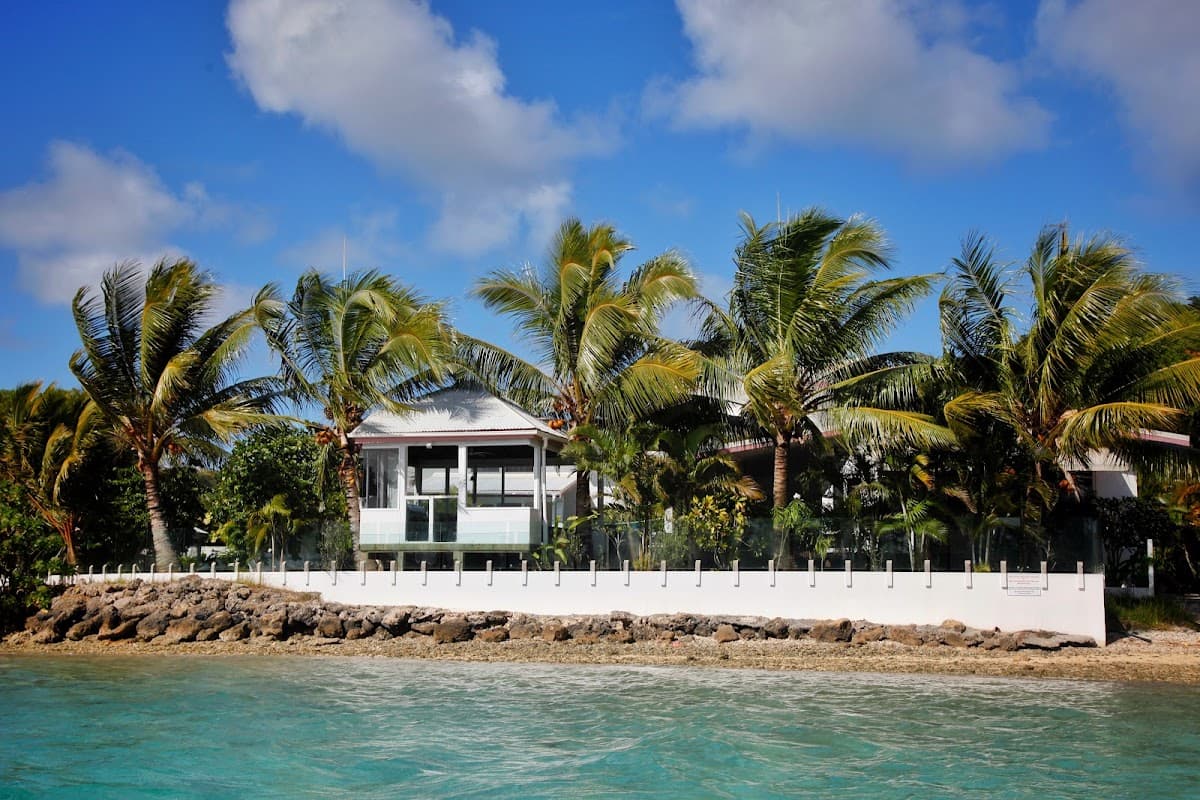
Port Vila
Pacific Paradise with Volcanic Adventures and Island Culture
Port Vila isn't your typical Pacific island capital. Sure, there are beaches and palm trees, but this is where Melanesian culture meets volcanic adventure in ways that'll surprise you. The town sits on Efate Island's harbor, where cargo ships dock next to luxury yachts, and the smell of lap lap cooking mingles with diesel fumes. It's raw, real, and absolutely magnetic.
Look, Port Vila won't win any beauty contests against Bora Bora. The main drag has its share of concrete buildings and dusty streets. But that's exactly what makes it special. This is the Pacific without the polish, where you can swim in blue holes carved by ancient lava flows, then catch a string band performance at the local market. The locals speak Bislama, a creole that sounds like English had a baby with French and decided to move to the islands.
Here's what you need to know: Port Vila is adventure disguised as a sleepy capital. One day you're rappelling into Mele Cascades, the next you're learning to weave palm fronds with grandmothers in Ekasup Village. The city serves as your launching pad to some of the Pacific's most intense experiences, but it's got plenty of its own character to keep you busy.
Best Months
MAY – OCT
~28°C · moderate crowds
Culture & Context
KASTOM MEETS MODERNITY
Port Vila sits on the southwest coast of Efate island and carries the layers of its colonial past loudly. The French and British ran the place jointly as the New Hebrides Condominium from 1906 until independence in 1980, which is why you'll still find French bakeries next to Melanesian nakamals and signs in both languages. The Ni-Vanuatu people are the heart of this place.
Kastom — traditional law, land ownership, and social structure governed by local chiefs — still runs underneath the modern city. It's not folklore. It's how things actually work.
Jenny Regenvanu became Port Vila's first female mayor in August 2024, which was a genuinely significant moment locally. The city has 83 native languages floating around it, but Bislama ties everything together. And kava, not alcohol, is the real social lubricant here.
The nakamals open around dusk, the kava gets pounded, and the conversation gets slower and more honest. That's Port Vila's version of happy hour.
Local Customs
SHOES OFF, KAVA ON
Tipping is not practiced and is generally considered rude or awkward by locals. Don't do it.. Remove your shoes before entering a nakamal (kava bar or traditional meeting place).
This is not optional.. Ask permission before photographing anyone — seriously. Locals mean it when they say no..
When visiting villages or sacred sites, dress modestly. Shoulders and knees covered. The closer you get to traditional communities, the more this matters..
Kava is the national drink and the social glue. Trying it at a nakamal is a sign of respect. Drink it in one gulp, spit if you need to, and don't talk loudly right after — that's the custom..
Bargaining is not really the culture at Port Vila markets. Prices are usually already fair. A polite negotiation is fine; aggressive haggling is not..
Always ask landowners before wandering onto beaches or non-public land. Some beaches charge an access fee — that's normal and accepted.. Kastom governs community life.
Treat local chiefs with respect, and don't wander into village ceremonies uninvited.
Safety
SAFE, SEISMICALLY AWARE
Port Vila is generally safe for travelers and Australia's Smartraveller rates it at the lowest advisory tier (exercise normal precautions). But 2026 comes with context. The December 2024 earthquake (7.3 magnitude) killed 14 people and caused nearly $200 million USD in damage. The CBD is open and functioning, but building demolitions and reconstruction are ongoing throughout the city. Walk with your eyes up — some condemned structures are still being assessed. A second 7.3 quake struck near Luganville in March 2026; Port Vila was unaffected, but it's a reminder that Vanuatu sits on the Pacific Ring of Fire. Earthquakes here are not theoretical. In a tremor: drop, cover, hold on.
Cyclone season runs November to April. Check forecasts seriously during that window — storms can move fast and island infrastructure doesn't absorb them well. Petty crime is low, but use registered taxis (arrange through your hotel) rather than flagging random cars. For emergencies: ambulance at 115, police at 111 or 22222. There were shark sightings and minor incidents near Port Vila in 2024 — ask locally before swimming in unfamiliar spots. A pertussis (whooping cough) outbreak was declared on several islands including Efate in September 2025; check if your booster is current before departure.
Getting Around
MINIBUSES & ISLAND HOPS
Bauerfield International Airport (VLI) sits about 6km north of the city — roughly 10–15 minutes by taxi. Direct flights connect Port Vila to Australia, New Zealand, Fiji, New Caledonia, and the Solomon Islands. Air Vanuatu went through a restructuring in 2024 and operates a reduced international schedule; verify routes before booking. From the airport, a taxi to central Port Vila costs 1,500–2,000 VUV — agree on the price before you get in, not after.
Around town, the local minibuses (look for a 'B' on the license plate) are the cheapest option at 150 VUV per ride. They run flexible routes and can be flagged down on the main road. They can get crowded and won't handle big luggage easily, but for short hops around Efate they're perfectly functional. Shared taxis run at around 500 VUV within Port Vila. There's no formal public transport network beyond this.
For island-hopping, domestic Air Vanuatu flights connect to Tanna (Yasur Volcano), Espiritu Santo, Malekula, and beyond. Round-trip domestic tickets run 15,000–25,000 VUV. Book well in advance in peak season (July–September). Ferries and cargo ships also connect the main islands — slower, cheaper, and an experience in themselves, though not ideal if you need to keep a tight schedule.
Useful Phrases
Money-Saving Tips
- 1.Use Australian dollars everywhere - most places accept them alongside vatu, often at better rates than official exchanges
- 2.Buy kava in bulk at the market (500 vatu per shell) rather than paying tourist prices at nakamals (800+ vatu)
- 3.Shared taxis cost 150 vatu versus 500+ for private rides - just wave down the white Toyota Hiaces
- 4.Port Vila Market on Tuesday/Thursday/Saturday mornings has the cheapest fresh produce and local snacks
- 5.Book accommodation directly with hotels rather than through booking sites to avoid international transaction fees
- 6.Many restaurants add 10% service charge automatically - check your bill before tipping extra
- 7.ATMs charge hefty fees (500+ vatu per transaction) so withdraw larger amounts less frequently
Travel Tips
- •Pack reef-safe sunscreen - the coral reefs here are protected and chemical sunscreens are discouraged
- •Download offline maps before arriving - cell coverage can be spotty outside town center
- •Bring a waterproof bag for day trips - sudden tropical showers are common even in dry season
- •Learn basic Bislama phrases like 'tankyu tumas' (thank you very much) - locals appreciate the effort
- •Always negotiate taxi fares upfront and confirm the currency (vatu vs Australian dollars)
- •Respect kava culture - don't take photos at nakamals without permission and follow local etiquette
- •Pack insect repellent for evening activities - mosquitoes emerge at dusk and can carry dengue fever