São Miguel
Azores' emerald jewel of volcanic lakes and thermal springs
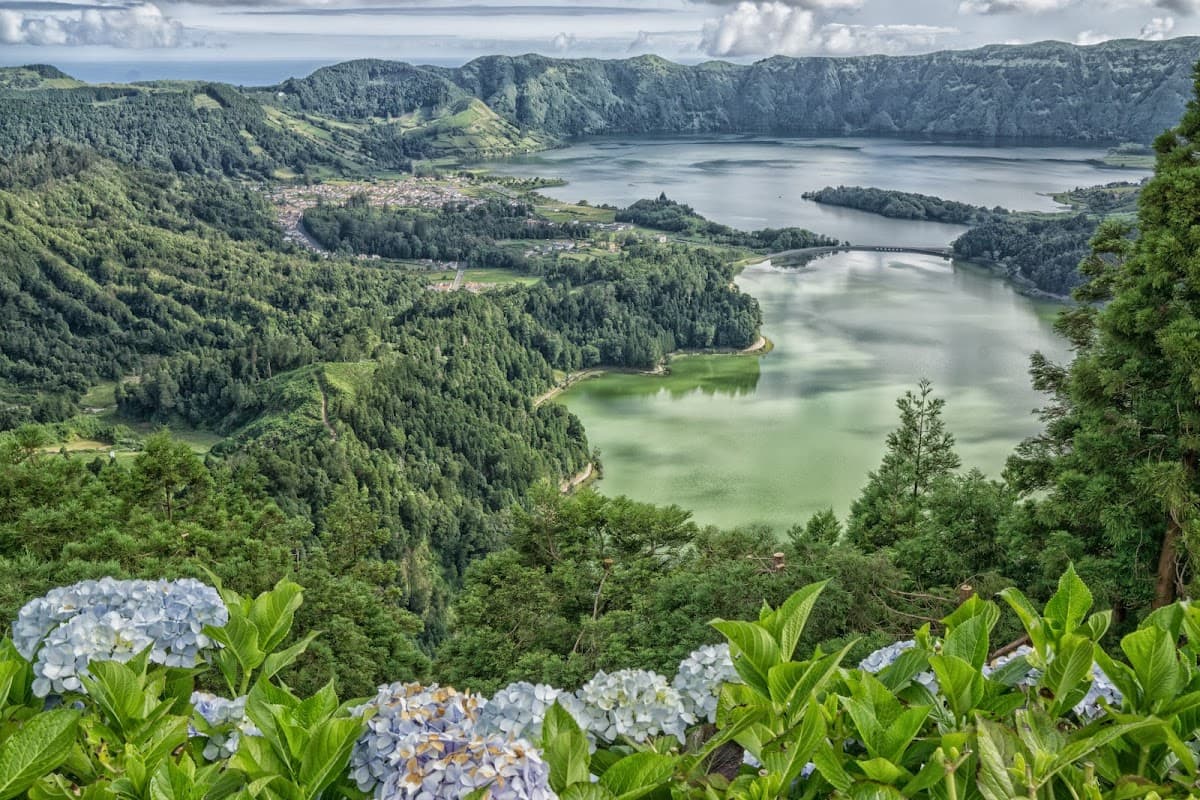
São Miguel hits differently than other Atlantic islands. Sure, you've got beaches and volcanic drama, but this is where you'll find yourself soaking in natural hot springs at sunrise, then hiking around emerald crater lakes by afternoon. The largest of the Azores islands doesn't try to be tropical paradise – it's something more raw and real.
Most people fly through Lisbon to get here, which keeps the crowds manageable even in summer. You'll share hiking trails with more locals than tourists, and restaurant menus still list prices that won't make you wince. The island runs on volcanic time – things move slower, dinners start later, and nobody's in a rush to be anywhere but exactly where they are.
Best Months
MAY – OCT
~23°C · moderate crowds
Culture & Context
VOLCANIC ISLAND IDENTITY
São Miguel is Portugal, but not quite. It's a volcanic island in the middle of the Atlantic, about 1,500 km west of Lisbon, and it developed its own identity over centuries of geographic isolation. People here are Azorean first.
They speak Portuguese with a thick island accent that even mainland Portuguese speakers find hard to follow at times. The island has around 140,000 people, roughly 45,000 of them in the capital, Ponta Delgada. Catholicism runs deep.
Not as a museum-piece formality, but as something actually lived. The festivals here aren't tourist events; they are the community. The island also has a significant diaspora connection with the US and Canada, which means English is more commonly spoken than you'd expect for a place this size.
You'll hear American accents in the cafes. Lots of them. The food is the real story.
Cozido das Furnas, a slow-cooked stew buried underground in volcanic earth for six hours, is genuinely one of the most interesting dishes you'll eat anywhere in Europe. Local dairy is extraordinary, because the cows here eat impossibly green grass year-round. And the pineapples, grown in small greenhouses because the climate isn't tropical enough for fields, take two full years to mature and taste nothing like the ones in your supermarket back home.
Local Customs
RESPECT THE FESTIVALS
Religious festivals are genuinely central to community life here. Don't treat them as photo opportunities and move on. The Santo Cristo procession in May is a deeply spiritual event for locals.
Quiet, respectful presence is the right approach.. If you visit a village Espírito Santo celebration, you may be offered food. Accept it.
The distribution of food to strangers is the whole point and refusing is a bit rude.. Café culture is serious. A bica (espresso) costs around €1.
30 and ordering one is how you sit somewhere for an hour. A galão (a tall latte-style drink) is the longer version. Don't rush..
The Azorean accent is strong and distinctive, especially on São Miguel. Even fluent Portuguese speakers sometimes need a moment to tune in. Locals are used to this and patient about it..
Renting a car is essentially mandatory for exploring the island properly. Public buses exist but run on limited routes and schedules. Bolt (ride-hailing) works in Ponta Delgada, but a trip from the airport to Furnas costs more than a full day's car rental..
Parking in Ponta Delgada city center requires paying at a machine before leaving. Don't skip it. Fines are issued and enforced..
The weather changes fast. Four seasons in a day is not a cliché here; it is a lived reality. Pack a light rain layer even in July..
Hydrangeas line the roadsides in summer. They are gorgeous and iconic, but not actually native. They're an invasive species that escaped cultivation in the 19th century.
Good for photos, mildly complicated for the local ecosystem.
Safety
VERY SAFE, NATURE RULES
São Miguel is genuinely safe. Portugal consistently ranks in the top five on the Global Peace Index, and the Azores are among the safest parts of Portugal. Crime is low. Petty theft exists but is rare; the areas where it's most likely are crowded tourist spots like Ponta Delgada city center, the Sete Cidades viewpoint, and trailheads where cars are left unattended for hours. Don't leave anything visible in a parked car at trailheads.
The real risks here are natural, not human. The island sits on active volcanic geology. Earthquakes happen. Eruptions are possible but typically have advance warning. Follow local news and emergency notices. The coastline is beautiful but unforgiving: cold water, frequent riptides, and seasonal Portuguese Man o' War jellyfish (particularly in spring). Only swim at beaches with seasonal lifeguards. Praia do Areal de Santa Bárbara and Praia dos Moinhos both have them in season.
Hiking trails are well-marked but shouldn't be attempted at night. Some cliff roads toward places like Ponta da Ferraria and Arnel lighthouse are narrow and steep; if you're not a confident driver, park and walk. Weather changes without warning, and fog can close in on the caldera viewpoints at any time of year.
Getting Around
RENT A CAR
Renting a car is the only practical way to see São Miguel properly. Public buses exist but routes are limited and schedules don't match up well with the island's main attractions. Car rental starts at roughly €35–42 per day for a small vehicle, and you'll want full coverage insurance on roads that can be narrow, steep, and winding. Fuel runs around €1.92/L for petrol and €2.00/L for diesel as of May 2026. Parking in Ponta Delgada center is pay-and-display; pay at the machine before leaving or expect a fine.
The main highway connects the airport to Ponta Delgada, Vila Franca do Campo, and Ribeira Grande and is fast and smooth. Roads to Furnas, Nordeste, and parts of the west coast are winding and slow. Budget extra driving time for the east and north of the island, and don't underestimate how long the curves take.
From the airport to Ponta Delgada city center is about 5 minutes. To Furnas from Ponta Delgada is around 40–50 minutes on the southern road. Nordeste is roughly an hour from the capital. Sete Cidades on the western caldera is about 30 minutes.
Bolt (ride-hailing) works in Ponta Delgada and is genuinely useful for a night out. But for the rest of the island, there is no viable alternative to having your own wheels. Taxis exist but a single long-distance trip can cost more than a full day's car rental.
Flights into Ponta Delgada (PDL) come from Lisbon, Porto, and direct from Boston and Toronto via Azores Airlines (SATA). Seasonal routes also operate from New York (JFK) and Oakland (OAK). There are no ferries currently connecting São Miguel to the other islands; inter-island travel requires flights, and seats on smaller island routes fill fast during festival periods.
Useful Phrases
São Miguel Itineraries
Money-Saving Tips
- 1.Rent cars at the airport rather than in town - better selection and often cheaper rates
- 2.Many restaurants offer lunch specials (prato do dia) for €8-12, much cheaper than dinner prices
- 3.Fill up gas tanks in Ponta Delgada - rural stations charge 10-15 cents more per liter
- 4.Natural hot springs at Caldeira Velha cost €8 entry vs €25+ at resort thermal pools
- 5.Local buses cost €2-4 per trip but run infrequently - only practical for short distances
- 6.Grocery stores like Continente offer picnic supplies at fraction of restaurant prices
- 7.Book accommodations directly with hotels to avoid booking site fees, especially smaller guesthouses
Travel Tips
- •Download offline maps before exploring - cell service disappears in mountainous areas
- •Pack layers and waterproof jacket - weather changes rapidly, especially at higher elevations
- •Bring reef-safe sunscreen - volcanic black sand reflects heat and intensifies UV exposure
- •Book thermal pool visits in advance during summer - popular spots like Terra Nostra fill up
- •Learn basic Portuguese phrases - English isn't as common as mainland Portugal
- •Carry cash for small restaurants and rural attractions - card readers often don't work
- •Check tide times before visiting coastal hot springs - some only accessible at low tide
- •Respect volcanic areas and stay on marked trails - unstable ground can be dangerous