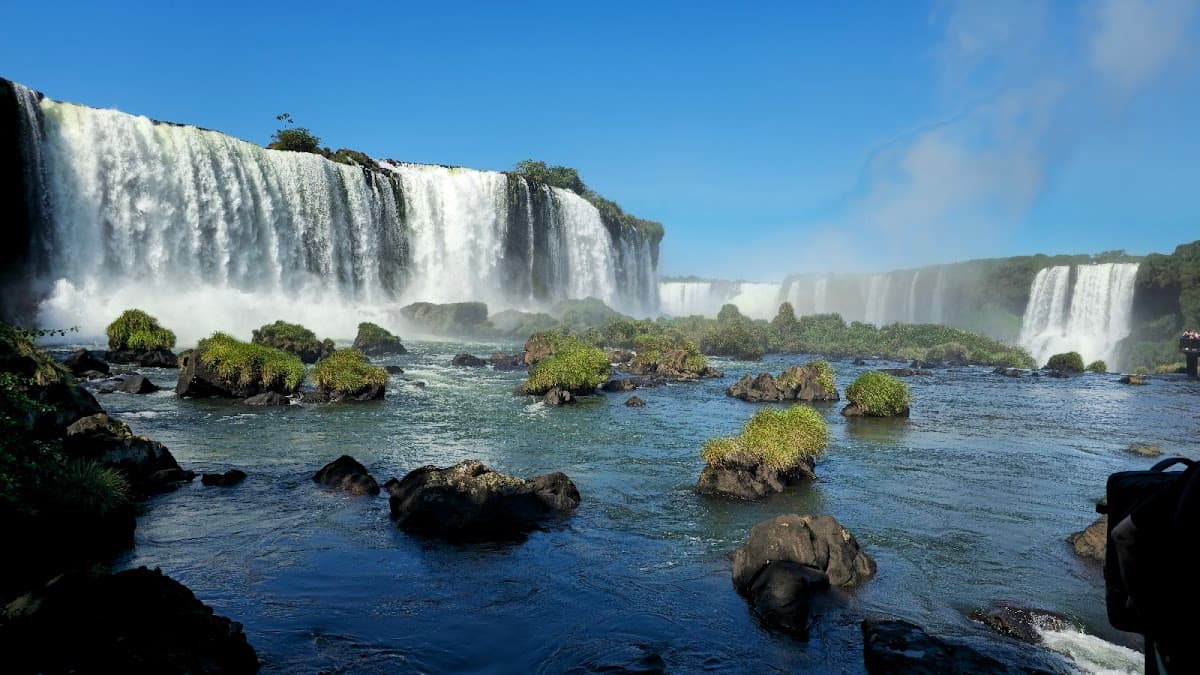
Iguazu Falls in January
Not the best time
January brings sweltering heat and massive crowds as it's peak summer vacation for South Americans. You'll share the falls with tour buses galore, but the thunderstorms create dramatic photo opportunities if you can handle the humidity.
Weather
Peak summer heat hits hard in January with oppressive humidity that makes everything feel sticky. Afternoon thunderstorms roll in almost daily around 2-3pm, drenching the falls and turning paths muddy. The heat combined with summer rainfall creates a steamy, jungle-like atmosphere that can be exhausting.
32°C high21°C low12 rain days
Crowds & Cost
peak crowds
~$180/day average
Events & Festivals
- •New Year celebrations
- •Summer vacation season (Argentina/Brazil)
January Tips
- •Book accommodations 6 months ahead - January is peak season
- •Visit the falls early morning before 10am to beat crowds and heat
- •Pack serious rain gear and quick-dry clothes
All Months
March through May and September through November hit the sweet spot — decent water levels without the crushing summer heat or winter crowds. December through February brings 100°F temperatures and every tour bus in South America. June through August is cooler but drier, so the falls lose some of their punch. The water flow changes dramatically based on rainfall upstream. After heavy rains, the falls turn chocolate brown and roar like freight trains. During dry spells, some of the smaller cascades barely trickle. Check recent photos online before you go — there's nothing worse than showing up to find Devil's Throat at half power. Weekdays are always better than weekends. Get to the parks right when they open at 8 AM to beat the tour groups.
Iguazu Falls Scores
Solo
8/10
Couples
9/10
Families
9/10
Adventure
8/10
Budget
6/10
Luxury
7/10
BUILD YOUR IGUAZU FALLS PLAN
Insider picks, smart timing, and a plan ready when you are.